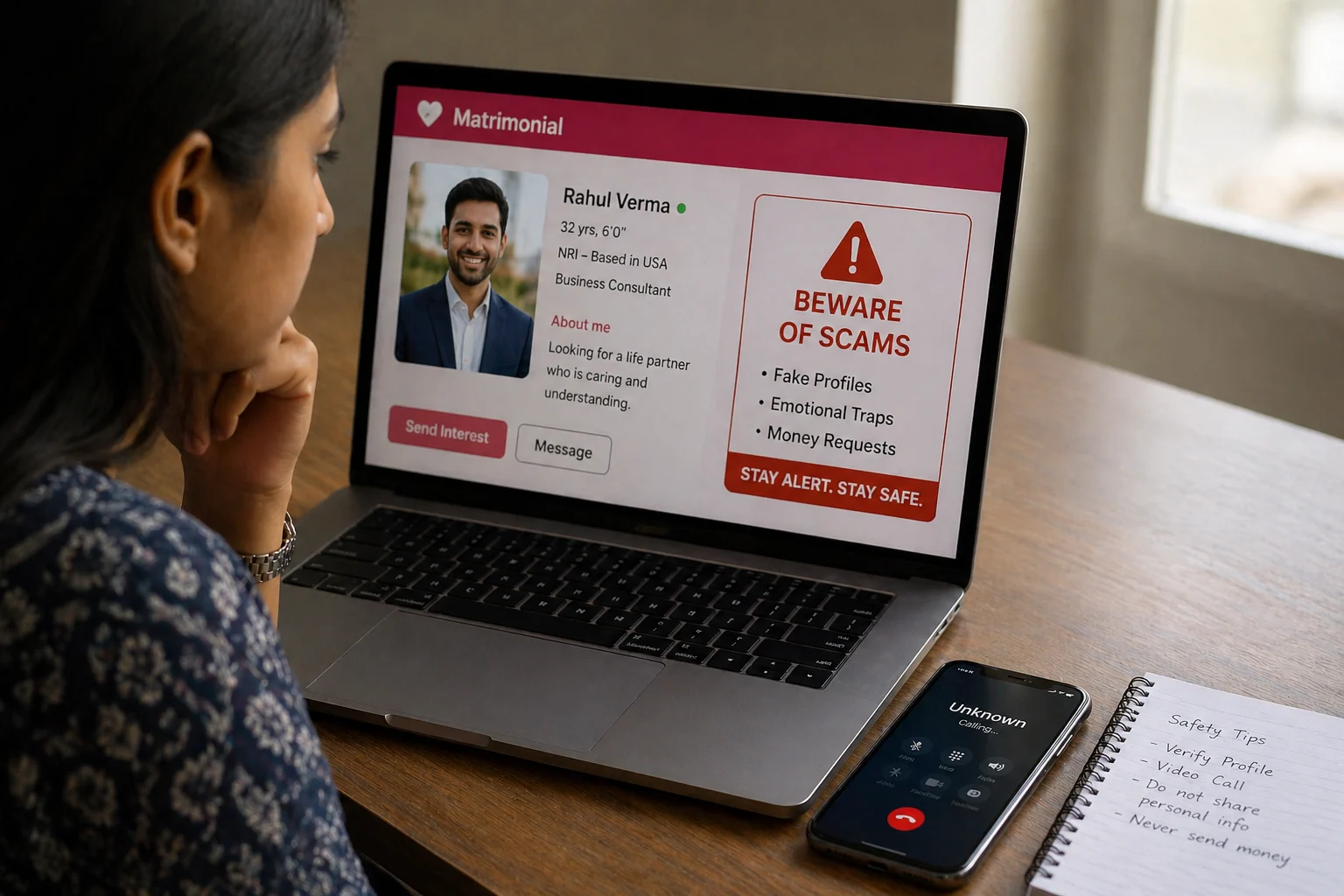
A woman from Mumbai was talking to a man named Michael Williams on BharatMatrimony. He said he was from the UK. They talked every single day. He was sweet, he listened, he remembered things. After weeks of calls she genuinely felt something for him.
He told her he was coming to India to meet her.
On the day he was supposed to land her phone rang. He was panicking. Airport customs had stopped him. Too much foreign currency. He just needed her to send some money for a certificate, something called an anti-terrorist certificate, and he would be out within hours.
She sent it.
He never called again.
₹ 2.93 lakh. And a person she thought was real, both gone the same day. When she reached out to BharatMatrimony they told her his profile was already gone and that it had always been her responsibility to check who she was talking to.
She is not alone in this. Not even close. Someone in India is going through this exact thing right now, on some app, trusting someone who does not exist.
India lost ₹ 22,845 crore to cyber fraud in 2024, a number the Ministry of Home Affairs shared in Parliament. Matrimonial fraud alone has shot up 206% in a year. Romance scams drain over Rs 500 crore annually. More than 12,000 complaints were filed in this one category in 2024. And that is only the people who actually told someone. Most never do because losing money hurts but telling people you fell for someone who was never real hurts differently.
If someone in your family is on BharatMatrimony, Shaadi.com, Jeevansathi or any matrimonial app, please read this carefuly.
What Is a Matrimonial Scam?
Matrimonial scams are planned. The person who made that fake profile was not confused or lonely. They knew exactly who they were looking for. Someone genuine. Someone hoping to find a life partner.
That person then spends weeks, sometimes months, just building trust. Daily messages, emotional conversations, small details that make everything feel real. The victim is not being careless. They are just responding to what feels like a real connection.
By the time money is asked for, the emotional damage is already done. Walking away at that point feels like losing a person, not avoiding a scam.
This is what makes matrimonial fraud so serious. The scammer did not exploit a mistake. They exploited sincerity. And that is a very different thing.
Who Gets Targeted?
Anyone on a matrimonial platform can be targeted, but fraudsters specifically look for:
- Women in their late 20s to 40s under family pressure to get married
- Widows or divorcees who may be emotionally vulnerable
- People from smaller cities who are less experienced with online fraud
- Families with good financial backgrounds who mention assets or property in profiles
- Men and women searching for NRI matches who may be impressed by foreign lifestyles
Delhi, Mumbai, and Bengaluru top the list of most affected cities. But Tier 2 and Tier 3 cities are increasingly targeted because awareness is lower and victims are less likely to report.
Common Types of Matrimonial Scams in India
1. The Fake NRI Groom or Bride Scam
This is the most reported type of matrimonial fraud in India. The scammer shows up as a successful NRI, based in the US, UK, Canada, or Australia. The profile looks convincing. Good English, a professional photo, a clean backstory. Doctor, engineer, businessman. Someone any family would approve of.
Weeks of conversation follow. Sometimes months. Then comes the plan to visit India, meet the family, make things official. And then something goes wrong. A medical emergency. A customs issue. A visa problem. Money is needed urgently. The victim transfers it. The scammer is gone.
In June 2025, Pune Cyber Police arrested Abhishek Shukla an Australian citizen from Lucknow, at Mumbai International Airport. He had been using the name Dr. Rohit Oberoi on Shaadi.com. His target was a 40-year-old divorced woman living in Pune’s Kharadi area. Over time, she transferred Rs. 3.6 crore across four bank accounts, including one in Citibank Singapore. She believed they were going to get married and build a business together.
When police investigated, they found Shukla had reached out to over 3,000 women using fake matrimonial profiles.
One man. Three thousand targets. One got caught.
Source: NDTV
2. The Fake Army Officer Scam
Scammers impersonate Indian Army, Navy, or Air Force officers using fake ID cards and official-looking documents. The military profession creates immediate trust. Parents feel reassured. The victim feels proud.
After building trust, the fraudster claims they need money for a transfer fee, a no-objection certificate to marry, or an urgent personal emergency. By the time the victim realizes the person was never in the military, large amounts have been transferred.
In one case uncovered by police, a family was looking for a groom for their daughter and matched with someone claiming to be an IAS officer. They even verified his profile photo. But when they searched the DoPT (Department of Personnel and Training) database, his name did not exist. He had already collected their daughter’s photographs.
3. Fake Dowry and Wedding Expense Scam
Some fraudsters go further. They actually agree to an engagement or marriage. They meet the family in person or on video call. Everything seems real.
Then they start asking for money. Venue bookings. Travel costs for relatives from abroad. Dowry discussions. “Just transfer the amount and we will settle everything after the wedding.”
Once the money is transferred, they vanish. Sometimes the entire “family” they introduced was also part of the scam.
4. The Sob Story and Emergency Scam
After weeks of emotional bonding, the scammer hits a crisis. Medical emergency. Business loss. Passport stolen. The ask is always urgent and the reason always sounds temporary. Just until we meet. Just until after the wedding.
The victim is not being foolish at this point. They are being caring. They have invested real emotion into this relationship and sending money feels like the natural thing to do for someone you love.
And it does not stop at one transfer. The crisis comes back. A new problem surfaces. Each time the victim gives, it becomes harder to accept that none of it was real. So they keep going.
In 2025, more than 10 women in Visakhapatnam lost a combined Rs. 20 lakh to NRI scammers using this exact pattern. Most of them never filed a complaint. Not because they did not know they were cheated. But because they were ashamed.
That shame is also part of the trap.
5. Fake Matrimonial Websites
In 2025, Chhattisgarh police busted a gang that had built six fake matrimonial websites from scratch. One of them was even called Indian Royal Matrimony. These were not rough, obviously fake pages. They looked legitimate enough for people to pay membership fees and hand over personal information without suspecting anything.
Behind the sites was a full call center operation. Real people calling victims, building conversations, creating relationships. The fraud was not automated. It was run like a business.
By the time the gang was arrested, over 500 people had already been cheated.
6. Document and Identity Theft
Some scammers are not after your money directly. They ask for documents instead. Aadhaar, PAN, passport copies, bank statements. The reason always sounds legitimate. Marriage paperwork. Visa formalities. Legal requirements from their side.
Once they have those documents, the damage goes far beyond the relationship. Your identity can be used to open fake bank accounts, take loans, or your information gets sold on the dark web to people you will never trace.
The financial loss from a scam can sometimes be recovered. Identity theft is a much longer and harder problem to fix.
Never share scanned copies of your personal documents with someone you have only spoken to online. No matter how long you have been talking. No matter how real it feels. Until you have met them in person and verified who they actually are, those documents stay with you.
7. Sextortion Through Matrimonial Platforms
Some scammers are not after money from day one. First comes the relationship. The trust. The late night conversations. And once that is established, things slowly shift toward personal photos or private video calls.
Then comes the threat. Send money or this goes to your family. Your office. Your contacts.
At that point the victim is not just dealing with financial loss. They are dealing with fear. Real, daily fear about their own life being used against them.
Most people in India never report this. Not because they do not know it is wrong. But because coming forward feels more dangerous than staying silent. That is exactly what the scammer wants.
If this has happened to you, understand one thing clearly. You did nothing wrong. Trusting someone is not a crime. What they did is. Call 1930 immediately and report it. The sooner you do, the better your chances of stopping them.
Warning Signs of a Matrimonial Scam
Watch for these red flags before it is too late:
- The profile looks too perfect: highly educated, great job, handsome or beautiful, living abroad
- They fall in love or get serious very quickly, within days or a week or two
- They avoid video calls or make excuses like bad internet or camera not working
- They ask about your financial situation, property, savings, or investments early on
- They always have an emergency that requires money
- They say they are coming to India but always face some problem at the last minute
- They pressure you to keep the relationship secret from family members
- Their English or communication style suddenly changes between messages
- Reverse image search on their photo shows it belongs to someone else
Also Read: Online Gaming Scams in India: Free Fire, BGMI and Roblox Frauds
How to Verify a Matrimonial Profile Before Going Further
Step 1: Do a Reverse Image Search
Save their profile photo and upload it to Google Images or TinEye. If that same photo shows up with a different name or on a stock photo site, you have your answer. This one step alone can save you from months of emotional damage.
Step 2: Video Call First
Before you get emotionally involved, ask for a live video call. Scammers will delay, make excuses, or simply refuse. If someone says they love you but cannot spare five minutes on camera, something is wrong.
Step 3: Verify Their Employer or Business
They say they are a doctor in London or an engineer in Canada. Search the company. Search their name on LinkedIn. Ask them to show their work ID on a call. Takes five minutes. A genuine person will not mind.
Step 4: Check Suspicious Links They Send
Some scammers send links to fake investment platforms, fake booking sites, or fake emergency payment portals. Before clicking any link they share, use ScamDekho’s URL Checker to verify if the link is safe.
Step 5: Check Messages for Scam Signs
If they send you messages that feel scripted, too emotional too fast, or contain requests for money or documents, check the message using ScamDekho’s Scam Message Checker before responding.
Step 6: Meet in Person With Family Present
Before any money, documents, or serious commitment, meet them in person. Take a family member along. Anyone with real intentions will understand this. Anyone who refuses should tell you everything.
Step 7: Never Transfer Money
No matter how long you have been talking or how real it feels, do not transfer money to someone you have not met in person. A genuine partner will never put you in that position.
What to Do If You Have Already Been Scammed
Do not feel ashamed. These people do this for a living. You were targeted, not stupid.
Here is what you need to do right now.
- Block them everywhere: Do not reply to anything, not even to confront them. Every response you give is another opportunity for them to manipulate you.
- Do not send more money: They will come back with a worse story or a direct threat. That is part of the plan. Do not give in.
- Call 1930: This is the national cyber crime helpline. Tell them everything. Transaction IDs, numbers, screenshots, whatever you have.
- Go to cybercrime.gov.in and file a written complaint: This creates a legal record and matters if the case goes further.
- Visit your local police station and file an FIR: Carry every proof you have. Under Bharatiya Nyaya Sanhita 2023, cheating through impersonation can lead to 7 years in prison.
- Report the profile on the platform: There is a Report Abuse option on every matrimonial site. Use it so the next person does not go through what you did.
- Call your bank: If money moved through UPI or a bank transfer, raise a fraud dispute immediately. The sooner you call, the better the chance of getting it back.
You can also read our full guide on how to recover money lost in an online scam in India for a complete step-by-step recovery process.
What Laws Apply to Matrimonial Fraud in India?
Victims have strong legal protection under Indian law:
Bharatiya Nyaya Sanhita 2023 (BNS): Cheating and impersonation through electronic means carries imprisonment of up to 7 years and heavy fines. Organized crime syndicates face enhanced penalties.
IT Act 2000, Section 66C and 66D: Identity theft and impersonation using computer resources. Up to 3 years imprisonment and Rs. 1 lakh fine.
IT Act 2000, Section 66E: Publishing private images without consent (used in sextortion cases). Up to 3 years and Rs. 2 lakh fine.
Aadhaar Act 2016: If your Aadhaar was obtained and misused through the matrimonial scam, additional charges under the Aadhaar Act apply.
How to Use Matrimonial Platforms Safely
Follow these rules every time:
- Never put your phone number or financial details in your public profile. That information does not belong there.
- Use the platform’s internal messaging system until you are genuinely confident about the person. Moving to WhatsApp too early gives them direct access to you outside any platform oversight.
- Do not share personal photos beyond what is already on your profile. Not until you have met them in person.
- Never share scanned copies of Aadhaar, PAN, passport, or bank statements with anyone you have only spoken to online. No matter how far the conversation has gone.
- Always involve a trusted family member before any major decision. A second pair of eyes catches what emotions sometimes miss.
- Trust your instincts. If something feels slightly off, do not ignore it. That feeling exists for a reason.
- Report suspicious profiles immediately even if you are not completely sure. You do not need proof to report. Let the platform investigate and decide.