Akshay Kumar recently revealed that his own daughter was targeted by scammers while playing an online game. If it can happen to a celebrity’s child, it can happen to yours too.
A 14-year-old boy from Panchkula was extorted for Rs. 4 lakh by people he met while playing an online game. A family in Ajmer lost Rs. 10.85 lakh after their child made a “friend” on Free Fire. And in Lucknow, a gang of teenagers ran a fake gaming operation that cheated over 2.5 lakh people out of Rs. 500 crore.
Online gaming scams targeting kids and teens in India are rising faster than most parents realize. Gaming frauds have gone up by 300% since 2023 according to I4C data. And 65% of Indian kids between the ages of 8 and 15 play online games daily.
This guide covers every scam type, real cases, and exactly what parents and kids need to do to stay safe.
Why Are Kids Being Targeted?
Scammers do not randomly pick victims. They specifically go after young gamers because:
- Kids are trusting by nature and less likely to question an offer
- They want to win badly and will take shortcuts for free diamonds or UC
- They have access to their parents phones, UPI apps and bank accounts
- They feel embarrassed to tell parents if something goes wrong
- They do not fully understand what sharing an OTP or password means
Most scams happen not because kids are careless, but because the traps are designed specifically for them.ss, but because the traps are designed specifically for them.
Most Common Gaming Scams Targeting
Indian Kids in 2026
1. Free Diamonds and Free UC Generator Scams
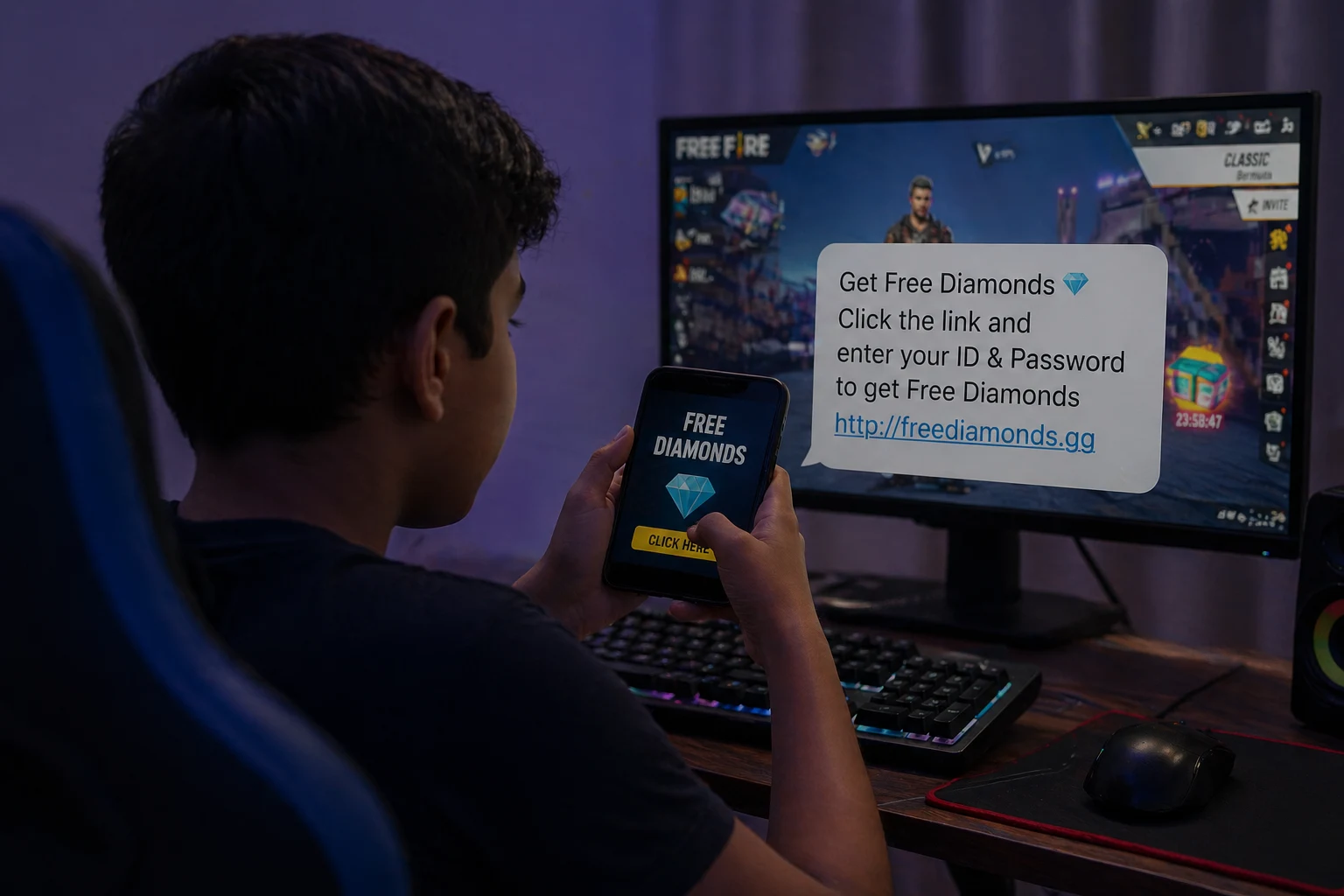
This is the most common trap. Your child is playing Free Fire or BGMI and comes across a YouTube comment, a WhatsApp forward, or an Instagram link that says something like:
“Get 10,000 Free Diamonds instantly! No survey! 100% working!”
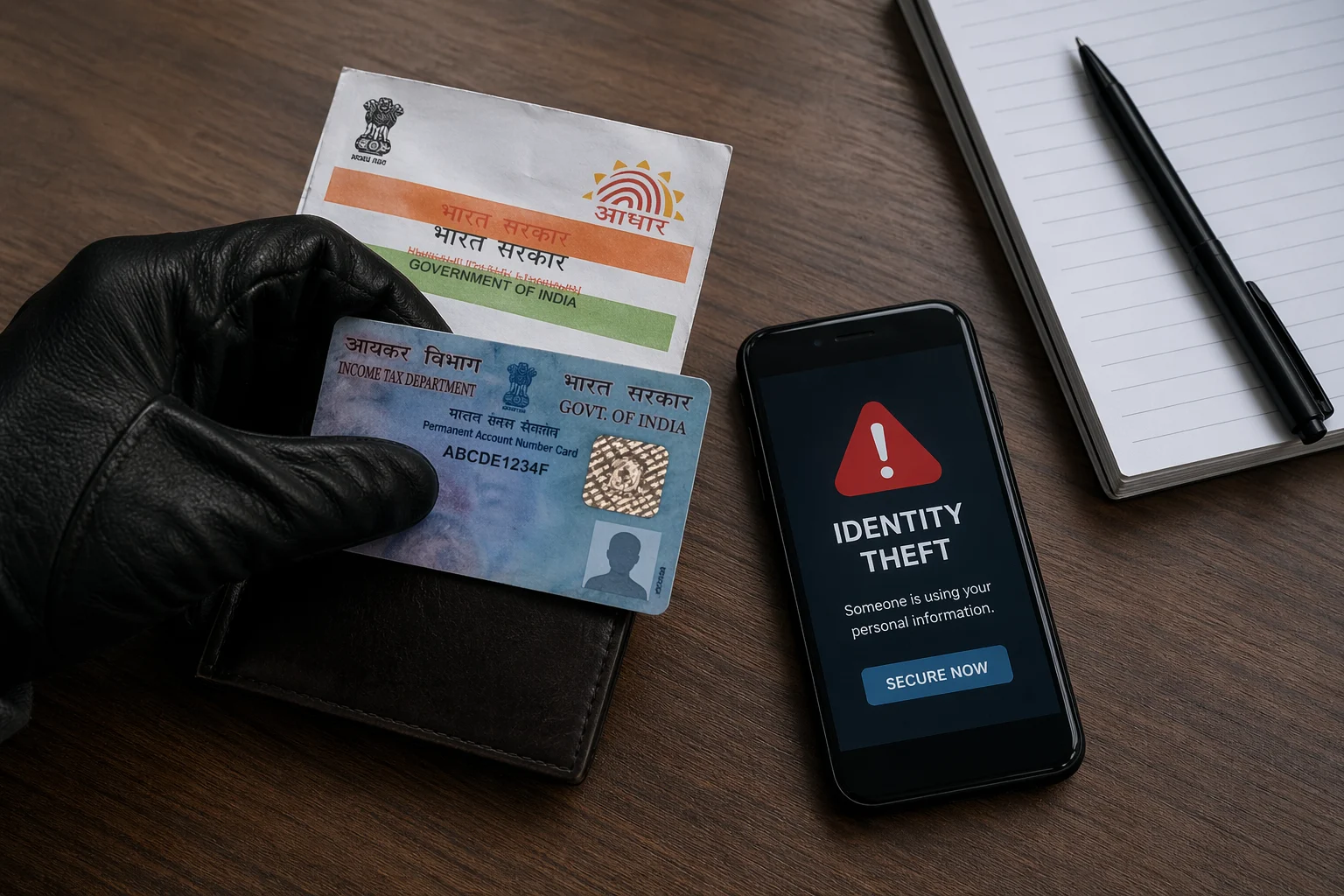
They click it, type in their game ID, sometimes even their password. The site looks real enough. What they do not know is that it was built to steal exactly what they just typed in. Some of these sites go further and ask for an OTP to verify the diamond transfer. The moment your child shares that OTP, whoever is on the other end has access to the UPI app or bank account on that phone.
Krafton, the company behind BGMI, ran an awareness campaign in 2025 specifically because thousands of players had fallen for fake UC generator sites designed to look identical to Codashop.
2. Fake Codashop and Top-Up Sites
Codashop is a legitimate platform where players buy BGMI UC and Free Fire diamonds. Scammers build copies of it that look almost identical.
A kid searches for cheap UC India or Free Fire diamonds discount and lands on one of these fake pages. They pay via UPI. The money leaves their account and nothing arrives. Some of these sites also quietly save the UPI details and card numbers entered, and use them weeks later for transactions the family never notices until it is too late.
3. The Fake Friend Scam
This one does not happen overnight. A stranger sends a friend request on the game, on Discord, or on Instagram. They play together for days, sometimes weeks. They seem genuinely friendly. Then slowly things shift:
- They mention a special method to get free UC or diamonds
- They ask for the game account login to transfer the rewards themselves
- They ask for an OTP claiming it is needed for verification
- They start asking for small amounts of money, saying they are in trouble
In the Ajmer case from December 2025, this is exactly how it started. A friendship on Free Fire. Weeks of playing together. Then access to the family’s phone and bank account. Rs 10.85 lakh gone.
4. Fake Game Customer Support Scams
The message comes on WhatsApp or Instagram and sounds urgent:
“Your account has been flagged for suspicious activity. Share your login details within 24 hours or your account will be permanently banned.”
A kid who has spent months building their account reads that and panics. They share what is asked. The scammer gets in, takes over the account, and in many cases comes back demanding money to return it or threatening to report the account themselves.
No game company, whether it is Free Fire, BGMI or Roblox, will ever contact a player through WhatsApp or Instagram. Every real communication from these companies happens through the official app or the registered email address. Nothing else.
5. Fake Mod, Skin, and Cheat Download Scams
Kids searching for “Free Fire mod apk” or “BGMI unlimited UC hack download” end up downloading malicious files. These files infect the phone with malware that:
- Steals saved passwords
- Monitors banking apps
- Sends all OTPs to the scammer without the user knowing
- Accesses the camera and microphone
Kaspersky research shows that over 3 million attack attempts were made on young gamers through malicious mod downloads in just one year.
6. Gaming Tournament and Prize Scams
Fake tournament announcements are sent through WhatsApp groups or Instagram pages. They promise cash prizes of Rs. 50,000 or more for winning a Free Fire or BGMI tournament.
To register, kids are asked to pay a small “entry fee” of Rs. 100 to Rs. 500 via UPI. Once paid, the scammer disappears. There is no tournament. This scam runs on volume. If 1,000 kids each pay Rs. 200, the scammer makes Rs. 2 lakh in a day.
7. Roblox Robux Generator Scams
Roblox is extremely popular among kids below 14 in India. Scammers set up fake “Robux generator” sites promising free Roblox currency. These sites ask for the child’s Roblox username and password to “credit the Robux.”
Once the scammer has the login details, they take over the account and steal any Robux or rare items the child has collected. In some cases, they access the email linked to the account and use it for further fraud.
Warning Signs Your Child May Be Getting Scammed
Watch out for these red flags:
- Your child has become secretive about what they are doing on their phone
- You notice UPI transactions or bank debits you never authorized
- Your child seems anxious, scared or unusually emotional after gaming
- They keep asking for money for game items more than usual
- Their game account suddenly loses all progress or gets locked out of nowhere
- They are receiving calls or messages from unknown numbers related to gaming
- You find unfamiliar apps downloaded on your phone or theirs that nobody can explain
How to Protect Your Child: A Step-by-Step Guide for Parents
Step 1: Have an Open Conversation First
Before you set any rules or take away any devices, just talk to your child. Ask them what games they play, who they talk to online, and what kind of rewards they are chasing. Kids who feel safe talking to their parents are the ones who come to them when something feels wrong. That conversation is worth more than any parental control app.
Step 2: Disable In-App Purchases
This one is simple and takes two minutes. On Android, open Google Play Store, go to Settings and turn on purchase authentication so every transaction needs a password. On iPhone, go to Screen Time and block in-app purchases from there. Do this today before you forget.
Step 3: Never Link Your Main Bank Account to a Gaming App
If your child wants to make a legitimate purchase, set up a separate prepaid card or wallet with a small fixed amount. Your primary salary account or main UPI ID should never be anywhere near a gaming app.
Step 4: Teach Kids These Rules
Sit down with your child and go through these one by one:
- Free diamonds, free UC and free Robux do not exist. Every single site claiming otherwise is trying to steal something
- Never share your game password with anyone online, even someone you have been playing with for months
- Never share an OTP with anyone claiming to be from game support
- Real game support never reaches out on WhatsApp or Instagram. Ever
- Never download mod APKs or cheat tools from outside the official app store
- If anything feels uncomfortable or wrong, come and tell us. No scolding, no lecture, just tell us
Step 5: Check Suspicious Links Before Clicking
Your child gets a link promising free rewards or entry into a tournament. Before anyone clicks it, run it through ScamDekho’s website Checker free. Takes five seconds and could save a lot of trouble.
Step 6: Check Suspicious Messages
Someone claiming to be from BGMI or Free Fire support slides into your child’s WhatsApp or Instagram. Before your child replies or clicks anything, put that message through ScamDekho’s Scam Message Checker first.
Step 7: Enable Google Play Family Library and Parental Controls
Google Play lets you set up a family group where every purchase your child tries to make needs your approval first. Set this up on every device they use for gaming and you will never get a surprise transaction again.
What to Do If Your Child Has Already Been Scammed
Act fast. Here is exactly what to do:
Immediately:
- Call your bank or open your banking app and block the UPI ID or card that was used
- Change the passwords of every account your child may have shared, their game account, email and Google account
- Check for any apps downloaded recently and uninstall them right away
Within a few hours:
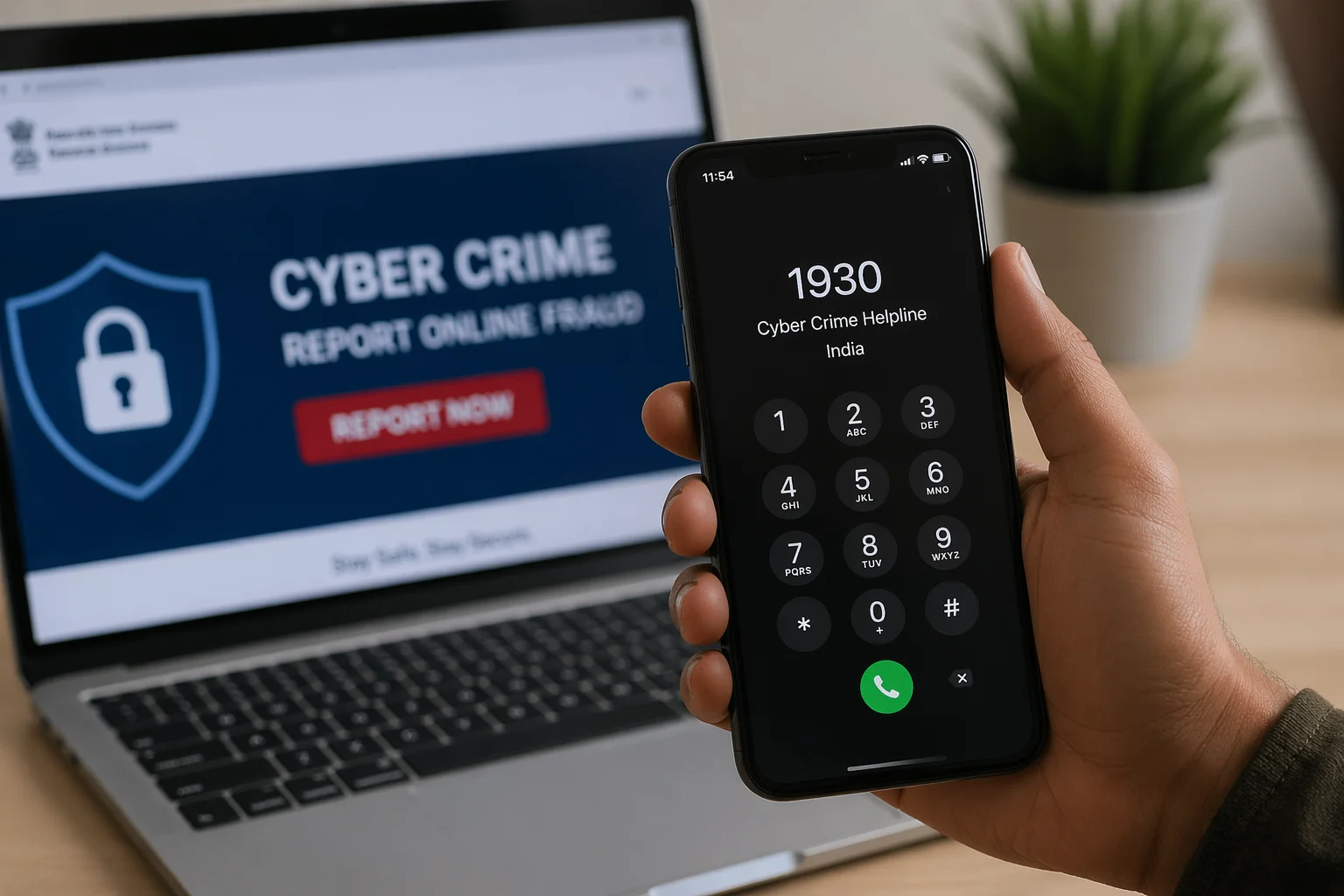
- Call 1930, India’s national cyber crime helpline. The sooner you call the better the chance of freezing the transaction before the money is withdrawn
- File a complaint on cybercrime.gov.in
Within 24 hours:
- File a formal FIR at your nearest police station
- Carry all screenshots, transaction IDs and the scammer’s contact details with you
One last thing. Do not blame your child and do not let them feel ashamed. These scams are built to fool adults too. What happened is not their fault. What matters right now is moving fast.
You can also read our complete guide on how to recover money lost in an online scam in India for a detailed recovery process.
Safe Ways to Buy In-Game Currency in India
If your child wants to buy diamonds, UC or Robux, here are the only safe ways to do it:
- Free Fire Diamonds: Only through the official Free Fire app or Garena’s official website
- BGMI UC: Only through the in-game store or the official Codashop website at codashop.com
- Roblox Robux: Only through roblox.com or through the app on Google Play or the App Store
- Google Play Gift Cards: Only from authorized retailers like Amazon, Flipkart or a physical store you trust
Never buy from individual sellers on Instagram, no matter how cheap the price looks or how many positive comments their post has. That is where most of these scams begin.
A Note for Parents
Your child is not stupid for falling for these scams. These traps are designed by adults who spend hours studying what kids want and how they think. The 14-year-old in Panchkula, the child in Ajmer, and Akshay Kumar’s daughter were all targeted by professionals at manipulation.
The best protection is not restrictions alone. It is trust. A child who knows they can come to you without being shouted at will come to you when something feels wrong. That conversation can save your family from serious financial and emotional damage.
Frequently Asked Questions
Nope, never. They are all fake. Not a single one works. Only official game events give free stuff, nothing else.
Three ways mostly. Fake websites that look like the game login. Mod APKs with hidden malware. Or someone your child thinks is a friend slowly gains trust and asks for the password directly.
Yes. Some links start downloading malware without even asking. That malware sits quietly and reads OTPs, opens banking apps, tracks everything. Do not click random gaming links without checking first.
Only from Codashop.com. That is it. Any other website selling UC at a lower price is fake, period.
UPI payment? Call your bank right now and raise a dispute. Google Play or App Store? Go to their refund page and apply today. Every hour you wait makes it harder.
Most games allow 13 and above. Below that, stay away from online multiplayer. Even at 13, keep checking who they talk to and what they share in-game chats.
Block immediately. Report inside the game. And tell you. That is the only right answer. Anyone asking a child for money online is not a friend, they are a scammer.