You got a job offer. Or maybe someone is asking you to pay before your first day. It looks real. The logo is there. The letter has your name on it.
But is the company actually real?
Every day in India, people lose money or personal data to companies that exist only on paper or not at all. The scary part is that most victims trusted the offer because it “looked legitimate.”
This guide will show you exactly how to verify any company in India before you join, sign anything, or send a single rupee.
Why Does This Matter?
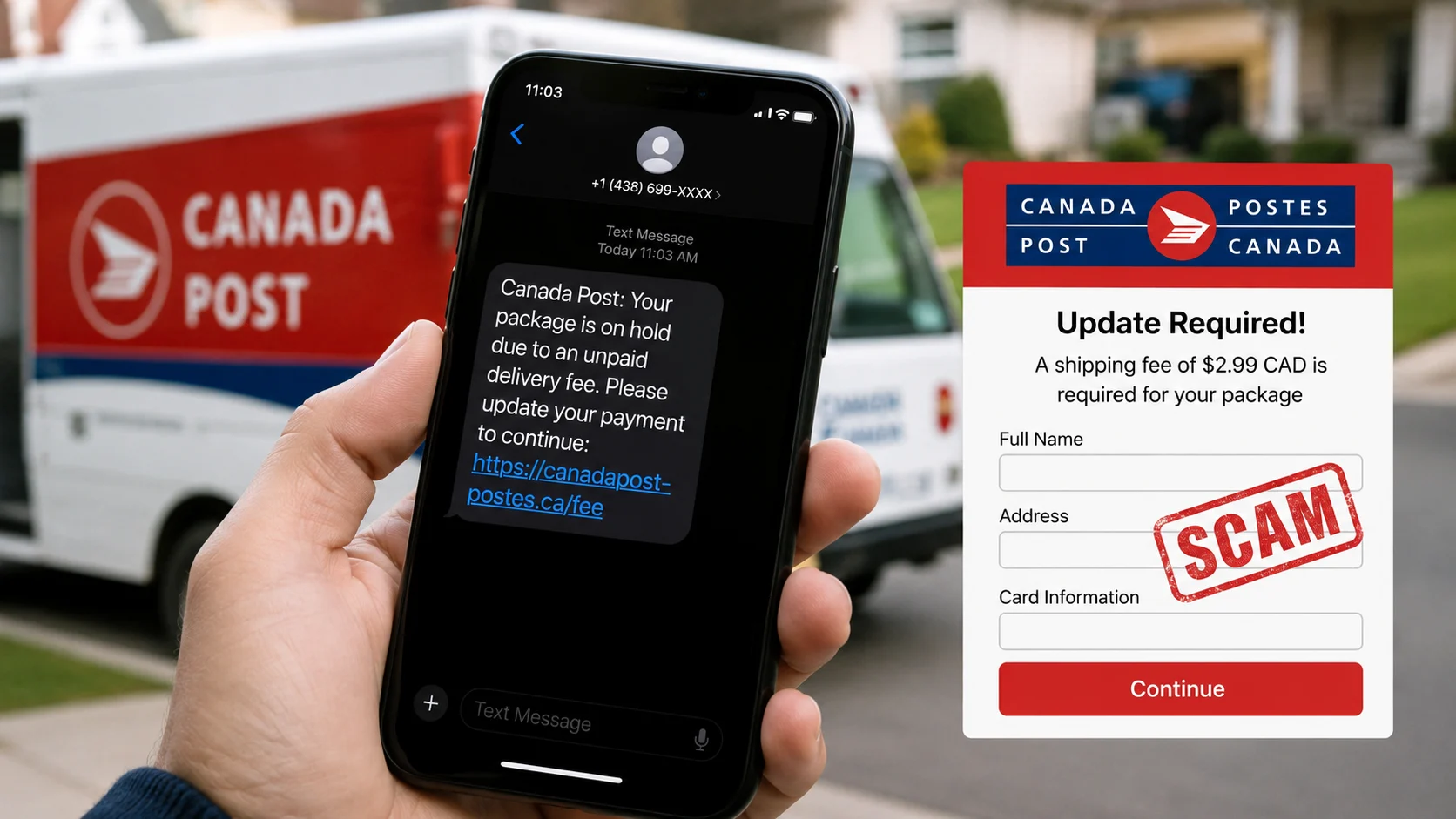
Fake company scams are not just about job offers. People get scammed when:
- A “company” sends a job offer and asks for a security deposit
- Someone sells a product or service in a company’s name that does not exist
- A recruiter collects your Aadhaar and PAN “for onboarding” and disappears
- A vendor asks for advance payment and ghosts you
The damage is not just financial. Once your documents are out, they can be used for identity fraud.
If someone is asking you to trust a company, verify it first. It takes less than 10 minutes.
Step 1: Check the Company on MCA Portal (Free and Official)
The Ministry of Corporate Affairs (MCA) maintains a public database of every registered company and LLP in India. This is your first and most important check.
Here is how to do it:
- Go to mca.gov.in
- Click on MCA Services in the top menu
- Select View Company/LLP Master Data
- Enter company name or its CIN (Corporate Identification Number)
- Click Submit
You will see the company’s registration status, date of incorporation, registered address, director names and filing history. No account needed, no payment, nothing.
What you are looking for:
- Status should be Active. If it says “Strike Off” or “Under Process of Striking Off,” stop immediately. Do not pay, do not share documents, do not join.
- The registered address should roughly match what the company told you.
- There should be recent annual filings (MGT-7 and AOC-4). A company with no filings for years is a red flag.
Important note: This only works for Private Limited companies, Public Limited companies, and LLPs. Sole proprietorships and general partnerships are not registered on MCA. If a company claims to be a “Private Limited” but has no MCA record, that is a major warning sign.
Step 2: Verify the GST Number
Any business in India with a turnover above a certain threshold must register for GST. Most genuine businesses will have a GSTIN.
To verify:
- Go to gst.gov.in
- Click on Search Taxpayer
- Enter the GSTIN shared by the company
This will show the legal name, registration status and business type. If the details do not match what the company told you, something is off.
If a company is claiming to be a large business but has no GST registration, ask them to explain. Most genuine companies will have one.
Step 3: Check the Email Domain
This one is simple but it catches a lot of fakes.
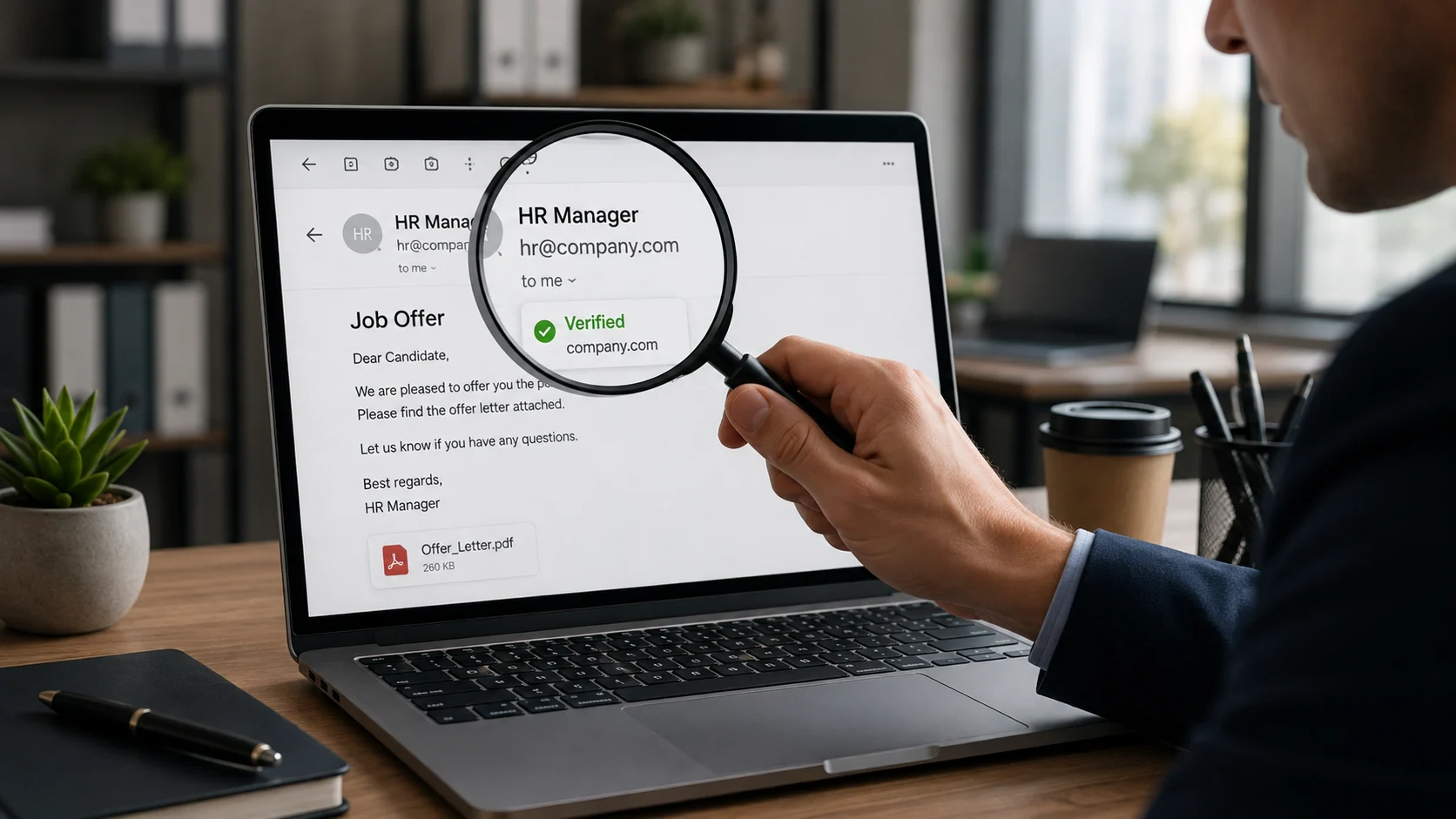
Real companies use their own domain for email. That is just how businesses work.
- hr@infosys.com is a real company email
- infosys.hr.jobs@gmail.com is not
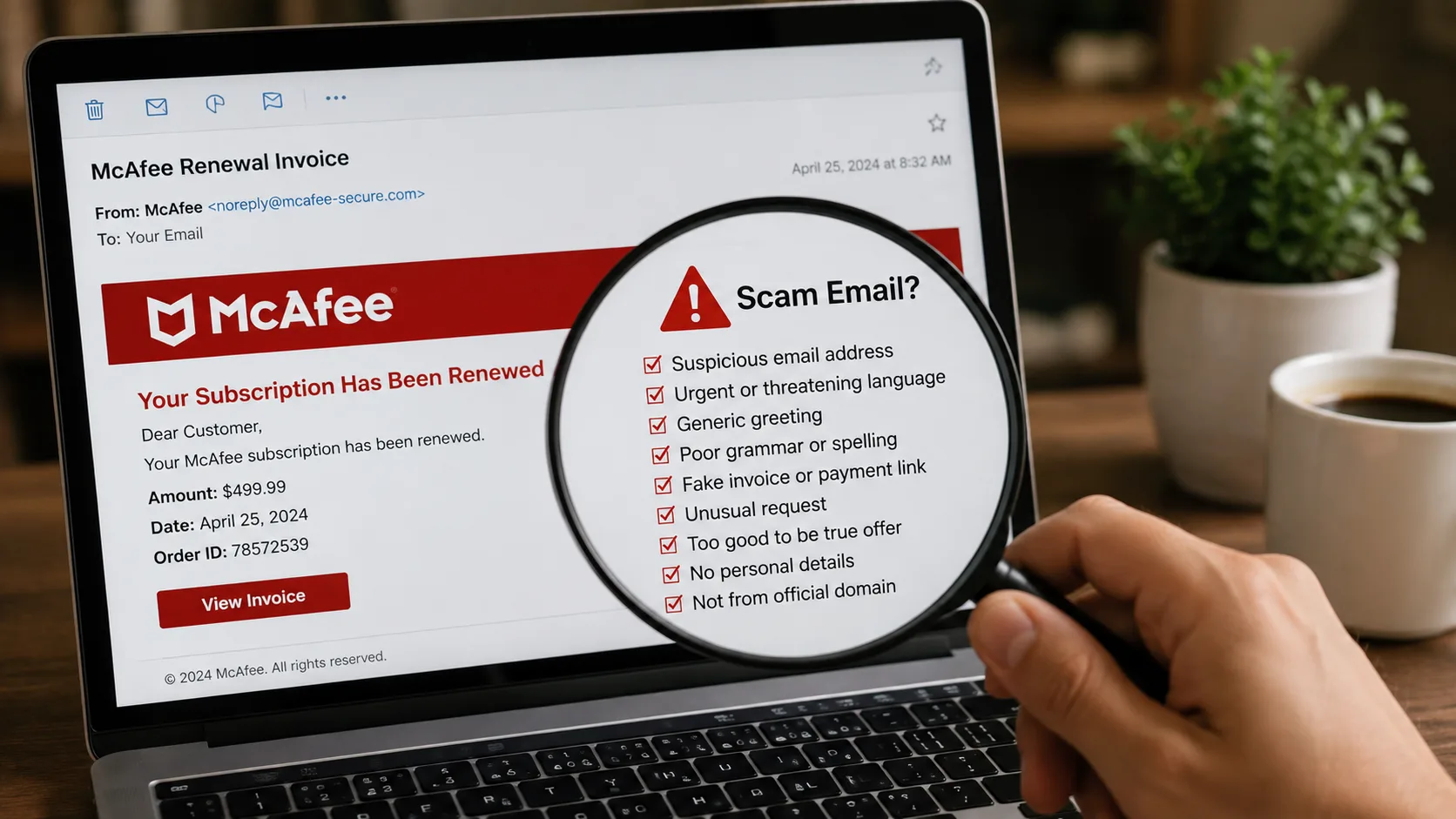
If someone is contacting you from a Gmail, Yahoo or Outlook address while claiming to represent a company, stop and think before you respond. It does not always mean it is a scam but it means something is worth checking.
Google the company name, find their actual website and see if the email domain matches. Takes two minutes.
Also watch out for domains that look almost right but are not. Scammers register things like tata-careers.com or infosys-hr.com specifically because they look convincing at a quick glance. Read the domain carefully every single time.al. Always check the actual official website domain.
Step 4: Look Them Up on LinkedIn
Go to LinkedIn and search for the company by name. A genuine business of any size will have a LinkedIn page with employees, a description, and some activity.
Check:
- Does the company profile exist and look active?
- Can you find the person who contacted you on LinkedIn?
- Do their work history and company connection look real?
If the “HR manager” who sent you an offer has a LinkedIn profile with no connections, a blank history, and was created last month, that is suspicious.
You can also search the name of the company on Google News to see if they have any press coverage, announcements, or complaints.
Step 5: Call the Company’s Official Number
Find the company’s phone number yourself. Go to their official website and get it from there, not from the offer letter and not from the recruiter’s message.
Then call and ask two simple questions:
- Is this person actually employed here?
- Do you have an opening for this role?
Five minutes. That is all it takes. And it catches fake offers almost every single time.immediately. Scammers cannot control calls to the real company.
Step 6: Check Glassdoor and Ambitionbox
These platforms have real employee reviews. Search the company name and see what past and current employees are saying.
Look for:
- Reviews mentioning salary not being paid
- Complaints about fake promises at the time of joining
- Warnings from other candidates who had similar experiences
No reviews at all for a company that claims to have 500 employees is itself a red flag.
You can also check platforms like Trustpilot or simply Google the company name with words like “fraud,” “fake,” or “complaint” to see if others have already flagged it.
Also Read: Matrimonial Scam in India: Fake Profiles, NRI Fraud and How to Stay Safe
Red Flags That Should Stop You Immediately
Before you verify anything else, these signs should make you stop and investigate:
- They are asking for money before you join. No genuine company in India charges candidates for joining, training, a laptop deposit, a security deposit, or anything else. This is the single biggest red flag. If money is being asked before your first working day, walk away.
- The offer came out of nowhere. You never applied. They somehow found you and are very eager to hire you. Real companies that are interested in you will always have a traceable hiring process.
- There is urgency. “Pay within 24 hours or the offer will be cancelled.” Real HR teams do not operate with this kind of pressure. This is a manipulation tactic.
- The salary is unusually high. A fresher being offered 80,000 per month for basic data entry work. Scammers use unrealistic salaries to attract attention.
- They want your documents early. Asking for Aadhaar, PAN, or bank details before you have even confirmed the job or met anyone in person is suspicious. Your documents are valuable. Share them only when you are sure the company is real.
What If You Already Paid or Shared Details?
If you already sent money:
- Call 1930 immediately. The faster you call the better the chance of freezing the transaction before it is withdrawn
- File a complaint at cybercrime.gov.in
- Call your bank and ask them to raise a dispute
If you already shared documents like Aadhaar or PAN:
- Keep a close eye on your bank accounts and credit report for anything unusual
- Lock your Aadhaar biometric temporarily on the UIDAI website
- Report the incident at cybercrime.gov.in
Read our guide on how to recover money lost in an online scam in India for detailed steps.
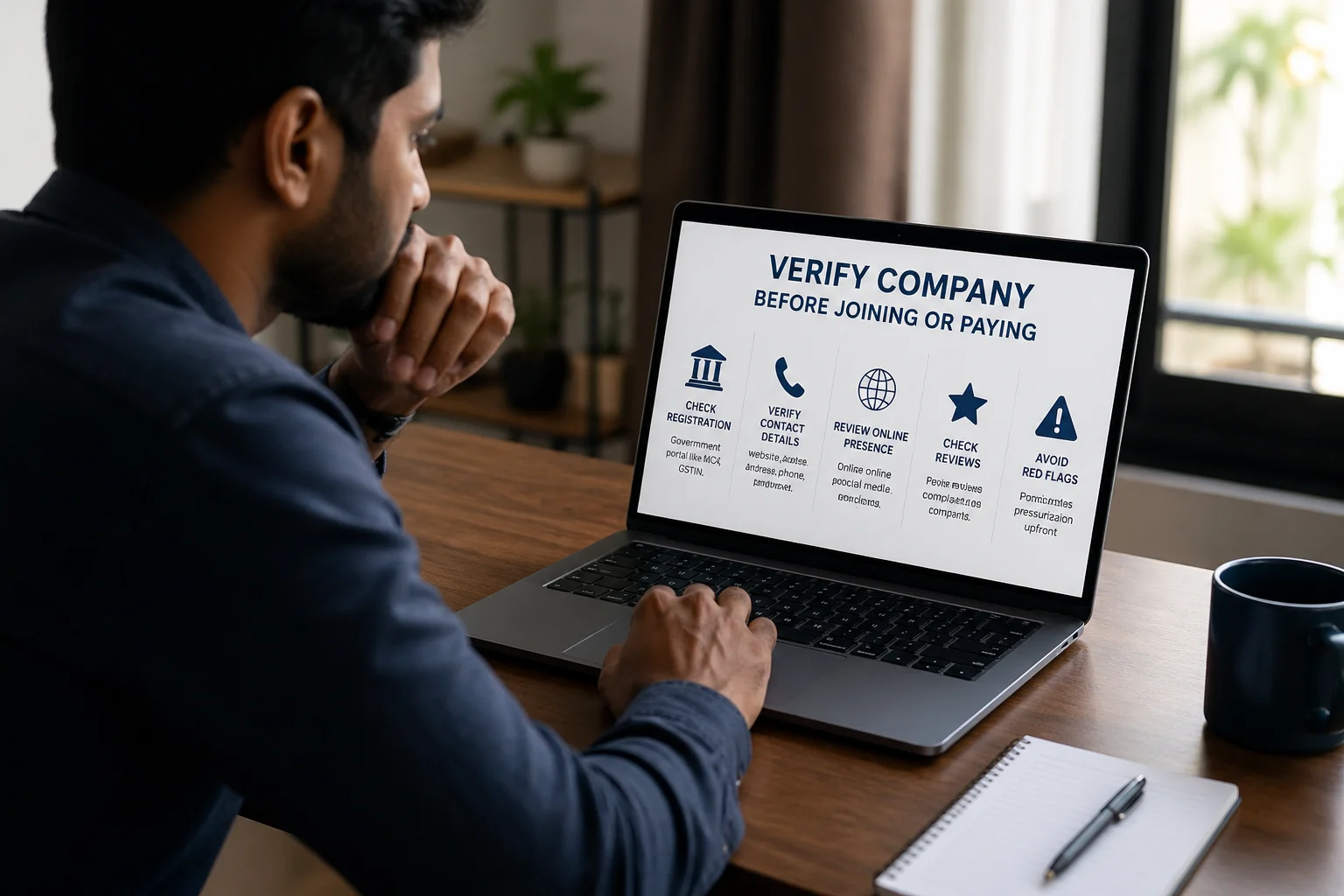
Quick Summary: Company Verification Checklist
Before you join or pay, check this:
- Search the company on the MCA portal. The status must show Active
- Verify their GSTIN on gst.gov.in
- Check that the recruiter’s email matches the company’s official domain
- Find the person on LinkedIn and make sure their profile looks real
- Call the company’s official number yourself and confirm the offer exists
- Look up reviews on Glassdoor or Ambitionbox
- If anyone asks for money at any point, stop everything and report it
One Rule That Never Fails
Employment is based on your skills, not your money. No real company charges you to work for them. No legitimate HR team asks for a security deposit before your joining date. No genuine recruiter needs you to pay for a background check, a training kit or an ID card.
If anyone at any point during a hiring process asks you to transfer money, pause everything. It does not matter how professional the offer letter looks, how many rounds of interviews you went through or how badly you need the job. The moment money is involved on your end, something is wrong.
Verify before you get excited. Check the company on the MCA portal. Confirm the email domain. Call the official number. Look up the recruiter on LinkedIn. Five minutes of checking can save you months of regret.
And if something feels off, trust that feeling. Not every red flag is obvious. Sometimes it is just a gut sense that something does not quite add up. Do not talk yourself out of it. Check first, join later.