Australians lost $2.18 billion to scams in 2026. And the scariest part? The scams hitting hardest right now are not your old-school “Nigerian prince” emails. They look real. They sound real. They feel real.
That is because they are built with AI.
If you bank online in Australia, this directly affects you. Here is everything you need to know.
What Are AI Powered Bank Scams?
AI powered bank scams use artificial intelligence to make fraud attempts look and sound far more convincing than before. Scammers are no longer sending poorly written emails full of typos. They are creating:
- Deepfake videos of celebrities promoting fake investments
- Voice clones of your family members asking for urgent money transfers
- Personalised phishing emails that reference your real name, bank, and recent activity
- Fake investment ads polished to look like legitimate financial products
ASIC Commissioner Alan Kirkland put it plainly in April 2026: scammers are using AI to make fake investment ads look more polished, more convincing, and harder to spot.
The result? Investment scams alone cost Australians $837.7 million in 2026.
How Scammers Are Using AI Against Australians Right Now
1. Deepfake Celebrity Investment Ads
This is one of the fastest-growing AI scam types in Australia. Scammers clone the faces and voices of well-known Australians, such as business figures and TV personalities, and use them in fake investment videos shared on Facebook, Instagram, and YouTube.
The video looks completely legitimate. The “celebrity” explains why they invest in a particular platform and urges viewers to sign up fast.
Once you deposit money, it disappears.
ASIC removed more than 1,100 investment scam ads from social media in 2025 and took down 11,964 scam websites in the same period, which is a 90% jump compared to the year before.
Source: ASIC
2. AI Voice Cloning and the “Hi Mum” Scam
You get a call. It is your daughter’s voice. She is crying. She says she is in trouble and needs you to transfer money immediately.
Except it is not your daughter. It is an AI voice clone built from a few seconds of audio scraped from her social media.
Westpac’s Head of Fraud Prevention, Ben Young, warned in April 2026 that scammers are moving well beyond generic phishing into highly targeted attacks that feel intensely personal.
3. AI Powered Phishing Emails and Texts
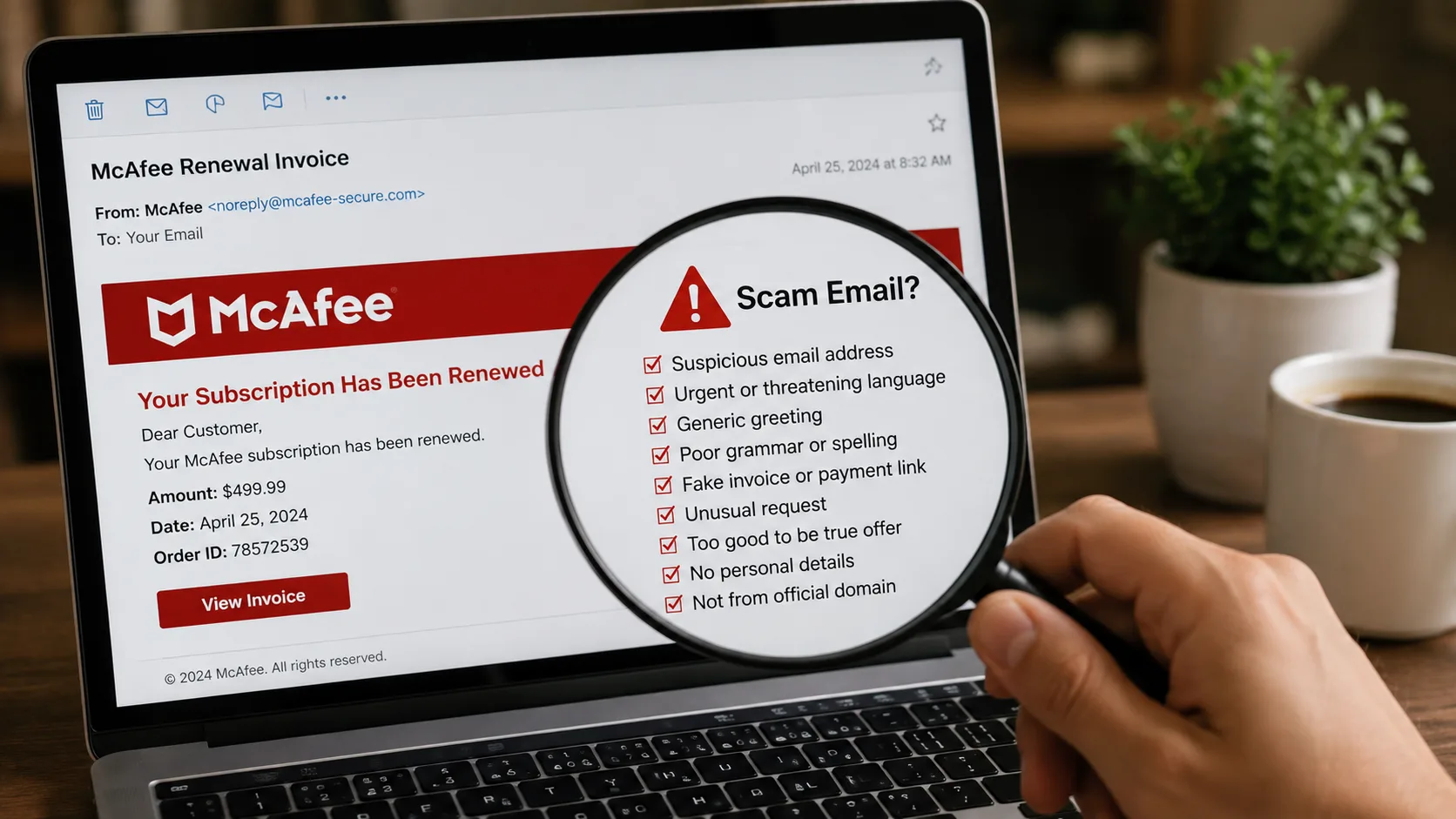
Old phishing emails were easy to spot because of the grammar mistakes and generic greetings. Not anymore.
Today’s AI generated phishing messages use your correct name, mention your bank by name, and sometimes even reference a recent transaction. They mimic the exact tone and design of official bank communications.
One click on the wrong link can hand over your internet banking login.
4. AI Used for Property and Loan Fraud
This one is bigger than most Australians realise. In early 2026, Commonwealth Bank alerted authorities after identifying a suspected $1 billion loan fraud racket where AI was allegedly used to generate fake financial documents. Fraudsters used artificial documents to obtain home loans for shell companies and luxury properties.
This shows AI bank scams are not just targeting everyday Australians at home. They are attacking the financial system at scale.
Fake SMS and Scam Call Examples
Scammers are getting smarter, and honestly, it’s getting harder to keep up. They’re now using AI-generated messages and cloned voices to pull off banking scams that look and sound like the real deal. Plenty of Aussies have already been caught out by fake SMS alerts pretending to be from CommBank, NAB, ANZ, and Westpac.
Here are some examples that have actually been sent to real people:
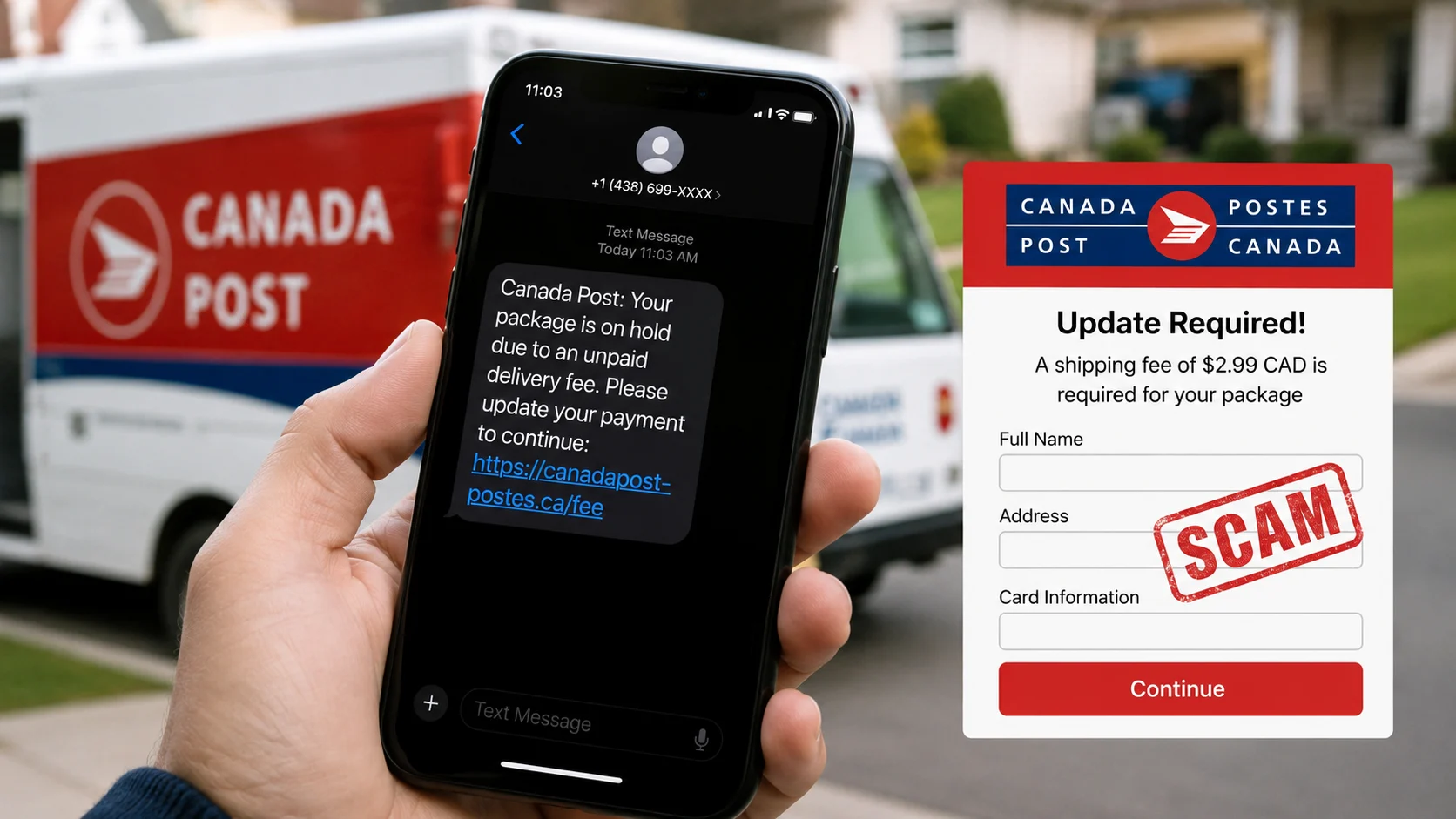
“Your CommBank account has been temporarily locked due to suspicious activity. Verify now to avoid account suspension.”
“NAB Security Alert: A payment attempt was detected on your account. Confirm immediately.”
“Hi Mum, I lost my phone and can’t access my bank account. Please transfer money urgently.”
These messages are written to make you panic on the spot. Before you’ve even had a chance to think it through, you’re already clicking a dodgy link or transferring money to someone you’ve never met.
Signs an AI Bank Scam Call Is Fake
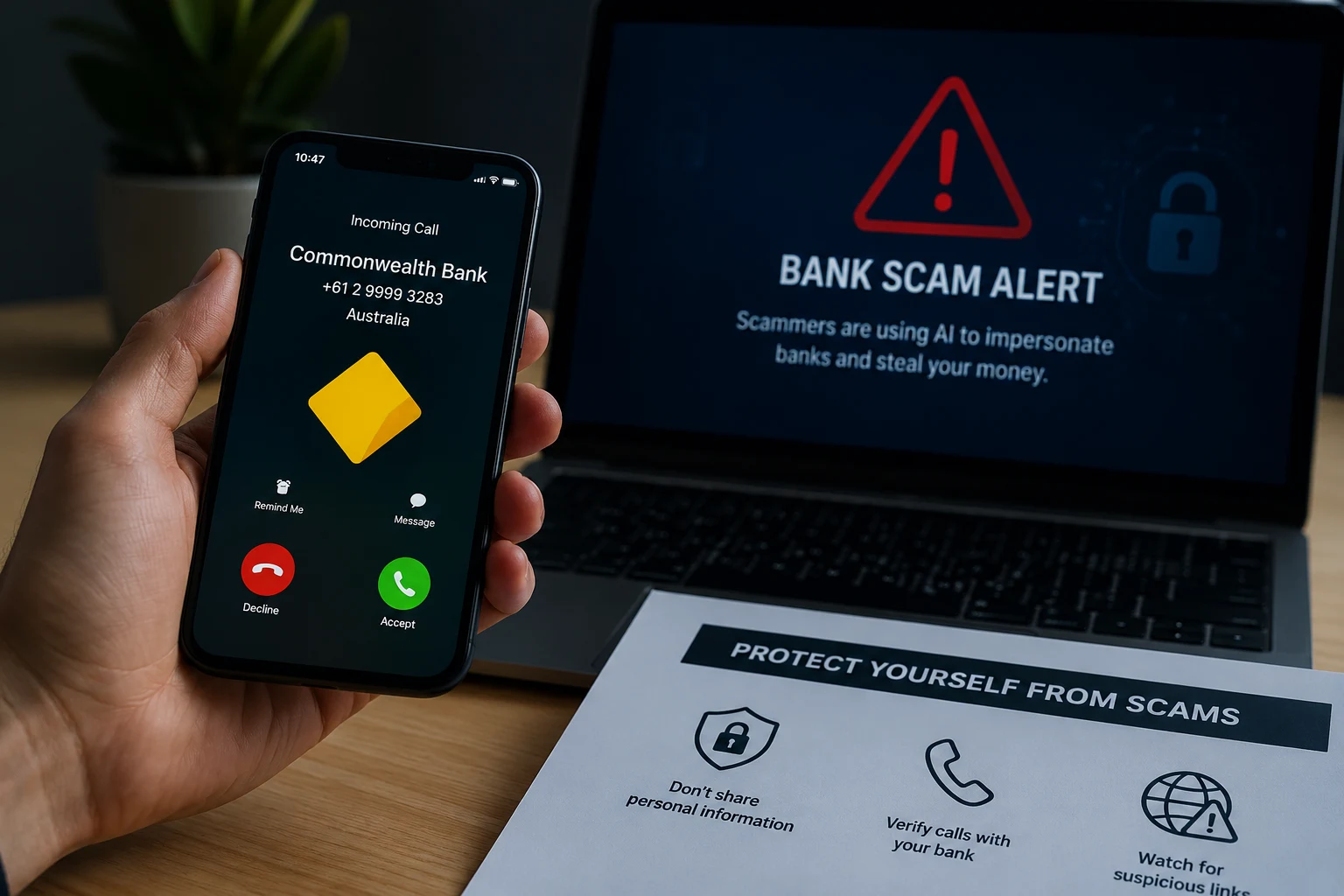
AI-powered scam calls have gotten scarily good, but if you know what to look for, the cracks start to show pretty quickly. Here are some things that should immediately get your guard up:
- The caller is pushing you to act right now, no time to think
- They’re asking for your OTP, PIN, or internet banking password
- The message has a link that just doesn’t look right
- You’re being told to transfer money on the spot
- They want you to download software so they can access your device remotely
- The voice on the other end sounds a bit off, almost too smooth or robotic
- They’re telling you not to call your bank directly, which is a massive red flag
Here’s something worth remembering. Your bank will never ask for your internet banking password, PIN, or any verification codes over the phone or by SMS. Ever. If someone is asking for that stuff, it is not your bank.
Most Targeted Australian Banks in AI Scams
Scammers aren’t picking banks at random. They go after the big names because people are more likely to trust them without questioning. In 2026, customers of these four banks are being hit the hardest:
- Commonwealth Bank (CommBank)
- NAB (National Australia Bank)
- ANZ
- Westpac
The fake messages, cloned support calls and phishing emails being sent out are frighteningly close to the real thing. If something feels a bit suss, skip the link or number they’ve given you and head straight to your bank’s official app or website to check.
Real vs Fake Bank Messages
| Real Bank Message | Scam Message |
|---|---|
| Uses official bank domains | Contains suspicious or shortened links |
| Does not create panic | Uses urgent or threatening language |
| Never asks for OTPs or passwords | Requests verification codes or passwords |
| Encourages contact through official support | Pressures you to act immediately |
| Appears inside official banking apps | Sent through random numbers or emails |
How Good Are Australians at Spotting AI Scams?
Not as good as they think.
CommBank research from January 2026 found that 89% of Australians are confident they can spot an AI-generated scam. But when tested, they could only correctly identify real versus AI-generated images 42% of the time. That is actually worse than a random guess.
Even Australians aged over 65 were only 6% less accurate than younger people. AI scams fool everyone.
The gap between confidence and reality is exactly what scammers are exploiting.
How Australian Banks Are Fighting Back
The good news is that Australian banks are not sitting still.
CommBank has deployed an advanced AI agent that monitors over 20 million payments per day and sends more than 40,000 proactive scam alerts daily through the CommBank app. The system helped reduce customer fraud losses by over 20% in the first half of the 2026 financial year.
CommBank also partnered with Apate.ai, an Australian AI company, deploying 10,000 AI voice bots and 25,500 messaging bots that engage with scammers in real time, waste their time, and collect intelligence on how they operate.
Westpac launched SaferPay, an AI-powered system that detects high-risk payments and stops suspicious transactions before they go through. Since launch, Westpac has saved customers over $400 million from being lost to scammers.
Despite all this, no bank system is foolproof. Your own awareness remains the strongest line of defence.
How to Protect Yourself from AI Bank Scams in Australia
These steps are recommended by ASIC, CommBank, Westpac, and the Australian Banking Association:
- Stop before you act. If anything creates urgency or pressure, that is your signal to pause. Scammers rely on panic to make you act before you think.
- Verify through a separate channel. If you get a call from someone claiming to be your bank or a family member, hang up and call them back on a number you already know. Do not use the number from the message.
- Set up a family safe word. This is something Australians rarely do but absolutely should. Only 1 in 5 Australians have a family safe word to confirm identity, despite 74% agreeing it is a good idea. Pick a word only your family knows and use it to verify urgent calls.
- Use CommBank CallerCheck or Westpac push notifications. These tools let you verify in the app whether someone claiming to be from your bank is genuinely calling from there.
- Check investment opportunities on ASIC’s register. Before putting any money into an investment you found on social media, search the company at asic.gov.au. Always verify they hold an Australian Financial Services Licence.
- Report scams immediately. If you think you have been targeted, contact your bank straight away and report to Scamwatch at scamwatch.gov.au.
What to Do If You Have Already Been Scammed
If you have already transferred money or shared your banking details:
- Call your bank immediately using the number on the back of your card
- Report the scam to Scamwatch (scamwatch.gov.au)
- Lodge a report with the Australian Cyber Security Centre (cyber.gov.au)
- If identity theft is involved, contact IDCARE (idcare.org)
Acting fast is critical. The sooner your bank knows, the better the chance of stopping or recovering the transfer.
The Bottom Line
AI powered bank scams in Australia are not a future threat. They are happening right now, at scale, and they are designed to fool even careful, tech-savvy people.
The technology scammers are using is becoming cheaper and more accessible every month. But the core defence has not changed. Slow down. Verify independently. Never act under pressure.
And if something does not feel right, it probably is not.