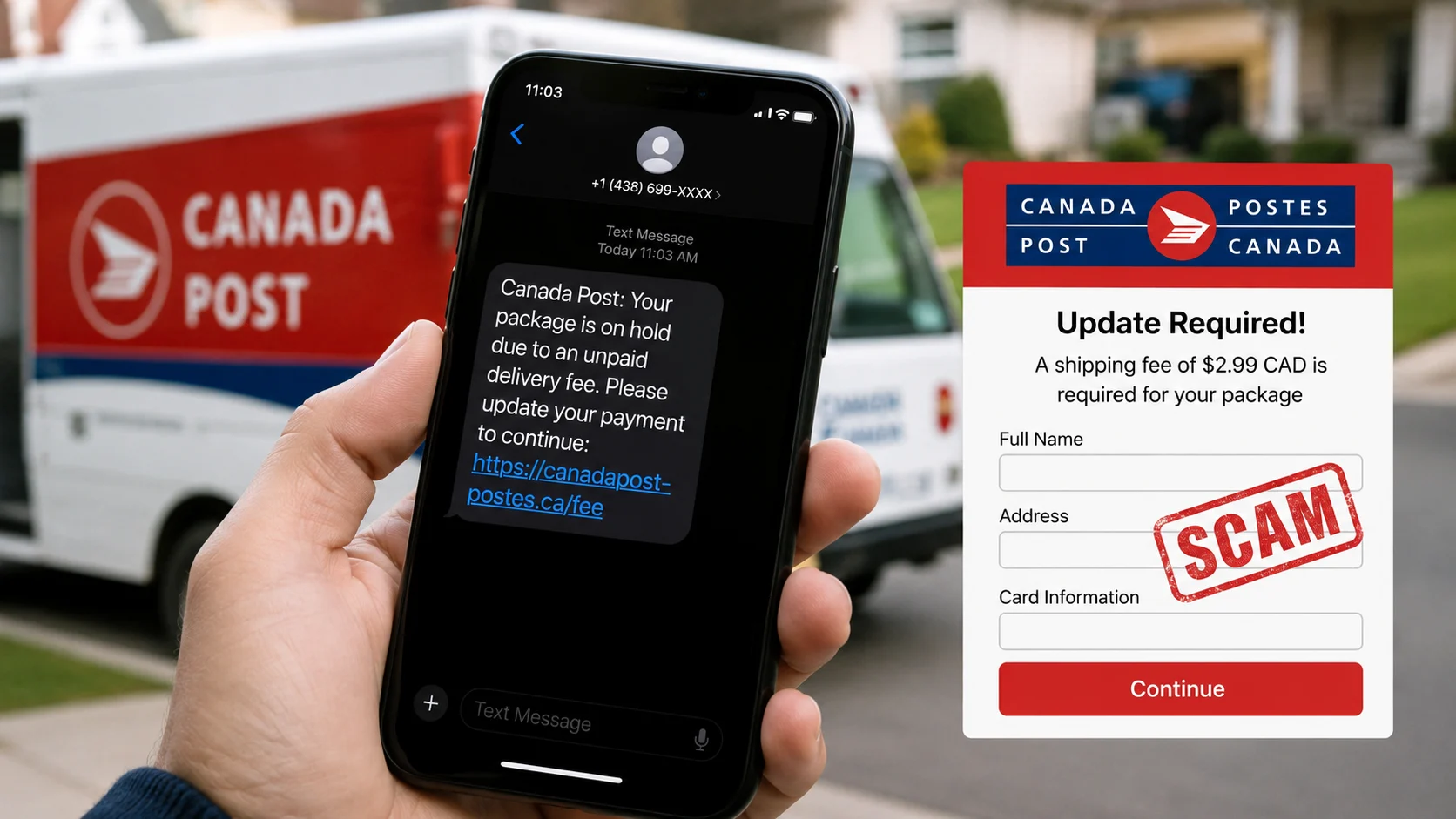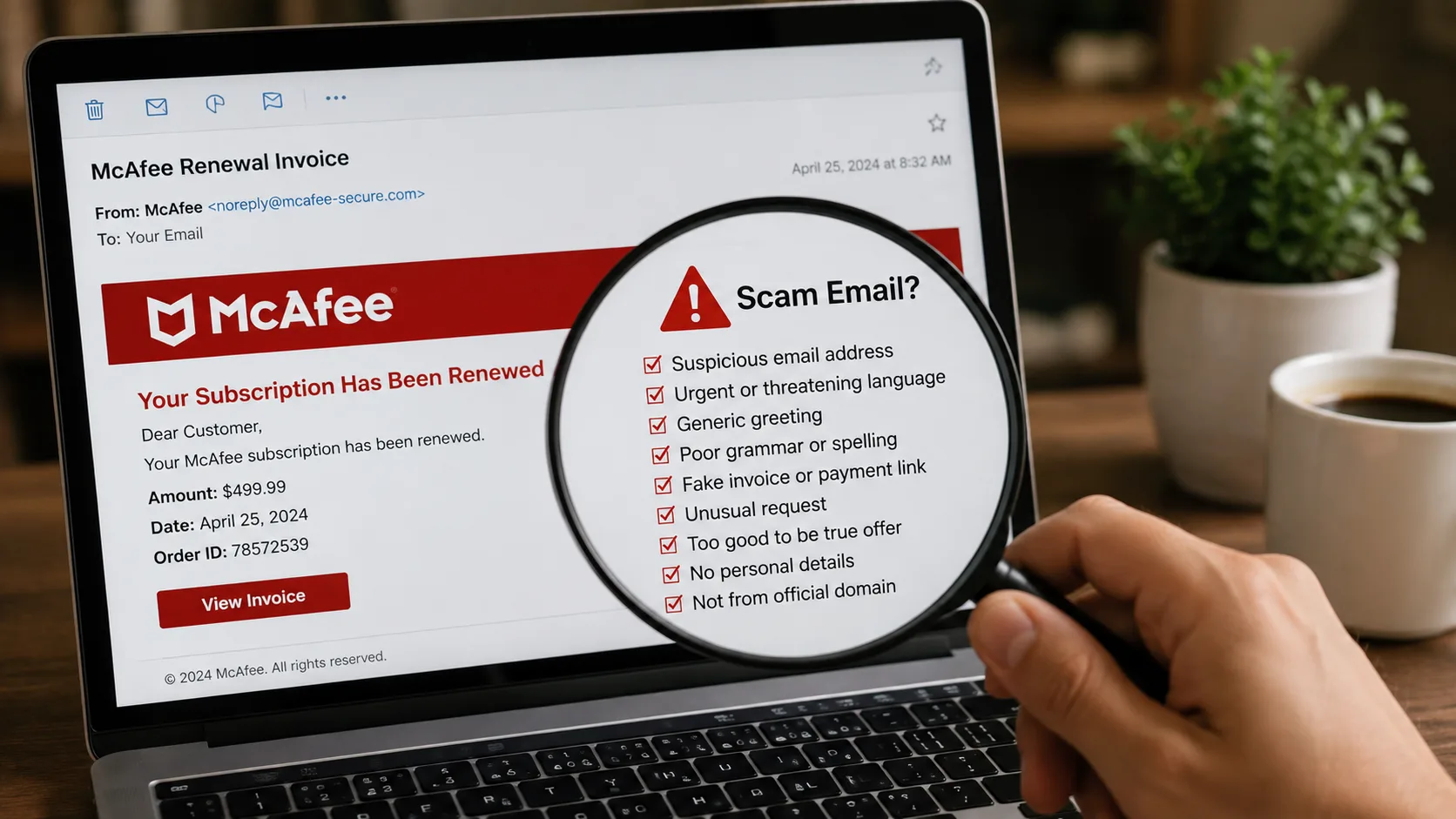
You get a message out of nowhere. “Hi, I have a part-time job opportunity for you. Simple tasks, no joining fee. You can earn ₹500 to ₹5,000 per day from home.”
It sounds harmless. Even exciting.
But thousands of Indians who responded to exactly this kind of message have lost anywhere between ₹10,000 and ₹51 lakh. Not because they were careless. Because the scam is designed to look completely real.
This is the Telegram task scam. And it is currently one of the most active cyber frauds in India.
What Is the Telegram Task Scam?
The Telegram task scam is a type of online job fraud where scammers contact you through WhatsApp, Telegram, or SMS with a fake work-from-home offer. The job involves simple tasks like liking YouTube videos, rating hotel listings, subscribing to channels, or adding products to a shopping cart.
The scam works in two phases. First, they pay you small amounts to build your trust. Then, they trap you into making large payments by promising bigger returns — which never come.
By the time most victims realize what has happened, they have already transferred lakhs into the scammer’s account.
How the Scam Works: Step by Step
Understanding the exact pattern is the best way to protect yourself.
Step 1: The First Message
You receive a message on WhatsApp, Telegram, or SMS from an unknown number. The message offers a simple part-time job — rating products, completing surveys, or liking videos. There is no joining fee mentioned. The tone is friendly and professional.
Step 2: You Are Added to a Telegram Group
Once you show interest, you are added to a Telegram group. The group has multiple members who regularly post screenshots of their earnings. These are fake accounts playing the role of “happy workers” to make the group look legitimate.
Step 3: The First Task — Small and Paid
You are assigned a simple task. Like a YouTube video, subscribe to a channel, or rate a product. Once done, you receive a small payment — ₹150 to ₹500 — directly in your bank account or UPI. This is the trust-building phase.
Step 4: Bigger Tasks, Bigger “Profits”
After a few paid tasks, you are told about “prepaid tasks.” These involve depositing a small amount — say ₹2,000 — to unlock a task that returns ₹3,500. The first round works. You get your money back plus profit. This is intentional. They are making you comfortable.
Step 5: The Trap
Now you are told about a high-value task that requires a deposit of ₹25,000, ₹50,000, or more. The fake dashboard on their app shows your balance growing. But when you try to withdraw, the system shows an error. You are told to pay more to “unfreeze” your account. This cycle continues until you stop paying or run out of money.
Step 6: They Disappear
Once they have taken enough money, the Telegram group is deleted. The website goes offline. All contact numbers stop responding.
Real Cases From India
1. Rohtak, Haryana — Jatin was 20-something, looking for extra income, when a Telegram message offered him a simple work-from-home job — rating hotels online. It sounded harmless. He joined a group, completed a few small tasks, and deposited ₹7,000. His dashboard showed ₹14,000 in returns almost immediately.
That moment of excitement cost him everything.
Encouraged by what looked like real profit, he kept investing. By the time he stopped, he had lost ₹10.14 lakh. A case was eventually registered at the cyber police station under the Bharatiya Nyaya Sanhita — but the money was gone.
2. Palanpur, Gujarat — A 28-year-old pharma executive received a Telegram message promising ₹5,000 to ₹20,000 per day working from home. He downloaded what he thought was a legitimate wallet app and started transferring money. Over the next two months, he made 18 separate transfers. Total loss: ₹9.21 lakh. The only amount he ever managed to withdraw was ₹1,300 — before the fraudsters blocked him and disappeared.
3. Hyderabad — An engineer lost ₹51 lakh to a Telegram group that claimed to be an e-commerce company called “P&B Solutions.” The job involved listing products online. The dashboard showed growing profits. Every time he tried to withdraw, they asked for one more deposit to unlock his earnings. The profits were fabricated. The company was fake. The money was gone.
And these are just three stories.
According to the Pune Cyber Cell, residents of Pune alone lost ₹27.23 crore to task-based fraud since 2023. Pune is one city. Imagine the national number.
Warning Signs You Must Know
The scam follows a predictable pattern. These are the signs that tell you something is wrong:
- Unsolicited job offer from an unknown number. No genuine employer contacts you randomly on WhatsApp or Telegram without you applying first.
- No interview, no verification, no joining process. Real jobs have a hiring process. If someone just adds you to a group and hands you work, that is a red flag.
- Small initial payments to build trust. Scammers always pay you first. This is not generosity. It is bait.
- A fake app or website with a “balance” you cannot withdraw. If your earnings are showing on a private app that you were asked to download, and withdrawals keep failing, you are being trapped.
- Pressure to deposit more to “unlock” funds. No legitimate employer will ask you to invest your own money to receive your salary.
- Fake testimonials in the Telegram group. Multiple members posting earnings screenshots are usually bots or scammer accounts.
Who Do These Scammers Target?
Scammers do not pick victims randomly. They go after specific people — and they are very good at finding them.
Their primary targets are people who genuinely need extra income. Students looking for pocket money between classes. Homemakers who want to earn something from home without a traditional 9 to 5 job. People who were recently laid off and are under financial pressure. Freshers who have been applying for months and still cannot find a full-time position.
These are people with a real need. And scammers know exactly how to speak to that need.
The promise of earning ₹500 to ₹5,000 per day — no skills required, no experience needed, work from your phone — is not a random pitch. It is carefully designed to appeal to people who feel like options are limited and time is running out.
That is what makes it so effective. And that is what makes it so cruel.
How to Recover Money Lost in a Telegram Task Scam
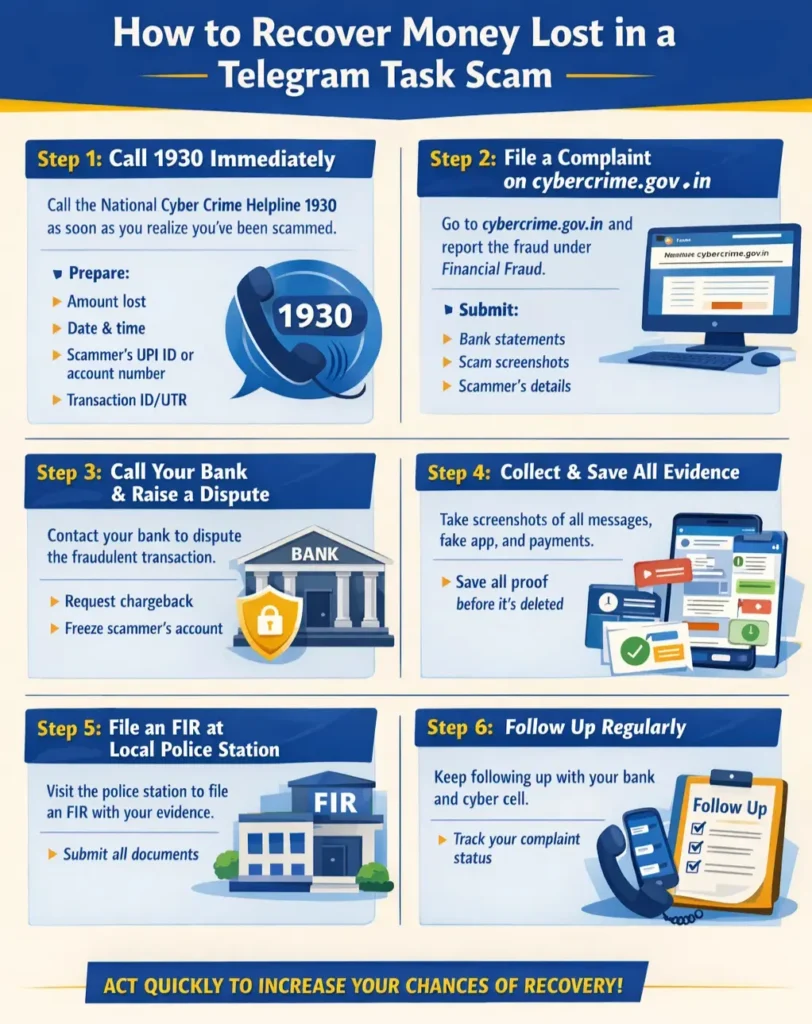
If you have already lost money, do not assume it is gone forever. Recovery is possible — but only if you act fast. The first few hours are the most critical window.
Here is exactly what you need to do, in order.
Step 1: Call 1930 Immediately
The moment you realize you have been scammed, call 1930. This is the National Cyber Crime Helpline run by the Indian Cyber Crime Coordination Centre (I4C).
Keep these details ready before you call:
- The exact amount transferred
- Date and time of the transaction
- The UPI ID or bank account number you sent money to
- Transaction reference number or UTR number
When you report quickly, authorities can alert the receiving bank to freeze the scammer’s account before the money is moved further. Even a 30-minute delay can reduce your chances significantly.
Step 2: File a Complaint on cybercrime.gov.in
Go to the National Cyber Crime Reporting Portal and file an online complaint under Financial Fraud.
You will need to submit:
- Transaction ID and bank statement
- Screenshots of all Telegram messages and the fake job offer
- The scammer’s phone number, UPI ID, or Telegram username
- Details of the fake app or website if you downloaded one
This complaint creates an official record and is forwarded to the cyber cell for investigation.
Step 3: Call Your Bank and Raise a Dispute
Contact your bank’s customer care immediately after filing the complaint. Ask them to:
- Raise a chargeback or dispute on the fraudulent transaction
- Flag or freeze the beneficiary account
- Block your account temporarily if you suspect further unauthorized access
The sooner your bank is informed, the higher the chance they can coordinate with the receiving bank to hold the funds.
Step 4: Collect and Save All Evidence
Before the scammers delete the Telegram group — which they do very quickly — take screenshots of everything:
- All messages and task instructions
- The fake earnings dashboard or app screenshots
- Payment confirmations and bank transaction records
- The scammer’s profile details and phone number
Once the group is deleted, this evidence becomes very hard to recover.
Step 5: File an FIR at Your Local Police Station
If the amount lost is significant, visit your nearest police station and file an FIR. Carry printed copies of all your evidence. An FIR is important because it formally initiates a legal investigation and strengthens your case for fund recovery.
Step 6: Follow Up Regularly
Filing a complaint is not enough. Follow up with your bank and the cyber cell using your complaint reference number. Many victims lose money simply because they do not follow up after the initial report.
For a detailed guide on the full recovery process, read: How to Recover Money Lost in an Online Scam
Can You Actually Get the Money Back?
Recovery depends on how quickly you report and where the money went.
Recovery is more likely when you reported within 1 to 2 hours of the fraud, the money was transferred within India via UPI or bank transfer, and the scammer’s account still has funds.
Recovery becomes difficult when you waited several hours or days before reporting, the money was moved through multiple accounts quickly, or the funds were converted to cryptocurrency.
This is why calling 1930 within minutes — not hours — is the single most important thing you can do.
How to Verify if a Job Offer Is Real
Before responding to any online job offer, take these steps.
Search the company name on Google and check whether it has an official website, registered address, and verifiable contact details. Look it up on the Ministry of Corporate Affairs website at mca.gov.in to check if it is a registered company.
Ask for a formal offer letter with the company’s letterhead and GST number. No legitimate company will refuse this.
Do not download any app that was not sent from the official Google Play Store or Apple App Store. Fake wallet apps are always shared as APK files or through third-party links.
Never pay any amount to receive a salary. This is the clearest sign of fraud.
How ScamDekho Can Help
If you receive a suspicious Telegram message with a link, UPI ID, or a website URL, check it on ScamDekho before clicking or paying.
Go to ScamDekho.in, enter the link or UPI ID, and get an instant scam risk report. The tool analyzes the input using real fraud signals so you can make an informed decision before it is too late.
Final Thoughts
The reason this scam works is not because people are careless. It is because scammers are patient.
They spend days, sometimes weeks, making you feel like you have finally found something real. Small payments come through. The dashboard looks promising. Everything feels like it is working — until the moment it does not.
By then, the money is already gone.
There is one rule that can protect you from all of this. No real employer will ever ask you to deposit money to receive your own earnings. No legitimate job requires you to pay to unlock a task, activate an account, or release a withdrawal. The moment someone asks you for a deposit to access your own money — stop. That is the scam revealing itself.
It does not matter how long you have been talking to them. It does not matter how much the dashboard is showing. It does not matter how convincing they sound. Walk away.
If you or someone you know has already been targeted, do not wait. Call 1930 or file a complaint at cybercrime.gov.in as soon as possible. Quick reporting gives you the best chance of recovering something.
Stay alert. And if an opportunity ever feels too easy — it probably is.