You get a message on your phone.
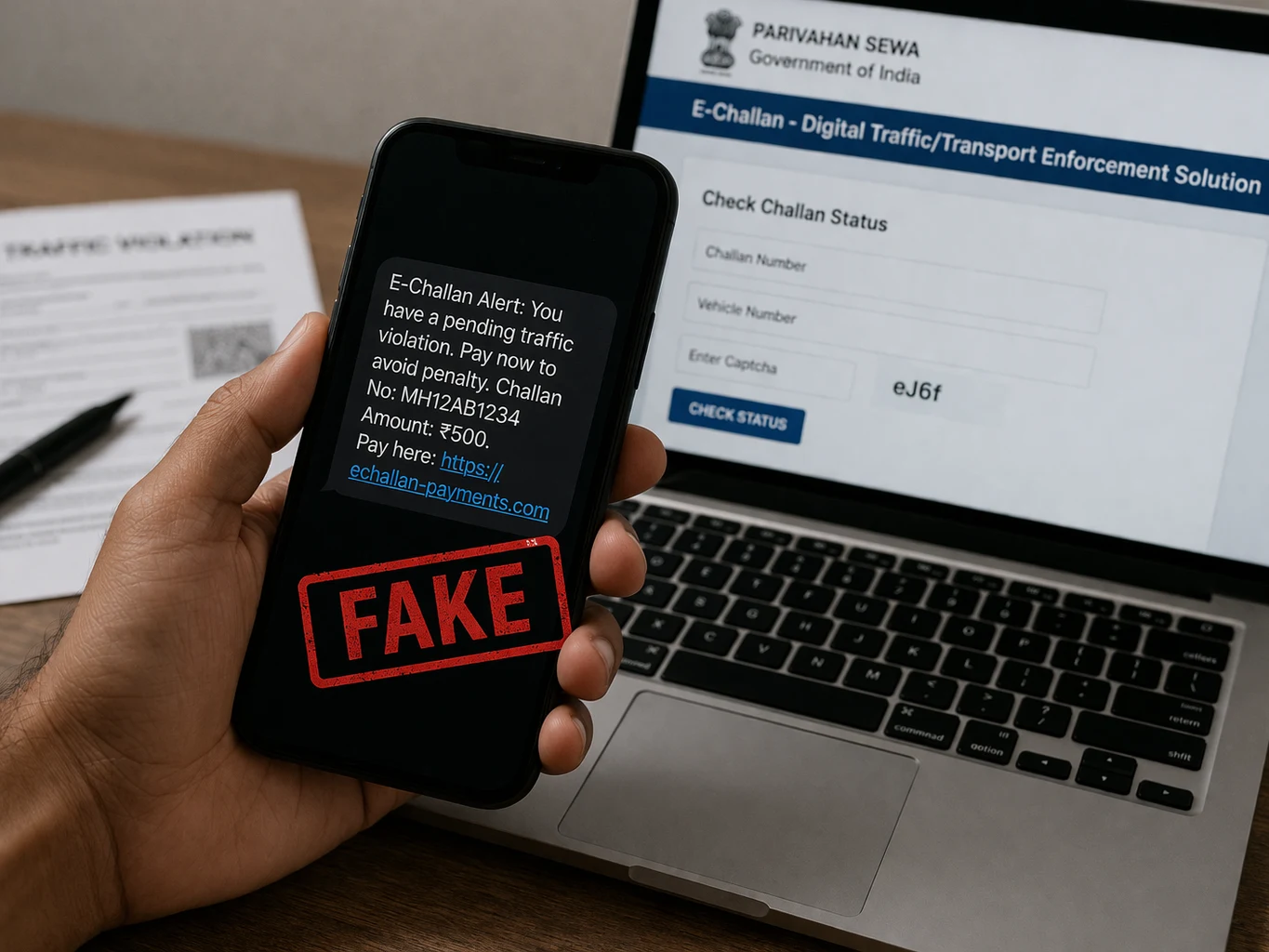
“A traffic challan of ₹1,200 has been issued against your vehicle. Pay immediately to avoid licence suspension.”
The message looks real. It has your vehicle number. It has an official-looking link. You are in a hurry, so you click.
Within hours, your bank account is empty.
This is the e-challan scam — and it is happening every single day across India in 2026.
How Big Is This Problem? Real Numbers
This is not a small or occasional fraud.
In Maharashtra alone, 193 cyber fraud cases related to fake e-challan links and APK files were registered in 2025, and 36 accused were arrested.
This is not just a metro city problem anymore. Victims in Delhi, Mumbai, Bengaluru, Chennai, and Hyderabad have reported losing thousands after clicking on fake e-challan links.
The scale is growing. The scammers are getting smarter. And the victims are not just uneducated or elderly people — they are businessmen, shopkeepers, professionals, and daily vehicle owners.
Real Cases From Across India
These are actual police-reported incidents. Read them carefully — any one of these could happen to you.
1. Vadodara, Gujarat — ₹34.75 Lakh Lost
A businessman from Vadodara lost ₹34.75 lakh after installing a malicious app called RTO e-challan.apk that he received on WhatsApp. The app compromised his banking details and led to a series of unauthorised transactions.
2. Nashik, Maharashtra — ₹6 Lakh Stolen
A man from Nashik received a fake e-challan SMS with a link. He clicked it, and his personal banking details were stolen. ₹6 lakh was drained from his account.
3. Rajkot, Gujarat — ₹10.81 Lakh Gone
A shop owner in Rajkot downloaded a fake traffic challan app. The app silently accessed his banking data and ₹10.81 lakh was stolen.
4. Coimbatore — ₹2.96 Lakh Lost
Several residents in Coimbatore received fake traffic challan messages on WhatsApp asking them to download an app. One victim lost ₹2.96 lakh.
5. Kochi — Two Scammers Arrested
In Kochi, two suspects were arrested for spreading counterfeit Parivahan apps through WhatsApp. The fraud operation used a Telegram bot to gather vehicle information before targeting victims.
What Is the E-Challan Scam? (Simple Explanation)
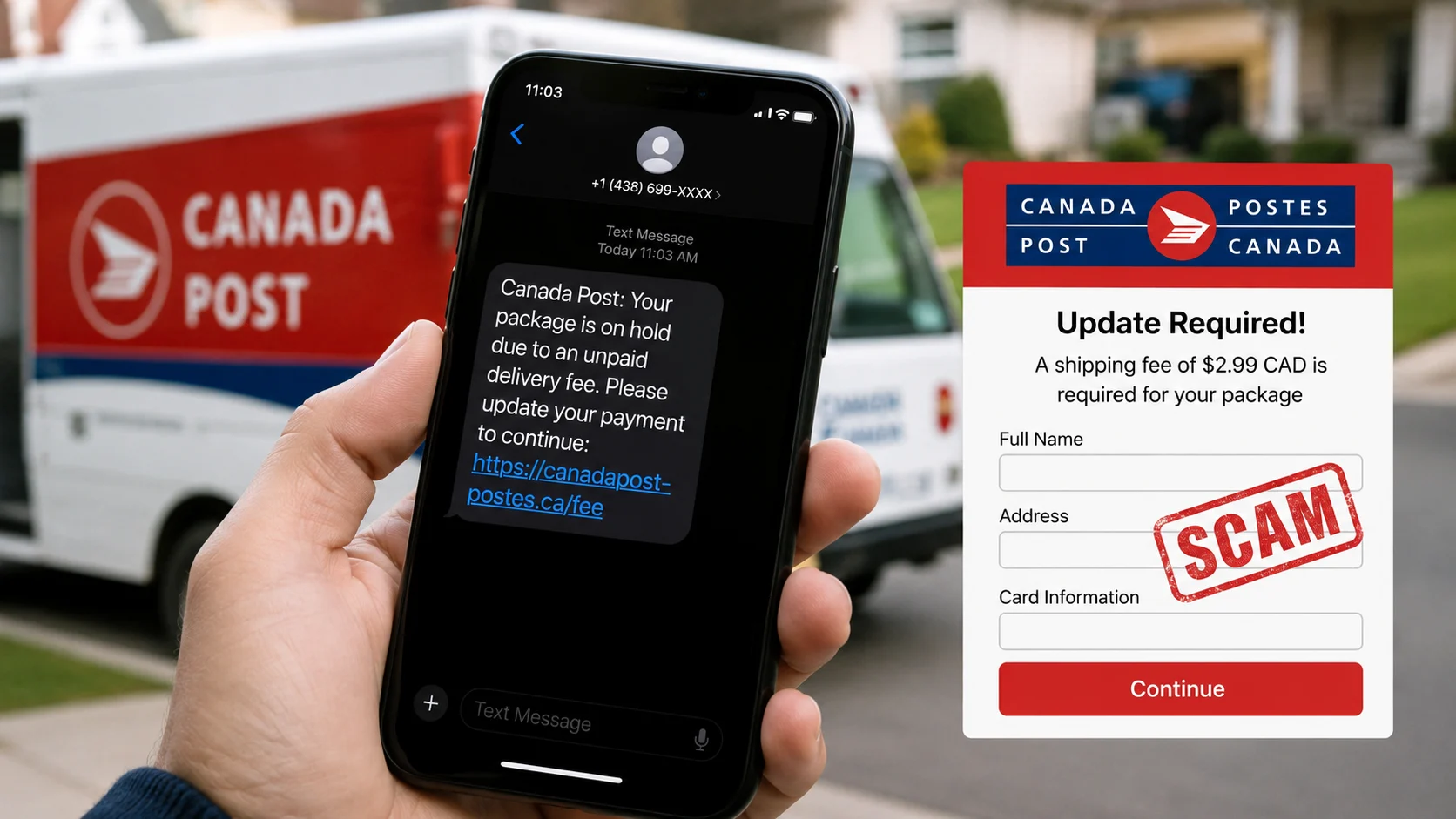
In an e-challan scam, fraudsters pretend to be traffic authorities or RTO officials. They send fake messages through SMS or WhatsApp, claiming that you have violated a traffic rule and must pay a fine immediately. These messages often look completely legitimate, they include your vehicle number and a payment link that closely copies the government portal.
The goal is simple panic you into clicking fast, without thinking.
3 Types of E-Challan Fraud You Must Know
1. Type 1 — Fake SMS or WhatsApp Link
You receive a message saying you have a pending traffic fine and must pay immediately to avoid licence suspension. The link looks official, the logo seems real, and the urgency feels genuine. Once you click and enter your details, your money and data are gone.
2. Type 2 — Fake Website (Phishing Portal)
Clicking the link takes you to a cloned portal that mirrors the branding and structure of the real government e-Challan website — including the government logo, MoRTH references, and official branding. This is purely to convince you that the challan is real. When you click “Pay Now,” your card details go directly to the attacker’s server — whether the payment succeeds or not.
3. Type 3 — Malicious APK App (Most Dangerous)
This is the most dangerous version of the scam.
Scammers distribute a fake RTO Challan Android app through WhatsApp, framing messages to look official with fabricated challan numbers, violation dates, and vehicle registration details. Once installed, the app harvests your Aadhaar, PAN, SIM data, phone numbers, and SMS contents, and silently intercepts your OTPs — giving attackers complete access to your financial accounts.
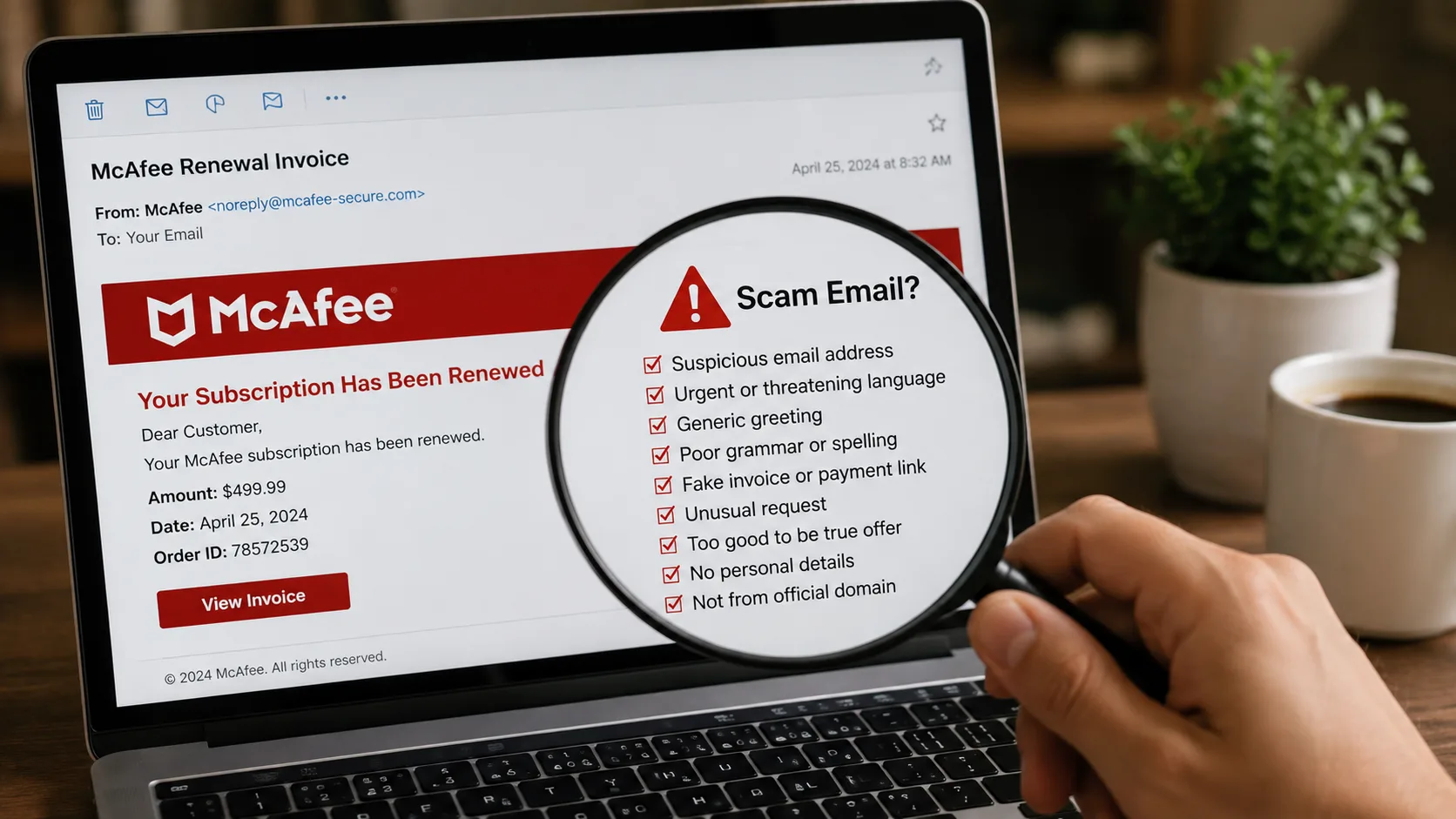
8 Warning Signs of a Fake E-Challan
Check for these red flags before you do anything:
1. Sender is a random mobile number Real government messages come only from the official sender ID “VM-PARIVAHAN.” Fake ones come from random mobile or international numbers.
2. Link does not end in .gov.in Real challan links end in .gov.in. Fake ones use .in, .co, .xyz, or shortened URLs.
3. Message creates urgency or threats Real messages use a neutral tone. Fake ones use lines like “Pay in 2 hours or your licence will be suspended” to make you panic.
4. Spelling mistakes or odd formatting Fake messages often have spelling errors, odd spacing, or inconsistent fonts.
5. No vehicle number in message Real challans always mention your exact vehicle registration number. If it is missing — it is fake.
6. Asks for OTP, ATM PIN, or CVV No government portal ever asks for your OTP, PIN, or card CVV. Ever. If it does — it is a scam.
7. Asks you to download an APK No government department sends apps over WhatsApp or SMS. If you receive any APK file claiming to be an RTO app — delete it immediately.
8. Payment only through card, not UPI Fake payment pages are deliberately restricted to credit or debit cards, avoiding traceable UPI or net banking methods — because cards are harder to trace.
Also Read: Is This Link Safe? How to Check a Suspicious URL Before Clicking
Real Challan vs Fake Challan — Quick Comparison
| Feature | Real e-Challan | Fake e-Challan |
|---|---|---|
| Sender ID | VM-PARIVAHAN | Random mobile number |
| Website URL | echallan.parivahan.gov.in | Fake lookalike domain |
| Vehicle Number | Always mentioned | Often missing |
| OTP / PIN asked | Never | Always |
| APK sent | Never | Via WhatsApp / SMS |
| Tone | Neutral | Urgent, threatening |
| Payment Method | UPI, card, net banking | Only card |
How to Check Your Real E-Challan Safely
If you think you may have a genuine pending challan, check it the safe way:
- Official Government Portal Go directly to “https://echallan.parivahan.gov.in” Type this URL yourself in your browser. Do not click any link from any message.
- mParivahan App Download the official mParivahan app from Google Play Store or Apple App Store only.
- Scan Suspicious Links on ScamDekho Before clicking any challan link, paste it into ScamDekho’s free URL checker to instantly find out if it is safe or a scam.
If You Already Clicked a Fake Link — Do This Right Now
Act fast. Every minute matters.
- Do not enter any more details on that website if you have not already
- Call your bank immediately on their 24×7 helpline — block your card and freeze transactions
- Change your net banking password and UPI PIN right now
- Uninstall any app you may have downloaded from that link
- Call 1930 — National Cyber Crime Helpline — and report the fraud
- File a complaint online at cybercrime.gov.in
- Consider a factory reset if you installed an APK from that link
Why Do People Fall for This Scam?
This is an important question — because the victims are not foolish people.
These are not random phishing attempts. They are professionally designed and organised frauds built to look exactly like actual government portals, complete with Parivahan branding, state police websites, and even fake customer care numbers.
The scam works because it exploits two things every vehicle owner has fear of legal action and trust in government systems.
When you see a government logo and a threat of licence suspension, your brain skips the verification step. That is exactly what the scammers count on.
Conclusion
The e-challan scam is one of the fastest-growing cyber frauds in India in 2025. It has taken ₹34 lakh from a businessman in Vadodara, ₹6 lakh from a man in Nashik, and ₹10 lakh from a shopkeeper in Rajkot — all from a single SMS or WhatsApp message.
The rule to remember is simple: The Indian government never sends payment links over SMS or WhatsApp. Never.
If you get any challan message, always verify directly on echallan.parivahan.gov.in — and if a suspicious link has already reached you, scan it first on ScamDekho before you click anything.
Stay safe. And share this article — one share can protect someone you know from losing their life savings.