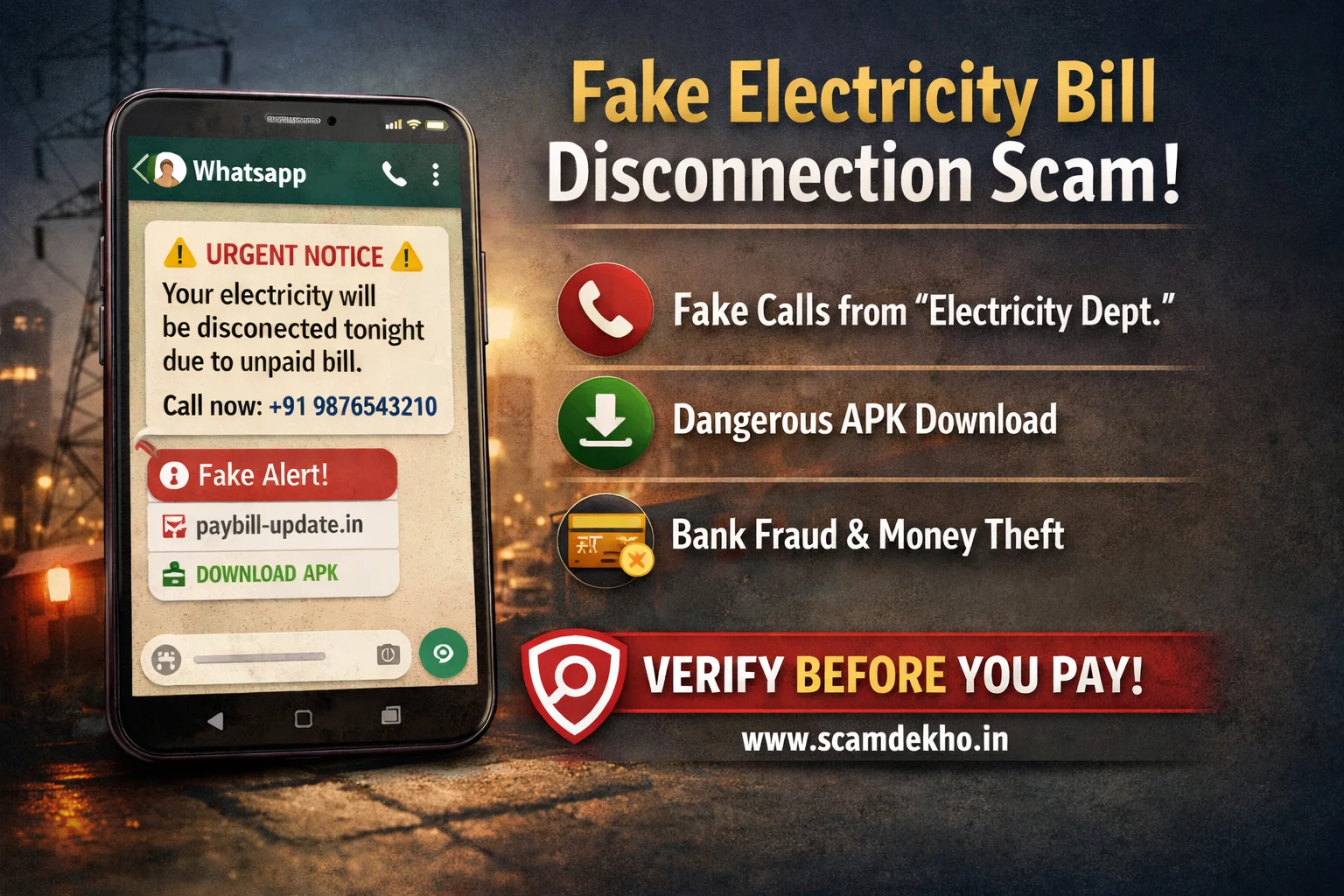
One of the most common cyber scams in India is electricity bill scams. Every day, thousands of people receive fake messages or calls from scammers saying that their electricity bill is unpaid and that their electricity supply will be disconnected immediately.
These messages look very genuine and create a sense of urgency among people. Due to this, people pay the money immediately. However, this money is transferred to the scammer instead of going to the electricity department.
There have been many cyber crime cases that have revealed how dangerous this electricity bill scam is. In some such cases, people have lost thousands or even lakhs of rupees by interacting with fake electricity department officials or by installing fake apps.
Since electricity supply is one of the basic needs for people, they will definitely take immediate action if they receive any information about electricity disconnection.
In this guide, we will learn about how this fake electricity bill scam is done, how we can identify this scam, and how we can verify this using ScamDekho.
What Is the Fake Electricity Bill Disconnection Scam?
The Electricity Bill Disconnection Scam is a type of cyber fraud in which scammers pose as representatives of the Electricity Boards and send notifications to the victims that their bills have not been paid.
These fraud messages usually say something like:
“Dear customer, your electricity connection will be disconnected tonight due to an unpaid bill. Please contact our officer immediately.”
The message usually contains:
- A mobile number
- A suspicious payment link
- A request to download an app
The goal is to make the victim panic and take immediate action.
As it is common for Electricity Companies to send SMS notifications regarding bills, scammers use this mode of communication to send their messages.
How the Fake Electricity Bill Scam Works
Cybercriminals usually follow a simple but effective process.
1. Fake Electricity Bill Message
The scam begins with an SMS or WhatsApp message claiming that your electricity bill is pending.
The message often includes threatening lines like:
- “Your electricity will be disconnected tonight.”
- “Bill not updated in system.”
- “Contact electricity officer immediately.”
Sometimes scammers even include fake electricity department logos to make the message look legitimate.
2. Fake Customer Support Call
If the victim calls the number provided in the message, a scammer answers pretending to be an electricity department officer.
They try to create panic and urgency, saying things like:
- Your electricity will be disconnected in 30 minutes
- Your bill update failed in the system
- You must update payment immediately
The fraudster may then ask for payment through UPI, wallet transfer, or bank details.
3. APK or Remote Access App Trap
In many cases, scammers send a link or APK file on WhatsApp and ask the victim to install it.
They claim the app is needed for:
- Bill update
- Complaint registration
- Payment verification
However, the app actually gives remote access to the scammer, allowing them to control the victim’s phone.
4. Bank Fraud and Money Theft
Once the scammer gains access to the device, they can:
- Read OTP messages
- Access banking apps
- Change passwords
- Transfer money from your account
In many reported cases, victims lost ₹1 lakh to ₹15 lakh through such scams.
Real Examples of Electricity Bill Scam in India
Reports of cybercrimes highlight the extent to which this fraud has spread.
- A resident of Delhi lost ₹9 lakhs to scammers, who posed as electricity department officials and gained remote access to the victim’s phone.
- Another case has seen two people lose over ₹16 lakhs due to the installation of malicious APK files sent by scammers.
- Many consumers in India are still receiving messages that claim that their electricity supply will be disconnected if they do not make immediate payment.
These incidents show how dangerous the scam can be if people do not verify messages properly.
Check: BC / EBC Scholarship Fake Portals — Official Warning And How to Stay Safe
Signs That an Electricity Bill Message Is a Scam
Some of the common red flags are listed below:
1. Message from Personal Mobile Number
It is not expected for electricity companies to send messages from a personal mobile number.
2. Threat of Disconnection
Threats of immediate disconnection of electricity are common in scams, but not from real electricity departments.
3. Suspicious Links and APK Files
It is not expected for electricity companies to send APK files through WhatsApp.
4. Request for OTP and Bank Details
It is not expected for electricity companies to ask for:
- OTP
- UPI PIN
- Debit card details
5. Payment to Personal UPI ID
It is not expected for electricity companies to ask for payment to a personal UPI ID.
How to Check If an Electricity Bill Message Is Fake Using ScamDekho
If you receive a suspicious electricity bill message, you can verify it easily using ScamDekho.
Step 1 – Open your browser and visit scamdekho.in
Step 2 – On the home page of the website, you will see the option of Check Scam or Scan Now
Step 3 – Copy the suspicious electricity bill message that you have received via WhatsApp or SMS
Step 4 – Now, paste the copied message in the input box of the website
Step 5 – If you have already received the electricity bill, then click on the ‘Upload Image’ button and upload the image of the electricity bill directly
Step 6 – Now, ScamDekho will check the bill and inform you whether it is genuine or not
Step 7 – Click on ‘Check Now’ and wait for a few seconds to get the result
Step 8 – Now, the website will show you the result, whether it is ‘Safe’ or ‘Scam’
Step 9 – If it shows that it is a ‘Scam’ message, then click on ‘Report This Scam’ so that others can also be warned
Step 10 – Share the result with your family and neighbours on WhatsApp to protect them as well
Also Read: Latest Online Scams in India (2026): New Fraud Trends You Must Know
What To Do If You Receive a Fake Electricity Bill Message
If you receive such a message, follow these safety steps.
1. Do Not Panic
Scammers generally depend on your fear and pressure to take action immediately.
2. Verify on the Official Website
Always verify your electricity bill through the official website or app of your electricity provider.
3. Do Not Install Unknown Apps
Do not download the APK files received through WhatsApp or SMS.
4. Never Share OTP or PIN
No electricity provider will ask for your sensitive financial information.
5. Report the Scam
If you suspect fraud, report it immediately:
- National Cyber Crime Helpline: 1930
- Cyber Crime Portal: cybercrime.gov.in
Tips to Stay Safe From Utility Scams
Here are some simple tips to protect yourself.
✔ Pay Electricity Bills only through official apps or websites
✔ Never believe threats of urgent disconnection
✔ Do not click unknown payment links
✔ Install apps only through Google Play Store or Apple App Store
✔ Verify unknown links or messages using Scam Dekho
The hackers are using the element of scare to trick people, so it is important to remain calm and verify the information.
Final Thoughts
The scam of fake electricity bills being disconnected is becoming popular in India, and people are falling prey to this scam through messages, WhatsApp, and phone calls. Scammers are posing as electricity department employees and are demanding payment of these bills.
However, the good news is that this scam can be avoided if you take some precautions.
- Never trust urgent payment messages.
- Verify your bills through official channels.
- Be cautious of suspicious messages and check ScamDekho.
Awareness is the best defense against cybercrimes. With your help, cyber scammers won’t be able to exploit innocent users.