Getting a job offer is exciting. After weeks or months of applying, when an email arrives with the subject line “Congratulations! You Are Selected,” it feels like success is finally here. But what if that offer letter is fake?
Across India, fake job offer letter scams are rising rapidly. Scammers are targeting fresh graduates, unemployed youth, work-from-home seekers, and even experienced professionals. They use forged appointment letters, fake HR calls, and convincing company branding to trap victims. Many people lose thousands – sometimes lakhs, before realizing the job never existed.
This guide will help you understand how fake job offer scams work, how to spot red flags, and how to legally verify a company before trusting any offer.
What Is a Fake Job Offer Letter Scam?
A fake job offer letter scam is a form of employment fraud where the scammers pose as recruitment agents or human resource personnel of reputable firms. They send out professionally designed job offer letters that contain the following:
- Company logo
- HR signatures
- Employee ID numbers
- Joining dates
- Salary breakdown
The letter appears to be genuine. In some cases, they even hold mock interviews through phone or video conferencing to make the process seem more real.
The goal of the scam is usually one of the following:
- To extract money in the name of processing fees, training fees, security deposits, or equipment fees.
- To steal personal information such as Aadhaar, PAN, passport, or bank details.
- To use the victims’ identity for committing fraud.
No genuine company in India will ask for money to offer employment.
Why Fake Job Scams Are Increasing in India
India has a significant number of young unemployed individuals looking for jobs. With the increasing use of online job platforms, LinkedIn networking, Telegram groups, and recruitment messages on WhatsApp, fraudsters have new avenues to target victims.
Fraudsters use the names of well-known companies to build trust. In 2025, a recruitment scam using the name of Nestle India spread on social media platforms. The company had to release a public statement saying that they do not charge recruitment fees and that the recruitment notice was a scam.
How Fake Job Offer Scams Work
Understanding the process helps you detect fraud early.
Step 1: Unsolicited Contact
You may receive:
- A WhatsApp message about your resume being shortlisted
- A LinkedIn message from an HR person
- An email from a Gmail or Yahoo account
- A Telegram message about urgent hiring
Often, you may not even remember applying to that company.
Step 2: Easy or No Interview
In many cases:
- There is no interview at all
- The interview lasts only 5-10 minutes
- Technical questions are minimal
- Selection is done immediately
Real companies usually conduct multiple interview rounds, background checks, and proper HR discussions.
Step 3: Offer Letter Sent Quickly
Within 24–48 hours, you receive a PDF offer letter. It looks official and includes detailed salary information.
The formatting may appear professional, but subtle mistakes are often present.
Step 4: Payment Demand
This is where the scam becomes clear. They may ask for:
- Training fees
- Background verification charges
- Laptop or equipment security deposit
- ID card or uniform charges
- Visa processing fees for overseas jobs
The amount can range from a few thousand rupees to several lakhs.
After payment, communication stops.
Read: Top 7 Phone And SMS Scams You Should Never Ignore
Common Red Flags of Fake Job Offers
Being aware of warning signs can save you from losing money.
1. Request for Money
This is the biggest red flag. Genuine employers never ask candidates to pay for recruitment, interviews, or onboarding.
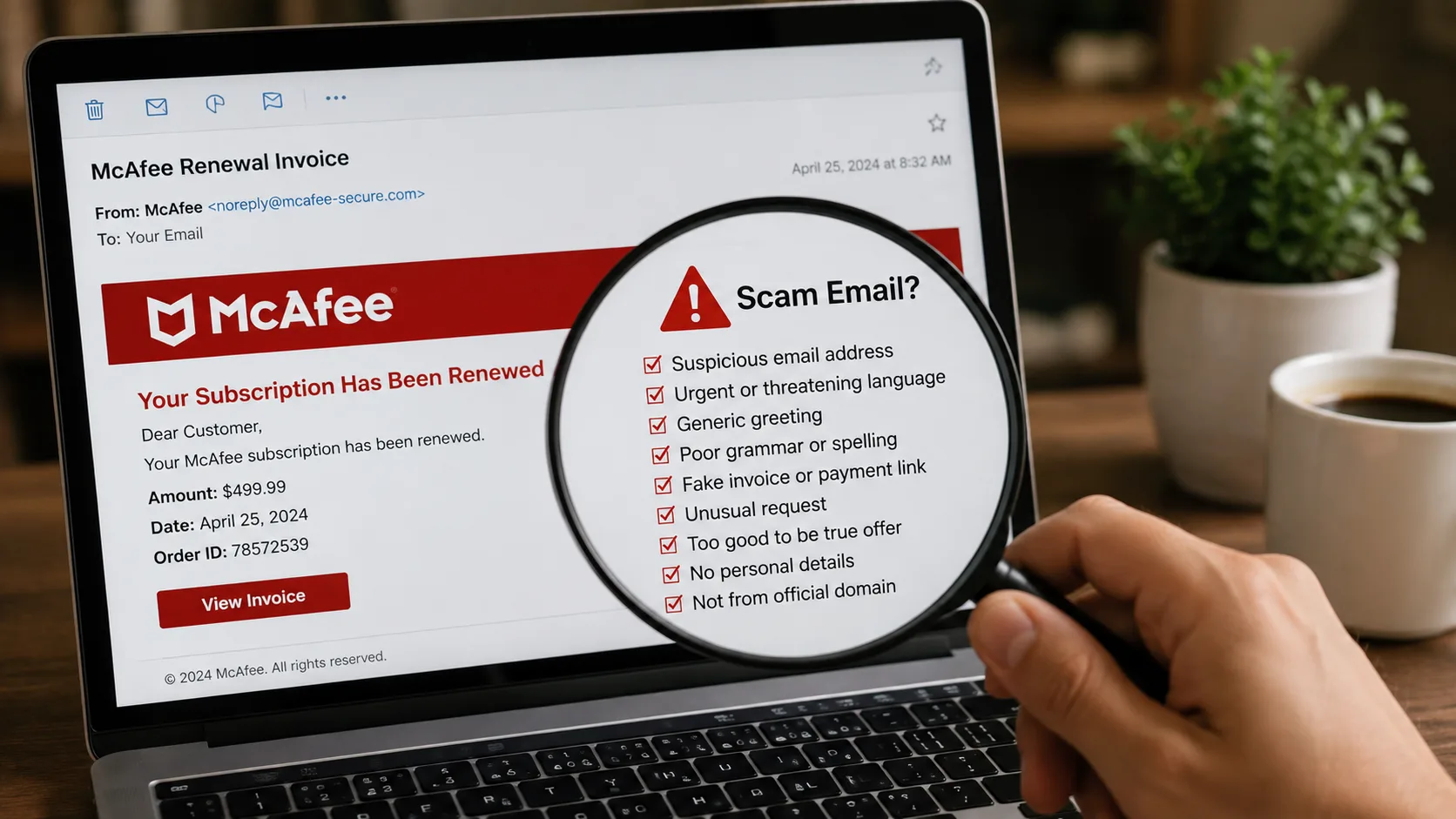
2. Email from Free Domains
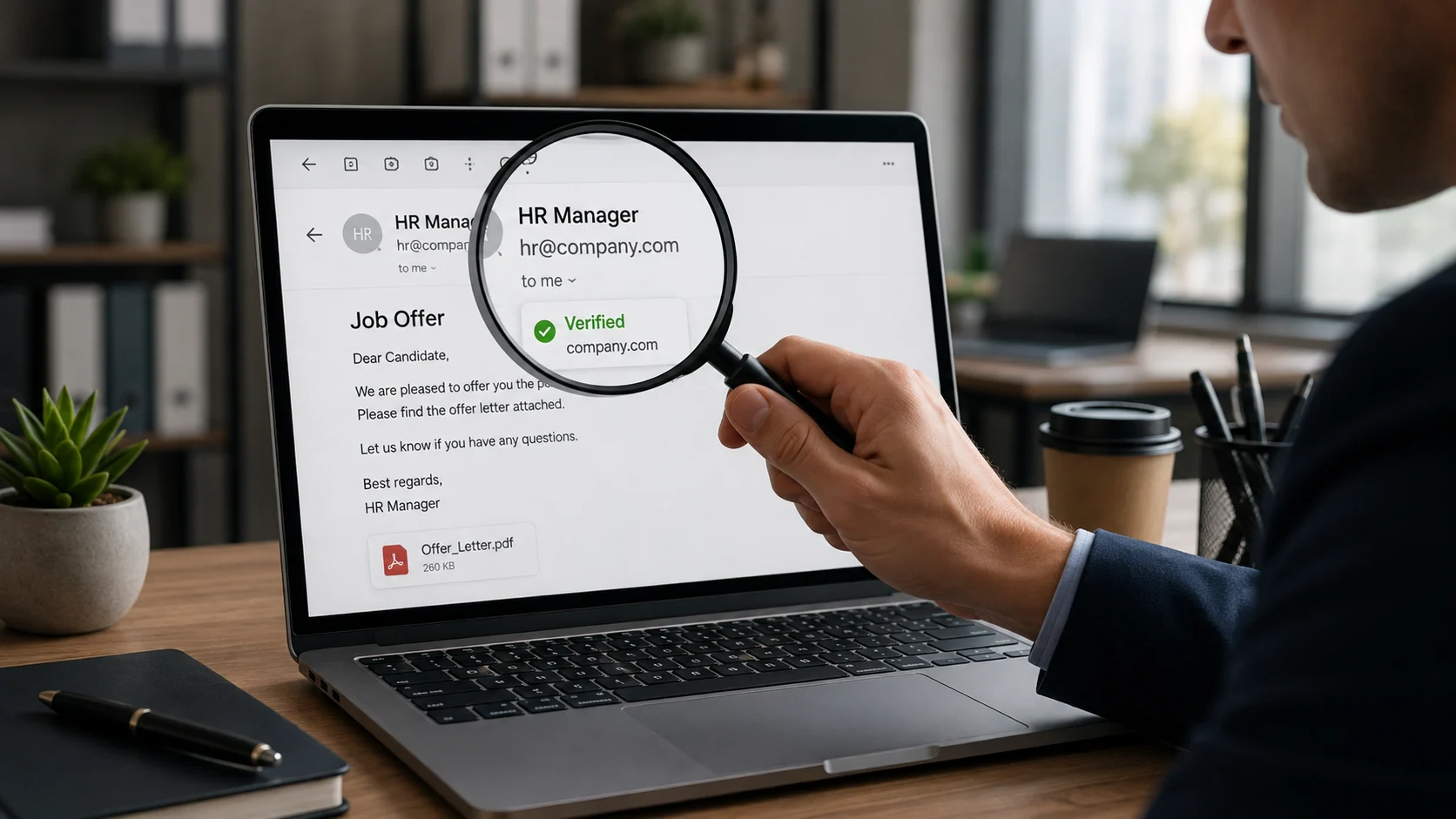
Legitimate companies always have email addresses that match their website domain name.
For example:
hr@companyname.com is normal.
companyjobhr@gmail.com is suspicious.
3. Unrealistic Salary
If a fresher is offered an unrealistic salary without proper evaluation, it is a warning sign.
4. Urgency and Pressure
Scammers always try to create a sense of urgency:
“Pay in 24 hours.”
“Offer will be cancelled if payment not received.”
Real HR teams never pressure job seekers like this.
5. Poor Grammar or Formatting Errors
Scam emails usually have spelling errors, poor formatting, incorrect addresses, or incorrect company information.
6. No Verifiable Online Presence
If the company doesn’t have a proper website, LinkedIn page, or Google reviews, it’s a warning sign to investigate further.
How to Legally Verify a Company in India
Before trusting any job offer, follow these legal verification steps.
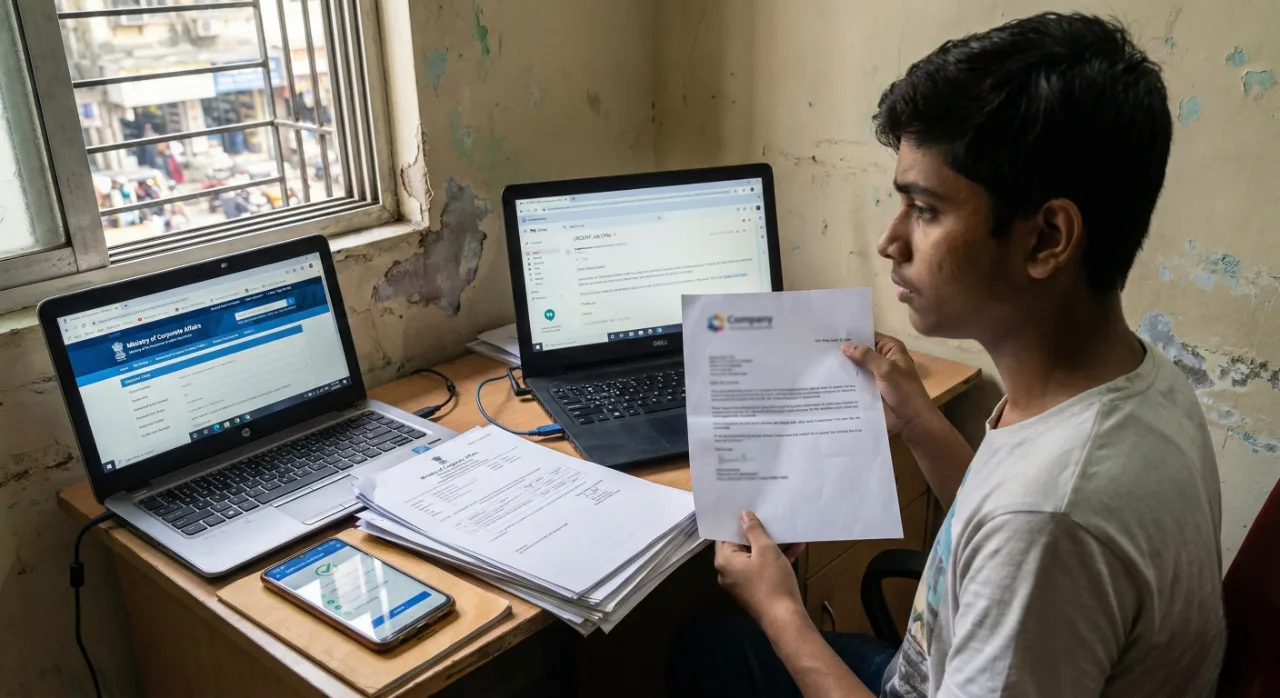
1. Check Registration on the Ministry of Corporate Affairs Website
In India, all registered companies must be listed with the Ministry of Corporate Affairs.
You can search for the company name and verify:
- Corporate Identification Number (CIN)
- Registration status
- Registered office address
- Directors’ details
If the company is not listed, it may not be legally registered.
Even if the company exists, scammers may misuse its name. So additional verification is important.
2. Visit the Official Website Directly
Search the company independently on Google. Do not rely on links provided in the suspicious email.
Check:
- Whether the job listing appears on the official careers page
- Whether contact details match the offer letter
- Whether the email domain matches the website domain
If unsure, call the official contact number listed on the website and confirm the offer.
3. Verify on LinkedIn
Look for:
- Official company page
- Verified employees
- Active HR professionals
If the person who contacted you has very few connections, no profile picture, or recently created account, be cautious.
4. Check National Career Service Portal
The National Career Service is a government platform where employers can post genuine job opportunities.
If the recruiter claims to represent a government or registered employer, you can cross-check there.
5. Verify Overseas Job Offers Carefully
If the job is abroad:
- Confirm whether the recruiting agency is licensed
- Verify visa requirements with official embassy sources
- Avoid paying large sums upfront
Many overseas job scams promise Gulf or Southeast Asian placements but disappear after collecting money.
6. Never Share Sensitive Documents Without Verification
Avoid sending:
- Aadhaar card copies
- PAN details
- Passport copies
- Bank account details
- OTP codes
Identity theft is a major risk in job scams.
What to Do If You Receive a Fake Job Offer
If you suspect fraud, act immediately.
- Stop communication.
- Do not send money.
- Preserve evidence such as emails, call logs, and payment receipts.
You can report the scam to the National Cyber Crime Reporting Portal. This platform allows victims to file complaints related to online fraud.
You can also visit your local cyber cell police station and file a complaint with supporting documents.
If scammers are misusing a real company’s name, inform the company directly through official contact details.
Legal Consequences for Scammers
Fake job offer scams fall under multiple legal provisions in India, including:
- Cheating under the Indian Penal Code
- Forgery and impersonation
- IT Act provisions for cyber fraud
However, legal action usually happens after victims report the crime. The strongest protection is early detection and awareness. Before trusting any suspicious offer letter, email, or recruitment link, you can verify the details using the ScamDekho scam checker to identify potential red flags and reduce the risk of falling victim.
Why Awareness Matters
Most victims of job offer scams are not careless. They are hopeful. They trust the company name. They trust the formal-looking letter. They trust the promise of employment.
Scammers exploit urgency, financial pressure, and career anxiety.
The simple rule is this: employment is offered based on merit, not money.
If anyone asks you to pay for a job, it is almost certainly a scam.
Final Advice for Job Seekers
Before accepting any offer:
- Verify company registration legally.
- Confirm through official channels.
- Check email domains carefully.
- Avoid paying any recruitment fee.
- Report suspicious activity immediately.
A real job offer will withstand verification. A fake one will collapse under basic checks.
Staying informed can protect not only you but also your friends and family from financial loss. In today’s digital hiring environment, caution is not fear — it is intelligence.