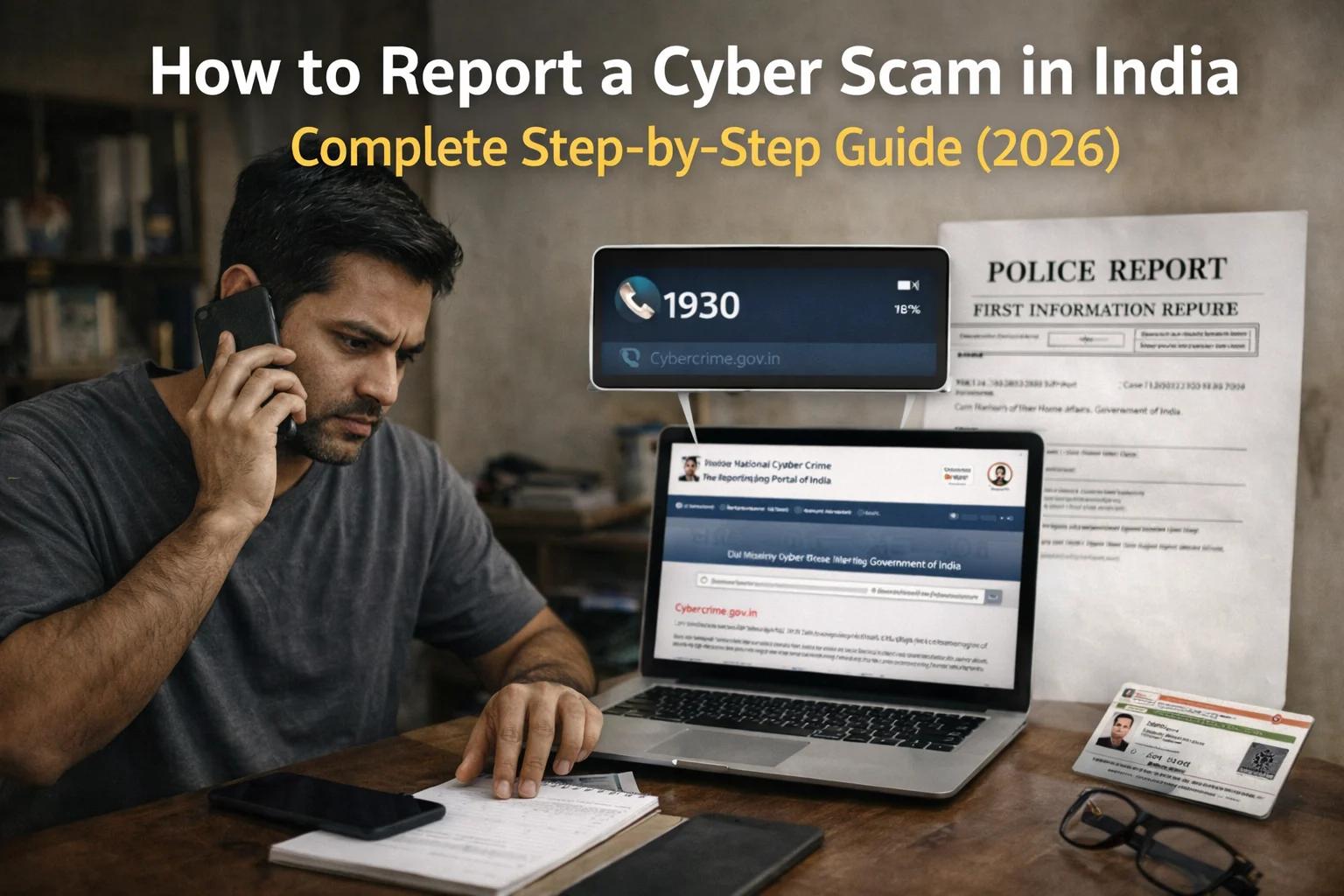
Author: Himanshu Mishra

  • Pig Butchering Scam in India: How Fake Trading Apps Stole ₹14,000 Crore

    Pig Butchering Scam in India: How Fake Trading Apps Stole ₹14,000 Crore

    You get a WhatsApp message from an unknown number. Wrong number, it seems. The person is friendly. Educated. Well-spoken. Over the next few days, they become a trusted contact — sharing life updates, investment insights, and eventually, an opportunity that sounds too good to pass up.

    Three months later, your life savings are gone.

    This is the pig butchering scam — and it is now one of the most financially destructive cyber frauds operating in India. The name comes from a brutal analogy: scammers “fatten the pig” with trust and attention before “slaughtering” it and stealing everything.

    In this complete guide, we explain exactly what the pig butchering scam is, how it specifically targets Indians on WhatsApp and Telegram, real victim cases, fake trading apps used in India, and the exact steps to verify any investment opportunity before you put in a single rupee.

    What Is the Pig Butchering Scam?

    The pig butchering scam — also known as “Sha Zhu Pan” (杀猪盘) in Chinese — is a sophisticated long-term fraud that combines romance manipulation, fake investment platforms, and psychological pressure to steal large sums of money.

    Unlike most scams that try to steal money quickly, pig butchering scammers are patient. They spend weeks or months building a genuine emotional connection with the victim before introducing the investment trap. By the time money is requested, the victim trusts the scammer completely — making this one of the hardest scams to detect and resist.

    Key difference from other scams: Most scams steal small amounts from many people quickly. Pig butchering targets fewer people but steals far more — often lakhs or crores from a single victim.

    How Big Is This Problem in India?

    • Investment fraud — driven primarily by pig butchering — accounts for 76% of all money lost to cyber fraud in India
    • ₹14,000 crore was lost to investment and trading scams in India in 2024 alone
    • The Ministry of Home Affairs confirmed pig butchering complaints via WhatsApp, Telegram, Instagram, Facebook, YouTube, and Google Ads
    • An Indian IT professional lost $450,000 (approx. ₹3.7 crore) after being targeted on a dating app by a scammer using deepfake videos
    • Globally, pig butchering caused $12.4 billion in losses in 2023 — making it the world’s most financially damaging scam category
    • Scam centres operating from Myanmar, Cambodia, and Dubai specifically run India-targeted operations in Hindi, Tamil, Telugu, and other regional languages

    How the Pig Butchering Scam Works in India — Step by Step

    Stage 1: The First Contact (The Hunt)

    The scam begins with an innocent-seeming message. Scammers use multiple entry points:

    • Wrong number message: “Hi, is this Rahul? Sorry, wrong number!” — then continues the conversation naturally
    • WhatsApp/Telegram group invite: Added to a “premium investment group” with professional branding
    • Dating app match: An attractive profile on Tinder, Bumble, or Hinge — often using AI-generated or stolen photos
    • Instagram/LinkedIn DM: Posing as a business professional, NRI, or successful investor
    • Facebook or YouTube ad: Fake testimonials for a high-return investment platform

    Scammer profiles are carefully constructed. They use stolen photos, detailed backstories, lifestyle posts, and even fake social networks of “friends and family” who interact on their profiles to appear real.

    Stage 2: Building Trust (Fattening the Pig)

    This is the most time-consuming stage — and what makes pig butchering different from all other scams. The scammer spends days or weeks building a genuine emotional connection:

    • Daily good morning and good night messages
    • Sharing personal stories, photos, life updates
    • Asking about your life, family, work, and dreams
    • Casually mentioning their own financial success without pushing anything
    • In romance variants — developing deep emotional and sometimes romantic feelings

    By the end of this stage, you genuinely like and trust this person. You have no reason to suspect them. That is the point.

    Stage 3: The Investment Introduction

    Gradually, naturally, the scammer mentions investments. Not as a pitch — as a casual share. “My uncle works at a trading firm and gave me a great tip last week — I made ₹80,000.” They show you screenshots. They are not pushy. They say you do not have to invest if you do not want to.

    You ask about it. They guide you — slowly, patiently — to a trading group on WhatsApp or Telegram, or directly to a fake app.

    Stage 4: The Fake Trading Platform

    You are asked to download a trading app — usually via a direct link, not the Play Store. The app looks completely professional. It shows:

    • Live stock prices and crypto charts
    • Your portfolio with growing returns
    • Other members’ profit notifications
    • Customer support chat
    • Withdrawal history showing others receiving payments

    You invest a small amount — ₹5,000 or ₹10,000. The app shows a 15% profit the next day. You withdraw it successfully. It works. Confidence builds.

    Stage 5: Increasing Investments (The Slaughter Begins)

    The scammer encourages you to invest more. You invest ₹50,000. Then ₹2 lakh. Then ₹10 lakh. The app keeps showing profits. Group members are celebrating. The “expert” tells you that you have a gift for trading. A special IPO opportunity is coming — you need to invest more to access it. You borrow from family. You take a loan. You invest your retirement savings.

    Stage 6: The Withdrawal Block (The Slaughter)

    You try to withdraw. The app says you need to pay a 5% “capital gains tax” first. You pay it. Then a “SEBI compliance fee.” Then a “foreign remittance clearance charge.” Then one final “GST payment.” Every fee you pay, another one appears. The balance in the app keeps showing crores. But you can never access it. Then — the app goes offline. The scammer’s number is switched off. The Telegram group disappears. Everything is gone.

    Real Victim Cases in India

    Case 1 — Indian IT Professional, Philadelphia — ₹3.7 Crore Lost

    An Indian IT professional working in Philadelphia was targeted on a dating app by a scammer posing as a French wine trader. Using deepfake videos and scripted emotional manipulation, the scammer built an intense romantic connection over weeks. He gradually persuaded her to invest in fake cryptocurrency platforms. She ultimately lost more than $450,000 — leaving her in crushing debt with no way to recover funds sent abroad.

    Case 2 — Mumbai, Maharashtra — ₹1.23 Crore Lost

    A 49-year-old project manager was added to a WhatsApp group called “W1001-ACME Wealth Private Limited Group.” A woman named Priyanka guided him on trading strategies and had him download the fake “ACME Wealth” app. His initial ₹1 lakh investment showed 10% profit the next day. A fake SEBI certificate was provided for credibility. When he tried to withdraw ₹9 crore shown in the app, he was asked for a 5% “tax.” Total real loss: ₹1.23 crore.

    Case 3 — Hyderabad, Telangana — ₹5.9 Crore Lost

    A businessman received a message promoting a “Goldman Sachs Business School” for block trading. A woman posing as the Goldman Sachs MD’s assistant presented a fake SEBI-certified opportunity. He downloaded a fake trading app called “GSIN” and invested ₹5.9 crore across multiple transactions. When he tried to withdraw, a 20% “access fee” was demanded. He had lost everything.

    Case 4 — Faridabad, Haryana — ₹7 Crore Lost

    A woman was lured through a fake investment app promoted via social media. She was added to a WhatsApp group named “ICICI IR Team” where fake success stories were posted constantly. She invested her savings over several months. An ED investigation later found her ₹7 crore had been converted to cryptocurrency and sent abroad through shell company accounts.

    Case 5 — Hyderabad, Telangana — ₹71.11 Lakh Lost

    A private sector employee received a WhatsApp link on Christmas Day inviting him to a Telegram group associated with a “multinational financial services company.” Fraudsters created a fake internal equity account using his Aadhaar details. The portal showed a balance of ₹2.20 crore. When he tried to withdraw, all access was blocked. Total real loss: ₹71.11 lakh.

    Fake Trading Apps and WhatsApp Groups Used in India

    These apps and group names have been documented in police FIRs and ED investigations across India:

    Fake Trading Apps

    • ACME Wealth — Mumbai ₹1.23 crore case (2026)
    • GSIN — Goldman Sachs impersonation, Hyderabad ₹5.9 crore case
    • IC ORGAN MAX — ED investigation, multiple crore losses
    • EltAs Fud — Hyderabad arrest case
    • Costa Well Grown — ₹43 lakh victim losses
    • NFM Capital Markets — Hyderabad police complaint

    Fake WhatsApp Group Names

    • ICICI IR Team
    • Goldman Sachs Business School
    • BlackRock Stock Club
    • JP Morgan Investment Group
    • W1001-ACME Wealth Private Limited Group
    • GFSL Securities Official Stock C 80
    • SMG Global Securities

    None of these groups are affiliated with the real companies they impersonate. ICICI, Goldman Sachs, BlackRock, and JP Morgan do not recruit investors or share tips through WhatsApp or Telegram.

    How Pig Butchering Targets Indians Specifically

    Scam centres operating from Myanmar, Cambodia, and Dubai have dedicated India teams. Here is how they personalise attacks for Indian victims:

    • Communicating in Hindi, Telugu, Tamil, Kannada, or the victim’s regional language
    • Referencing Indian cities, landmarks, Bollywood, cricket, and local culture to build familiarity
    • Targeting NRIs with stories about overseas investment opportunities
    • Using Indian names, Indian stock market terminology, and SEBI branding
    • Impersonating Indian banks — ICICI, HDFC, SBI — and Indian brokers like Zerodha and Angel One
    • Timing attacks around IPO seasons, budget announcements, and festive periods when investment interest is high

    Warning Signs — How to Identify a Pig Butchering Scam

    • You received a message from an unknown number — wrong number, networking invite, or random introduction
    • The person quickly becomes close but avoids video calls or meeting in person
    • They casually mention their investment success without pushing you to invest
    • They guide you to a specific trading app or WhatsApp group
    • The trading app was sent via a direct link — not downloaded from Play Store or App Store
    • Early investments show immediate, impressive returns
    • You are encouraged to invest more — “a special IPO window is closing”
    • Withdrawal is blocked by demands for taxes, fees, or compliance charges
    • Reverse image search of their photo shows it belongs to someone else
    • The app shows a large balance that keeps growing but can never be withdrawn

    How to Verify Any Investment Before You Put In Money

    1. Check SEBI Registration at sebi.gov.in

    Every legitimate broker and investment advisor in India must be registered with SEBI. Go to sebi.gov.in → Intermediaries → search the platform or broker name. If it is not listed — do not invest. Any SEBI certificate sent via WhatsApp can be fabricated in minutes and means nothing.

    2. Only Use Official App Store Downloads

    Never download a trading app from a WhatsApp or Telegram link. All legitimate trading apps — Zerodha, Groww, Upstox, Angel One — are on the official Play Store and App Store. A link-only app is always fake.

    3. Do a Reverse Image Search

    Take the profile photo of the person who contacted you and run a reverse image search on Google Images or TinEye. If the photo belongs to someone else — model, stock photo, or real person — the account is fake. This takes 30 seconds and immediately exposes most pig butchering scammers.

    4. Verify the Company on MCA Portal

    Check the company at mca.gov.in → MCA Services → View Company/LLP Master Data. Check registration date and director details. Most fake companies were registered days before they contacted you.

    5. Never Pay Fees to Withdraw Your Own Money

    No legitimate broker, trading platform, or investment firm charges fees to withdraw your own money. Any withdrawal fee — tax, GST, SEBI compliance, foreign remittance — is a scam signal. Stop all payments immediately and call 1930.

    6. Check the Website on ScamDekho

    Before registering on any investment platform, check the website URL on ScamDekho. ScamDekho checks domain age, SSL certificate, hosting reputation, and known fraud databases. Fake investment websites are almost always registered less than 30 days before they contact you. Free, no login required.

    Legitimate SEBI-Registered Brokers in India

    Only use these verified platforms for stock market investments:

    • Zerodha — zerodha.com
    • Groww — groww.in
    • Upstox — upstox.com
    • Angel One — angelone.in
    • 5paisa — 5paisa.com
    • ICICI Direct — icicidirect.com
    • HDFC Securities — hdfcsec.com
    • Kotak Securities — kotaksecurities.com

    None of these will contact you via WhatsApp with tips, add you to Telegram groups, or ask you to download an app via a link.

    Already Scammed? Do This Immediately

    1. Call 1930 Right Now

    India’s National Cybercrime Helpline, available 24×7. Call immediately — cyber cells can attempt to freeze beneficiary accounts within hours of the fraud. Every minute counts.

    2. File at cybercrime.gov.in

    File under “Online Financial Fraud” → “Investment Fraud.” Include all app screenshots, chat screenshots, UPI transaction IDs, and any fake SEBI certificates or documents received.

    3. Contact Your Bank

    Call your bank’s fraud helpline with your UTR numbers for each transfer. Request emergency flagging of all beneficiary accounts. Provide your 1930 acknowledgement number and cybercrime.gov.in reference number.

    4. Report to SEBI

    Report the fake broker or platform at scores.gov.in or call SEBI helpline 1800-266-7575. SEBI issues public warnings about unregistered entities — your report protects others.

    5. File an FIR

    Visit your nearest cyber police station. File under Section 318(4) of BNS 2023 (cheating) and Section 66D of the IT Act (cheating using computer resources). Bring all printed evidence.

    Key Takeaways

    • Pig butchering is India’s most financially damaging cyber scam — responsible for 76% of all money lost to cyber fraud
    • Scammers spend weeks building genuine trust before introducing any investment
    • Fake trading apps show fabricated profits — the balance you see is never real money
    • Entry points include WhatsApp, Telegram, Instagram, dating apps, and Google Ads
    • Any withdrawal fee — tax, GST, compliance — is always a scam signal. Stop immediately.
    • Always verify SEBI registration at sebi.gov.in before investing anywhere
    • Never download a trading app from a WhatsApp link — only official app stores
    • Check any investment website on ScamDekho before registering
    • If scammed, call 1930 immediately — every hour reduces recovery chances

    Conclusion

    The pig butchering scam works because it targets something no security software can protect — human trust. It does not hack your phone. It does not steal your OTP. It makes you want to invest. And by the time you realise what happened, months of emotional investment and lakhs of rupees are already gone.

    But awareness is the only protection that works. Now you know the six stages. You know the warning signs. You know how to verify any investment in under five minutes. And you know that any fee to withdraw your own money is always — without exception — a scam.

    Before you invest in any online platform — no matter how trusted the person who recommended it — take 30 seconds and check the website on ScamDekho. It is free, requires no login, and could save you crores.

    Share this article with people in your life who invest online, use dating apps, or are active in investment WhatsApp groups. One conversation could protect someone’s life savings.

    Verify first. Invest safely. Trust no app from WhatsApp.

    Frequently Asked Questions

    1. What is a pig butchering scam in simple words?

    A pig butchering scam is when someone befriends you online over weeks or months, builds genuine trust, then convinces you to invest in a fake trading platform. The platform shows fake profits to encourage more investment. When you try to withdraw, it is always blocked. Then the scammer disappears with all your money.

    2. How is pig butchering different from other investment scams?

    Most investment scams move fast — they push you to invest immediately. Pig butchering is slow and patient. Scammers spend weeks building real emotional trust before mentioning money. This makes it far more effective and far harder to detect, because by the time the investment is introduced, you genuinely trust the person.

    3. Can pig butchering happen to educated people?

    Yes — and it frequently does. Victims include IT professionals, doctors, chartered accountants, engineers, and retired executives. Pig butchering exploits trust and emotion — not ignorance. Anyone who has human relationships is vulnerable. Education provides no protection against emotional manipulation.

    4. Is the trading WhatsApp group I was added to real?

    Almost certainly not, if you were added without asking. Legitimate SEBI-registered brokers do not add people to WhatsApp groups and share stock tips. Real trading is done through official apps on verified platforms. Any unsolicited WhatsApp trading group should be left immediately.

    5. Can I recover money lost in a pig butchering scam?

    Recovery is extremely difficult once funds are converted to cryptocurrency and sent abroad. However, if you call 1930 within hours of the fraud, cyber cells can attempt to freeze domestic accounts before funds move. File at cybercrime.gov.in immediately, contact your bank, and file an FIR. Do not pay any “recovery agent” — that is a third scam targeting the same victim.

  • How to Report a Cyber Crime in India: Complete Step-by-Step Guide (2026)

    How to Report a Cyber Crime in India: Complete Step-by-Step Guide (2026)

    You just realised you have been scammed. Money is gone. You are panicking. You do not know what to do first.

    Take a breath. Then read this.

    Every minute matters after a cyber fraud. The faster you report, the better your chances of getting your money back. India has a proper system for this — most people just do not know how to use it.

    This guide gives you the exact steps to follow, the exact things to say to your bank, and the exact portals to file your complaint — all in one place, in simple language.

    How Serious Is Cyber Fraud in India Right Now?

    Before we get into the steps, here is why acting fast is so important:

    • ₹22,845 crore was lost to cyber fraud in India in 2024 — a 206% increase from 2023
    • 22.68 lakh complaints were filed on cybercrime.gov.in in 2024 — up from 10.29 lakh in 2022
    • National recovery rate improved from 10% in 2024 to 24% in 2025 — because more people are reporting faster
    • ₹4,386 crore has been saved so far through the 1930 helpline system by freezing fraudulent accounts in time
    • Only 1 in 10 cyber fraud victims in India actually report the crime

    The system works — but only if you use it fast enough.

    The Golden Rule: Report Within 24 Hours

    When you transfer money via UPI, NEFT, or any digital method — scammers move it through multiple accounts within minutes. The 1930 helpline system is directly connected to banks and can request an emergency freeze on the beneficiary account. But this only works if funds have not yet been moved or withdrawn.

    • 0 to 4 hours: Best chance of recovery — account freeze is very likely
    • 4 to 24 hours: Still possible — partial recovery realistic
    • 24 to 72 hours: Difficult — money has usually moved through multiple accounts
    • After 72 hours: Recovery is rare — but filing a complaint is still essential for legal record and bank dispute

    Do not wait. Do not feel ashamed. Do not think the amount is too small. Report immediately.

    What You Need Before You Start

    Keep all of this ready before making any call or filing any complaint. This will speed up the process significantly:

    Transaction Details

    • Exact amount lost and date and time of transaction
    • UTR number or Transaction ID (found in your UPI app or bank statement)
    • UPI ID, account number, or phone number you sent money to
    • Your bank name and account number

    Evidence Screenshots

    • All WhatsApp, Telegram, or SMS conversations with the scammer
    • Screenshots of any website, app, or link used in the scam
    • Screenshot of UPI payment confirmation from PhonePe, GPay, or your banking app
    • Any offer letter, job posting, or fake website shared by the scammer
    • Email communications if any

    Personal Documents

    • Your Aadhaar card, Voter ID, or any government ID (soft copy in .jpg or .png, under 5MB)
    • Your mobile number linked to the bank account

    Important: Do not delete any chats, messages, or screenshots. Even if you blocked the scammer — the evidence in those screenshots is what investigators will use. Store everything in a folder on your phone or email it to yourself before anything is accidentally deleted.

    Step 1 — Call 1930 Immediately (Do This First)

    Before filing any written complaint, call 1930 right now.

    This is India’s National Cybercrime Financial Fraud Helpline, available 24 hours a day, 7 days a week. It is completely free.

    Here is exactly what happens when you call:

    • The operator takes your details — transaction amount, UTR number, bank name, and the fraudster’s account details
    • Your complaint is instantly forwarded through a centralised system connected to all major banks and payment gateways
    • Authorities attempt to place a transaction hold or fund freeze request on the suspicious account
    • You receive an SMS with an acknowledgement number — save this, you will need it

    After the call, you must log in to cybercrime.gov.in within 24 hours to complete the formal written complaint using your acknowledgement number. The call alone is not sufficient — it must be followed up with the online complaint.

    What to Say When You Call 1930

    “I am a victim of cyber fraud. On [date] at [time], I was deceived into transferring ₹[amount] to UPI ID [UPI ID] / bank account [account number]. My bank is [bank name]. The UTR number of the transaction is [UTR number]. I request an immediate freeze on the beneficiary account.”

    Speak clearly and slowly. Give exact numbers. The operator will guide you through the rest.

    Step 2 — File Your Complaint on cybercrime.gov.in

    This is India’s official National Cyber Crime Reporting Portal, run by the Ministry of Home Affairs. Filing here creates a legal record of your complaint and triggers action by state cyber cells.

    How to File — Exact Steps

    1. Go to cybercrime.gov.in on your browser
    2. Click “File a Complaint”
    3. Click “Report Other Cyber Crime” for financial fraud, job scam, fake website, or investment fraud
    4. Fill in your personal details — name, state, district, PIN code
    5. In the complaint form, select the category — choose “Online Financial Fraud” for most scams
    6. Select the sub-category — UPI Fraud, Fake Job Scam, Investment Fraud, etc.
    7. Enter the incident date, time, and platform (WhatsApp, Telegram, website, etc.)
    8. In the description box — write a clear, factual account of what happened. Minimum 200 characters. Do not use special characters like #, $, @, ^
    9. Enter the bank name, account number, and UTR transaction number
    10. Upload your evidence screenshots and a copy of your ID
    11. Submit — you will receive a complaint reference number. Save this immediately. Your complaint is automatically routed to your State or UT cyber cell for action.

    Tips for Writing Your Complaint Description

    • Write in simple, factual language — what happened, when, how, how much
    • Include the exact scammer UPI ID or account number
    • Mention the platform — WhatsApp, Telegram, Instagram, job portal, etc.
    • Do not exaggerate or include unnecessary emotional content — stick to facts
    • A good description example: “On 18 March 2026, I received a WhatsApp message from +91-XXXXXXXXXX offering a part-time job for liking YouTube videos. After completing three tasks for which I was paid ₹450 via UPI, I was asked to deposit ₹5,000 to a ‘VIP task group’ UPI ID: fraud@ybl to earn ₹12,000. After payment, the contact disappeared. Total loss: ₹5,000. UTR: XXXXXXXXXX.”

    Step 3 — Contact Your Bank Immediately

    Parallel to calling 1930, call your bank’s fraud helpline. Do not wait for cybercrime.gov.in complaint first — do this at the same time.

    What to Say to Your Bank

    “I am a victim of a cyber fraud. On [date], I was deceived into transferring ₹[amount] to UPI ID [UPI ID] / account number [number]. I request you to immediately flag this transaction and send an emergency hold request to the beneficiary bank under RBI cybercrime guidelines. My 1930 acknowledgement number is [number] and my cybercrime.gov.in complaint reference is [number]. Please treat this as urgent.”

    Major Bank Fraud Helpline Numbers

    • SBI: 1800-111-109 or 1800-425-3800
    • HDFC Bank: 1800-202-6161
    • ICICI Bank: 1800-102-4242
    • Axis Bank: 1800-209-5577
    • Kotak Mahindra: 1860-266-0811
    • Bank of Baroda: 1800-102-4455
    • Punjab National Bank: 1800-180-2222
    • Paytm: 0120-4456-456
    • PhonePe: 080-68727374
    • Google Pay: 1800-419-0157

    Know your rights: Under RBI guidelines, if you report an unauthorised transaction within 3 working days and it was not due to your own negligence, your bank is required to refund the amount. Follow up in writing if your bank does not respond within 3 working days.

    Step 4 — Report the Scammer’s Phone Number on Sanchar Saathi

    Go to sancharsaathi.gov.in and click on “Chakshu” — this is the Government of India’s platform to report fraudulent phone numbers.

    Report the exact number used by the scammer. The Department of Telecommunications uses these reports to trace and block fraud numbers. Complaints made within 30 days are actively investigated. Reports after 30 days still help identify patterns and block serial offenders.

    This step takes under 5 minutes and helps protect thousands of other potential victims from the same number.

    Step 5 — File an FIR at Your Local Cyber Police Station

    An online complaint on cybercrime.gov.in is important — but for serious fraud, especially above ₹10,000, filing a physical FIR gives you a stronger legal position.

    When is an FIR Mandatory?

    • Loss above ₹10 lakh — under the new e-Zero FIR initiative, complaints involving losses above ₹10 lakh automatically generate a Zero FIR
    • When your bank asks for an FIR copy to process your refund
    • When you want to pursue legal action against the scammer
    • For identity theft, data breach, or harassment cases

    How to File an FIR

    1. Visit your nearest cyber police station or any police station
    2. Carry printed copies of all evidence — chats, payment receipts, screenshots, offer letters
    3. Carry your cybercrime.gov.in complaint reference number
    4. Request to file an FIR under Section 318(4) of BNS 2023 (cheating) and Section 66D of the IT Act (cheating using computer resources)
    5. Review the FIR carefully before signing — make sure all amounts and details are accurate
    6. Get a copy of the FIR with the FIR number and investigating officer’s name and contact

    What If Police Refuse to File an FIR?

    This still happens in some stations. If police refuse, remind them of Section 173 of BNSS 2023 (formerly Section 154 of CrPC), which legally mandates registering an FIR for cognizable offences. If they still refuse, file your complaint on cybercrime.gov.in — online complaints are monitored directly by the Ministry of Home Affairs and local police are mandated to act on them.

    Step 6 — Escalate If No Action Is Taken

    If you filed a complaint and received no response or action within a reasonable time, do not give up. You have escalation options.

    Escalate to RBI Banking Ombudsman

    If your bank refuses to acknowledge or act on your fraud complaint within 30 days, file a complaint against the bank at bankingombudsman.rbi.org.in. The RBI Ombudsman has authority to direct banks to process refunds in eligible fraud cases.

    Escalate to State Cyber Cell

    If local police are unresponsive, contact your state’s dedicated cyber crime cell directly. Most states now have a separate cyber crime division with dedicated officers for financial fraud cases.

    Escalate to National Consumer Helpline

    For e-commerce fraud, fake delivery scams, or online shopping fraud, file a complaint at consumerhelpline.gov.in or call 1800-11-4000.

    You can also use ScamDekho to verify any website link, UPI ID, or QR code before clicking or paying — completely free, no login required.

    Types of Cyber Scams You Can Report

    The cybercrime.gov.in portal accepts complaints for all of these:

    • UPI fraud and digital payment scams
    • Fake job offer and work-from-home scams
    • Online investment and trading scams
    • Fake loan app fraud
    • Digital arrest scam
    • Phishing — fake bank, UIDAI, or government websites
    • Online shopping fraud — fake products, no delivery
    • Fake donation and NGO scams
    • Identity theft and Aadhaar misuse
    • Social media hacking and impersonation
    • Sextortion and online blackmail
    • Fake customer care number fraud
    • SIM swap fraud
    • Ransomware and hacking

    Also Read: Fake Scheme Portals Are Defrauding Users-How to Spot Scams on Government Sites

    Quick Reference — All Important Links and Numbers

    • National Cybercrime Helpline: 1930 (24×7, free)
    • Online Complaint Portal: cybercrime.gov.in
    • Report Fraud Phone Numbers: sancharsaathi.gov.in (Chakshu)
    • RBI Banking Ombudsman: bankingombudsman.rbi.org.in
    • National Consumer Helpline: consumerhelpline.gov.in or 1800-11-4000
    • Check Suspicious Links and UPI IDs: scamdekho.in
    • PM CARES Fund (official): pmcares.gov.in
    • NGO Verification: ngodarpan.gov.in

    Key Takeaways

    • Call 1930 immediately after any cyber fraud — this is the most time-sensitive step
    • File a written complaint on cybercrime.gov.in within 24 hours of calling 1930
    • Contact your bank simultaneously — use the exact script provided above
    • Report the scammer’s number on Sanchar Saathi at sancharsaathi.gov.in
    • File a physical FIR for losses above ₹10,000 — especially if your bank needs it
    • Escalate to RBI Ombudsman if your bank does not respond within 30 days
    • Check any suspicious link or UPI ID on ScamDekho before clicking or paying
    • Never pay any fee to anyone who offers to help you recover your scammed money — that is a second scam

    Conclusion

    Getting scammed is not your fault. These are professional criminal networks that have spent years perfecting their techniques to deceive even the most careful people.

    But now you know exactly what to do. You have the helpline number. You have the portal link. You have the bank script. You have the escalation path.

    The most important thing is speed. Every hour you wait reduces your chance of recovery. So do not wait, do not feel ashamed, and do not think your case is too small to report. Even small amounts, when reported, help authorities track and shut down the networks behind these scams.

    And before your next online transaction — if you ever receive a suspicious link, a UPI ID from an unknown source, or a website that feels off — check it for free on ScamDekho before you click or pay. That one check could save you from needing this guide in the first place.

    Bookmark this page and share it with your family. The person who needs it most might not know this guide exists until it is too late.

    Report fast. Recover faster.

  • Donation Scams in India: How Fake NGOs and Charity Frauds Are Stealing From Kind-Hearted Indians

    Donation Scams in India: How Fake NGOs and Charity Frauds Are Stealing From Kind-Hearted Indians

    A child with cancer. A flood-hit village. A soldier’s family in need. A WhatsApp message arrives with an emotional photo, a UPI ID, and a single line: “Please help. Every rupee counts.”

    You want to help. That is the most human instinct there is.

    And that is exactly what scammers exploit.

    Donation and charity scams are among the most morally disturbing frauds in India — because they do not just steal your money. They steal your trust in doing good. They make you afraid to help the next time someone genuinely needs it.

    In this article, we explain every type of donation scam operating in India, show you real cases, tell you which fake NGOs to watch out for, and give you a clear step-by-step process to verify any donation request before you give.

    How Big Is the Donation Scam Problem in India?

    The numbers reveal how serious and widespread this problem has become:

    • A man lost over ₹1 lakh after clicking a WhatsApp charity donation link — scammers used social engineering to manipulate him into making repeated transfers under various false pretexts
    • Delhi Police busted a fake donation and NGO registration racket where a 76-year-old social worker was cheated of ₹16,600 after a caller posed as a charity organiser on WhatsApp
    • During COVID-19, scammers raised lakhs of rupees using fake oxygen and ICU bed fundraisers on social media — then deleted accounts once money arrived
    • A fake WhatsApp message impersonating the Indian Ministry of Defence urged citizens to donate to a fund for “modernising the Indian Army” — the government had to publicly deny it
    • Fake crowdfunding campaigns using stolen photos of real patients from platforms like Ketto are commonly used to collect donations for non-existent cases

    Every major disaster, festival season, and emotional news story triggers a new wave of donation scams in India. Scammers move faster than most people can verify.

    Types of Donation Scams in India

    1. Fake NGO Scams — Calling You for a Sick Child

    You receive a phone call or WhatsApp message from someone claiming to represent an NGO. They tell you about an urgent case — a child with cancer at AIIMS, a burn victim in Noida, a disabled person who needs surgery. They share a PDF with case details, a photo, and a UPI ID to donate.

    The photo is stolen from a legitimate fundraiser on Ketto or Milaap. The case is fake. The NGO exists only on paper — or not at all.

    These fake NGOs are run like call centres. They buy donor contact lists from other fake NGOs and keep calling until you donate. If you block them, they call from a new number. If you ask difficult questions, they get aggressive.

    2. Disaster Relief Scams — Floods, Earthquakes, Cyclones

    Within hours of any major natural disaster in India — floods in Assam, earthquakes in Joshimath, cyclones in Odisha — fake donation campaigns start appearing on WhatsApp, Instagram, and Facebook.

    They use real news photos. They use official-looking logos. They use urgent language designed to make you act immediately, without thinking.

    And they collect UPI payments from people who genuinely want to help.

    During Cyclone Amphan, scammers posed as relief organisations using fake names, forged IDs, and random UPI accounts. Thousands of well-meaning citizens across India sent money — believing they were helping flood victims. The money never reached anyone in need.

    This is one of the cruelest forms of fraud. It does not just steal money. It steals the act of kindness itself.

    3. Fake Crowdfunding Campaigns

    Scammers create fake campaigns on crowdfunding platforms — or share links that look like they are from trusted platforms like Ketto, Milaap, or ImpactGuru.

    They copy the website layout exactly. They use stolen patient photos. They write compelling backstories that feel completely real. Some go even further — they build entirely fake platforms that look identical to the original, right down to the logo and font.

    You think you are donating to a sick child or a flood victim. You are sending money directly to a fraudster.

    Before you donate on any crowdfunding link, check one thing — does the URL belong to the actual platform? Not a lookalike domain with an extra letter or a different extension.

    That one check can make all the difference.

    4. PM/CM Relief Fund Impersonation

    Fake messages circulate on WhatsApp claiming to be collection drives for the PM CARES Fund, Chief Minister’s Relief Fund, or other government disaster relief initiatives.

    These messages look official. They use government logos, serious language, and even include fake UPI IDs and QR codes to make the payment feel legitimate.

    But here is what you need to know — real government relief funds have official portals. They never collect donations through random WhatsApp forwards, unknown UPI IDs, or QR codes shared in group chats.

    If a message is asking you to donate via UPI and it came through WhatsApp — stop. Do not pay. Visit the official government website directly and donate only through the link listed there.

    5. Fake Army / Defence Donation Scams

    After any border tension or defence-related news — messages start circulating on WhatsApp and Telegram claiming to collect donations for soldiers’ families, army modernisation, or martyrs’ families from Kargil and Galwan.

    These messages feel deeply emotional. They use the names of real incidents, real soldiers, and real sacrifices to make you want to help immediately.

    The Indian government has officially warned that no such donation drives are run through WhatsApp or Telegram. None. If a message is asking you to send money for soldiers or their families through a UPI ID or QR code shared on a chat — it is a scam.

    If you genuinely want to support defence families, visit the official government portal directly. The Kendriya Sainik Board at ksb.gov.in lists verified welfare schemes and legitimate ways to contribute.

    6. Festival and Religious Donation Scams

    During Diwali, Eid, Christmas, Navratri, and other festivals, scammers go door to door or send WhatsApp messages claiming to collect for temple renovations, mosque construction, church funds, or community feasts. They carry fake ID cards and printed receipts. Once you pay cash, they disappear.

    7. Fake 80G Tax Exemption Donation Scams

    Scammers target salaried professionals and business owners with fake NGOs that promise 80G tax exemption certificates for donations. The donation is real — the tax certificate is forged. By mid-2025, the Income Tax Department had raided over 200 premises across 15 states, seized ₹150+ crore in unaccounted cash, and identified 500+ taxpayers who had filed fake donation claims.

    8. WhatsApp Viral Donation Forwards

    Emotional messages with photos of sick children, starving animals, or disaster victims are forwarded widely on WhatsApp family groups. They include a UPI ID or bank account and ask everyone to “please forward.” Most people forward without verifying. The UPI ID belongs to a scammer, not a charity.

    Real Cases From India

    Case 1: Delhi, 76-Year-Old Social Worker — ₹16,600 Lost

    Muhammad Yunus Khan, a 76-year-old social worker from Delhi, received a WhatsApp call from an unknown number. The caller posed as a charity organiser and convinced him to donate. Delhi Police later busted the fake donation and NGO registration racket behind this call. Three people were arrested.

    Case 2: Man Lost ₹1 Lakh on a WhatsApp Charity Link

    A man received a WhatsApp message with a donation link for a charitable cause. After clicking the link, fraudsters used social engineering to manipulate him into making multiple transfers — using pretexts like processing fees and refund-related transactions. He lost over ₹1 lakh before realising it was fraud.

    Case 3: COVID-19 Fake Oxygen Fundraisers

    During the second COVID-19 wave in India, scammers created fake social media posts claiming to arrange oxygen cylinders, ICU beds, and plasma for desperate families. Families who had lost relatives to COVID paid lakhs to these fake fundraisers. Once money was transferred, accounts were deleted and scammers disappeared.

    Case 4: Cyclone Amphan Fake Relief Collections

    In the aftermath of Cyclone Amphan, scammers posed as relief organisations across West Bengal and Odisha. They used fake names, forged ID cards, and random UPI accounts to collect donations from citizens who wanted to help flood victims. Countless well-meaning people unknowingly funded fraudulent campaigns.

    Case 5: Fake Ministry of Defence Donation Message

    A WhatsApp message circulated widely claiming to be from the Indian Ministry of Defence, urging citizens to donate for “army modernisation.” The government had to officially confirm the message was entirely fabricated and no such appeal had been issued. Citizens who donated to the UPI ID in the message lost money with no way to recover it.

    Fake NGOs and Platforms to Be Aware Of

    Rather than naming specific organisations, here are
    the patterns that have been widely reported:

    • NGOs that call you repeatedly after one donation and cannot be opted out of
    • Callers who get aggressive or evasive when you ask to visit the hospital or patient in person
    • Fundraisers who cannot provide their NGO registration number when asked
    • Callers claiming to represent UNICEF, WHO, or government bodies on WhatsApp
    • Donation links from lookalike domains (ketto-india.com, milaap.co.in instead of ketto.org, milaap.org)

    Important: Always verify any NGO on the government’s official NGO Darpan portal at ngodarpan.gov.in before donating.

    Warning Signs — How to Spot a Fake Donation Request

    • The donation request came via WhatsApp forward or unknown caller — not from an official source
    • The UPI ID or account name does not match the NGO or charity name
    • There is extreme urgency — “donate in the next 2 hours or the child will die”
    • No 80G or FCRA registration number is provided when you ask
    • The charity’s website or social media page was created very recently
    • Photos in the campaign appear in reverse image search on other unrelated campaigns
    • The fundraiser cannot tell you the hospital name, ward number, or patient details when asked
    • You are asked to donate via cash, gift cards, or a personal UPI ID — not an organisation’s official account
    • When you ask questions, the caller becomes defensive, aggressive, or tries to redirect emotionally

    Also Read: Fake Electricity Bill Disconnection Scam — How It Works and How to Stay Safe

    How to Verify Any Donation Before You Give — Step by Step

    Step 1: Check the NGO on NGO Darpan

    Go to ngodarpan.gov.in — this is the Government of India’s official directory of registered NGOs. Search the organisation’s name. If it is listed there, that is a good sign.

    But if an NGO is not listed on NGO Darpan, do not treat it as final proof of fraud. Some legitimate organisations may not be registered there. Always verify through multiple sources — check their official website, look for their registration details, and search for any government recognition or news coverage.

    One source is never enough. Always cross-check before you send money anywhere.

    Step 2: Ask for 80G and FCRA Certificate

    Any legitimate NGO accepting donations in India must have an 80G certificate for tax exemption. If they accept foreign donations, they need FCRA registration. Ask for these certificate numbers and verify them on the Income Tax Department portal at incometax.gov.in.

    Step 3: Do a Reverse Image Search

    Take the photo from the donation appeal and do a reverse image search on Google Images. If the same photo appears in multiple different donation campaigns with different names and stories, it is stolen and the campaign is fake. This takes one minute and catches most fake campaigns.

    Step 4: Verify the UPI ID Carefully

    The UPI ID you are asked to donate to should match the official organisation name. “helpachildfund@okaxis” is suspicious. “Give India Foundation@hdfcbank” from a verified page is more credible. If in doubt, check the UPI ID on ScamDekho’s UPI checker before transferring.

    Step 5: Donate Only Through Verified Platforms

    If you want to donate to a cause, use only these verified platforms that vet fundraisers before listing them:

    • GiveDo — https://give.do/
    • Ketto — ketto.org
    • Milaap — milaap.org
    • PM CARES Fund — pmcares.gov.in
    • Bharat Kosh — bharatkosh.gov.in

    Never donate based on a WhatsApp forward alone. Always go directly to the platform’s official website and verify the campaign there.

    Step 6: Ask to Visit or Video Call

    For large donations or cases involving sick children or individuals, ask to speak to the patient’s family directly, visit the hospital, or do a video call. Legitimate fundraisers will never refuse this. Scammers will avoid it at all costs — they will use excuses like “the patient is too weak” or “the hospital is far.” That is your signal to stop.

    What To Do If You Were Scammed on a Donation

    1. Call 1930 Immediately

    India’s National Cybercrime Helpline is available 24×7. If you transferred money via UPI and report it quickly, cyber cells can request banks to freeze the beneficiary account before money is moved further.

    2. File at cybercrime.gov.in

    Go to the National Cyber Crime Reporting Portal and file a complaint under “Online Financial Fraud.” Include all screenshots of the donation appeal, the UPI ID or bank account you paid to, and transaction details.

    3. Report the UPI ID to Your Bank

    Call your bank’s fraud helpline and say: “I made a UPI transfer to [UPI ID] on [date] for ₹[amount] after being deceived by a fake charity. I request you to flag this transaction and send an emergency hold request to the beneficiary bank.”

    4. Report the Fake NGO to MCA

    If the fake NGO claims to be a registered company or trust, report it to the Ministry of Corporate Affairs at mca.gov.in. You can also report it to the FCRA division of the Ministry of Home Affairs if they claimed foreign contribution eligibility.

    5. Warn Others — Report on Social Media

    Post about the scam publicly on the platform where you found it — Facebook, Instagram, or WhatsApp. Report the account or post to the platform. This prevents the same scammer from targeting others in your network.

    Must Visit: Fake Work From Home Jobs in India: How Scammers Are Targeting Students and Homemakers

    Key Takeaways

    • Donation scams spike after every major disaster, festival, and emotional news event in India
    • Fake NGOs operate like call centres — they buy donor lists and call repeatedly until you pay
    • Photos in fake campaigns are stolen from real patients on legitimate fundraising platforms
    • Always verify NGOs on NGO Darpan at ngodarpan.gov.in before donating
    • Check any donation website or UPI link on ScamDekho before clicking or paying
    • Real government funds like PM CARES never ask for donations through WhatsApp
    • If scammed, call 1930 immediately — every hour matters
    • The rule: verify first, donate second — your kindness should reach those who actually need it

    Conclusion

    Donating is one of the most powerful things a person can do. It reflects compassion, empathy, and a desire to make the world better. Scammers know this — and they have built entire criminal operations around exploiting it.

    But awareness is the strongest weapon against them.

    Now you know the types of scams. You know the warning signs. You know how to verify any NGO in under five minutes. And you know what to do if something goes wrong.

    The goal is not to stop you from donating. The goal is to make sure your donation reaches the people who actually need it — not a scammer sitting in a fake call centre.

    Before you donate to any cause, take 30 seconds to check the website or UPI ID on ScamDekho. It is free, requires no login, and could save you from losing money you intended for someone in need.

    Share this article with your family — especially elderly parents and grandparents who are most likely to receive these emotional fake donation calls. One share could protect someone’s savings and their faith in helping others.

    Verify first. Then donate with confidence.
  • Fake Work From Home Jobs in India: How Scammers Are Targeting Students and Homemakers

    Fake Work From Home Jobs in India: How Scammers Are Targeting Students and Homemakers

    You are scrolling through WhatsApp. A message pops up: “Work from home. No experience needed. Earn ₹5,000 per day. Apply now — limited seats.”

    It sounds like a lifeline. For a college student paying their own fees, a homemaker wanting to contribute to family income, or a job seeker who has been rejected for months — this message feels like an opportunity.

    That is exactly what scammers are counting on.

    Fake work from home jobs are one of the fastest-growing cyber frauds in India. They are not run by amateurs. They are professionally organised criminal networks that study desperation, build trust carefully, and vanish the moment they have your money.

    In this article, we break down every type of fake WFH scam operating in India right now, show you real data, expose which platforms scammers misuse, and tell you exactly how to protect yourself — and verify any job offer before you apply.

    How Big Is This Problem in India?

    The Scale of the Problem

    • 56% of Indian job seekers have encountered scams while searching for work online
    • 22.68 lakh cybercrime complaints were filed in 2024 on cybercrime.gov.in — with job and loan scams among the top categories
    • A 44-year-old homemaker from Nashik lost ₹15 lakh to a fake work from home scheme in 2023
    • In April 2025, UP Police cracked down on a job scam that had siphoned crores from over 1.2 lakh victims across India — all through fake recruiters on job portals
    • Work from home and part-time job scams are consistently among the top reported cybercrimes in India every quarter

    And these are only the reported cases.

    Thousands of victims — especially students and homemakers — never file a complaint at all. Some feel ashamed. Some do not know where to report. Some believe nothing will come of it anyway.

    The real number is far higher than what any statistic can show.

    Who Do Scammers Target and Why

    Scammers do not pick victims randomly. They specifically target people who are most likely to be desperate for income and least likely to verify carefully:

    • College students: need money for fees, books, and daily expenses. Urgent. Limited time to research.
    • Homemakers: looking for flexible income without leaving home. Often first-time online job seekers.
    • Fresh graduates: unemployed, rejected multiple times, desperate for any opportunity.
    • Small town job seekers: limited local job market, unfamiliar with how online recruitment works.
    • Recently laid-off individuals: emotionally vulnerable, under financial pressure, need income fast.

    Scammers know that when someone is desperate, they verify less. They act faster. They ignore red flags. That is the psychology behind every fake WFH job offer.

    Types of Fake Work From Home Scams in India

    1. Task-Based Scams (YouTube Likes, Reviews, Ratings)

    You are asked to complete simple tasks — like YouTube videos, rate products on Amazon, or write Google reviews. Initially you are paid small real amounts via UPI to build trust. Then you are invited to a “premium group” where tasks require upfront deposits. The deposits keep growing. The promised returns never come.

    This is the most widespread WFH scam in India right now and has caused losses of hundreds of crores.

    2. Data Entry and Form Filling Scams

    Scammers advertise high-paying data entry work — ₹15,000 to ₹30,000 per month for simple typing jobs. Victims are asked to pay a registration fee or buy software to get started. Once payment is made, the scammer either disappears or sends impossible targets that can never be completed — so no payment is ever made.

    3. Fake Offer Letter Scams

    Victims receive a professional-looking offer letter from a well-known company — TCS, Infosys, Amazon, or a foreign firm. The letter has a logo, employee ID, HR name, and everything. Then comes a request: pay a “laptop security deposit,” “ID card processing fee,” or “background verification charge.” The company is fake. The offer letter was made in minutes using a template.

    4. Registration and Training Fee Scams

    Jobs like pencil packing, envelope stuffing, candle making, or freelance writing are advertised with high earnings. Victims are asked to pay a registration fee to receive the work materials or training kit. Once payment is made, the scammer stops responding. The materials, if they arrive at all, are worthless.

    5. Fake E-Commerce Task Scams

    Victims are told they will help “boost sales” for a shopping website by placing orders and receiving a commission plus refund. The first two orders are small and refunded to build trust. The third order is ₹50,000 or more. Once payment is made, the website goes down and the scammer disappears. This is an advanced scam that uses cloned shopping websites.

    6. Survey Scam

    Victims are asked to complete online surveys for a fee per survey — ₹200 to ₹500 each. After completing many surveys, they are told they must pay a “withdrawal fee” or “account verification fee” to receive earnings. The earnings were never real.

    7. Freelance Job Scams

    Scammers pose as clients offering writing, design, or programming work. Victims complete real work and submit it. They are then either not paid at all, or given a fake cheque that bounces — leaving the victim liable. Meanwhile, the scammer has received and used the completed work.

    Fake Job Portals and Platforms Scammers Misuse

    Scammers do not always create their own platforms. They exploit trusted names to gain credibility.

    Job Portals Being Misused

    • Naukri.com — The most commonly misused job portal in India. Scammers post fake listings, collect resumes, and contact job seekers posing as HR executives. In one documented case, a Kanpur-based call centre had dozens of executives making daily calls pretending to be Naukri.com recruiters — defrauding over 1.2 lakh victims across India.
    • Indeed India — Fake listings appear for data entry, customer support, and remote work roles with unrealistic salaries.
    • Shine.com — Scammers post fake jobs and promise services in exchange for payment.
    • LinkedIn — Fake recruiter profiles with professional-looking photos contact job seekers with too-good-to-be-true offers.
    • OLX and Facebook Marketplace — Used for advertising fake home-based assembly, packing, and craft work with upfront material fees.

    Messaging Platforms Used to Execute Scams

    • WhatsApp — First point of contact. Unsolicited messages with job offers, fake HR personas.
    • Telegram — Where the scam moves to. Fake company groups, fake earnings screenshots, fake team members.
    • Instagram — Reels and DMs promising ₹5,000/day for simple tasks. Targets younger users.

    Companies Most Commonly Impersonated

    • TCS (Tata Consultancy Services)
    • Infosys
    • Amazon India
    • Flipkart
    • Tripadvisor
    • Netflix
    • Google
    • Foreign companies with Dubai, US, or UK addresses

    Important: None of these companies recruit through WhatsApp or Telegram. None of them ask for money at any stage of recruitment. If a “recruiter” is contacting you for any of these companies on WhatsApp, it is a scam.

    Also Read: Fake Online Shopping Websites in India: How to Identify Them Before You Lose Money

    Real Victim Cases in India

    Case 1 — Nashik, Maharashtra — ₹15 Lakh Lost

    A 44-year-old homemaker lost ₹15 lakh after being approached through a fake work-from-home scheme. She was promised flexible hours and high earnings for simple online tasks. By the time she realised it was fraud, her savings were gone.

    Case 2 — UP-Wide Operation — 1.2 Lakh Victims, Crores Lost

    In April 2025, UP Police dismantled a call centre in Kanpur running a massive fake recruitment operation. Scammers posed as recruiters from well-known companies, used fake websites and caller ID spoofing, and defrauded over 1.2 lakh job seekers across India. The gang used Naukri.com to collect resumes and then targeted applicants with fake high-paying offers.

    Case 3 — Chennai Student — ₹10,000 Lost, Legal Threat Used

    A third-year B.Tech student received a call from someone claiming to be from Naukri.com, saying he owed a penalty of ₹49,000 for ignoring their emails. To avoid the “fine,” he was told to pay ₹10,000. The student paid before realising the call was fraudulent. No such penalty system exists on Naukri.com.

    Case 4 — Delhi Professional — ₹9,200 Lost via Fake TCS Offer

    A job seeker received a professional offer letter from “TCS” offering ₹35,000 per month for a data entry role. He was then charged ₹4,900 for a laptop deposit, ₹2,500 for an ID card, and ₹1,800 for background verification — all fake. He had never applied to TCS and his resume had been taken from a job portal without his knowledge.

    Warning Signs — How to Spot a Fake WFH Job

    • The job offer came to you unsolicited — via WhatsApp, SMS, Instagram DM, or unknown call
    • No proper interview, no skill test, no formal selection process — you are “selected” immediately
    • You are asked to pay any amount at any stage — registration, training, equipment, security deposit, ID processing
    • The salary offered is unrealistically high for simple tasks — ₹30,000/month for data entry, ₹5,000/day for clicking links
    • Communication happens only on WhatsApp or Telegram — no official email, no company website contact
    • The offer letter has a famous company name but the email comes from Gmail, Hotmail, or a lookalike domain
    • You are pressured to act immediately — “limited seats,” “offer expires in 24 hours,” “join today only”
    • The group on Telegram is full of members posting earning screenshots constantly
    • You cannot find the job listed on the company’s official careers page

    How to Verify a Job Offer Before Applying — Step by Step

    Step 1: Check the Company Website Directly

    Go to the company’s official website and look for the job on their careers page. If the job is not listed there, it is fake. Never trust a job that only exists on WhatsApp or Telegram.

    Step 2: Verify the Email Domain

    A legitimate offer letter from TCS comes from @tcs.com. From Amazon it comes from @amazon.com. If the email comes from @gmail.com, @yahoo.com, @hotmail.com, or a domain that looks similar but slightly different — it is fake. Check every letter of the domain carefully.

    Step 3: Search the Company Name + “Scam” on Google

    Before applying anywhere, search: “Company Name scam India” or “Company Name fake job.” If other victims have reported it, you will find their stories. This takes two minutes and can save you lakhs.

    Step 4: Verify the Recruiter on LinkedIn

    Search for the recruiter’s name and company on LinkedIn. Check if their profile looks real — how long they have been on LinkedIn, their connections, their employment history. Fake profiles often have very few connections and a recently created account.

    Step 5: Call the Company’s Official Number

    Find the company’s official customer service or HR number from their website — not from the recruiter. Call them and ask if the job offer and recruiter are real. Legitimate companies will confirm or deny this in minutes.

    Step 6: Check the Website on ScamDekho

    If the recruiter sends you a company website link or a portal link, you can also check it on ScamDekho before clicking or entering any personal information. ScamDekho checks the domain age, SSL certificate, hosting reputation, and known fraud databases to tell you if the website is suspicious. It takes 30 seconds and is completely free.

    The One Rule That Saves Everyone

    No matter how real a job offer looks, no matter how official the letter appears, no matter how convincing the recruiter sounds — remember this one rule:

    A real employer will never ask you to pay money to get a job. Ever. If someone asks you to pay — registration, training, deposit, equipment, anything — it is a scam. Always.

    Real companies pay you. They do not charge you.

    Already Scammed? Do This Immediately

    1. Call 1930 Right Now

    India’s National Cybercrime Helpline is available 24×7. Call as soon as possible. If you report within hours of the transaction, cyber cells can request banks to freeze the beneficiary account before money is moved further.

    2. File at cybercrime.gov.in

    Go to the National Cyber Crime Reporting Portal. Select “Report Other Cyber Crime” and choose “Online Job Fraud” as the category. Include all screenshots, UPI transaction IDs, phone numbers, and any website links used by the scammer.

    3. Report on Sanchar Saathi

    Go to sancharsaathi.gov.in and use the “Chakshu” feature to report the phone number used by the scammer. This helps telecom authorities trace and block fraudulent numbers.

    4. Contact Your Bank Immediately

    Call your bank’s fraud helpline and report the transaction. Use this exact line: “I am a victim of an online job fraud. I request you to flag my recent UPI transaction to [UPI ID / account] dated [date] for ₹[amount] and send an emergency hold request to the beneficiary bank. My cybercrime complaint reference number is [number].”

    5. File an FIR at Your Local Cyber Police Station

    Visit your nearest cyber police station with printed copies of all evidence — chats, payment receipts, offer letter, and screenshots. File an FIR under Section 318(4) of BNS 2023 (cheating) and Section 66D of the IT Act (cheating using computer resources).

    Key Takeaways

    • 56% of Indian job seekers have encountered job scams — you are not alone and it is not your fault
    • Fake WFH scams target students, homemakers, and freshers most heavily
    • Scammers misuse trusted platforms like Naukri.com, LinkedIn, and Instagram to appear legitimate
    • The biggest red flag is any request for upfront payment — registration, deposit, training, equipment
    • Always verify job offers by checking the company’s official website and careers page directly
    • Check any website or link sent by a recruiter on ScamDekho before clicking
    • If scammed, call 1930 immediately — every hour matters for money recovery
    • One rule to remember always: real employers pay you, they never charge you

    Conclusion

    Fake work from home jobs are not just a digital nuisance — they are destroying the financial security of ordinary Indian families. Students are losing their tuition fees. Homemakers are losing their savings. Job seekers are losing the little money they had left.

    The scams look more professional every year. The offer letters look more real. The fake websites look more legitimate. The fake recruiters sound more convincing.

    But the core truth never changes: no legitimate employer will ever ask you to pay money to get a job. That one rule, if you never forget it, makes you nearly impossible to scam.

    Before you click any link from a recruiter, before you pay any fee, before you share any personal information — take 30 seconds and check the website on ScamDekho. It is free, it takes no login, and it could save you lakhs.

    Share this article with students, homemakers, and job seekers in your family. One person who reads this could be saved from losing everything.

    Stay alert. Verify first. Never pay to get a job.

  • Like YouTube Videos And Earn Money Scam: How Indians Lost Crores

    Like YouTube Videos And Earn Money Scam: How Indians Lost Crores

    “A Gurugram IT engineer lost ₹42 lakh. A Pune doctor lost ₹24 lakh. A Greater Noida man lost ₹51 lakh. All from a single WhatsApp message offering a “simple part-time job.”

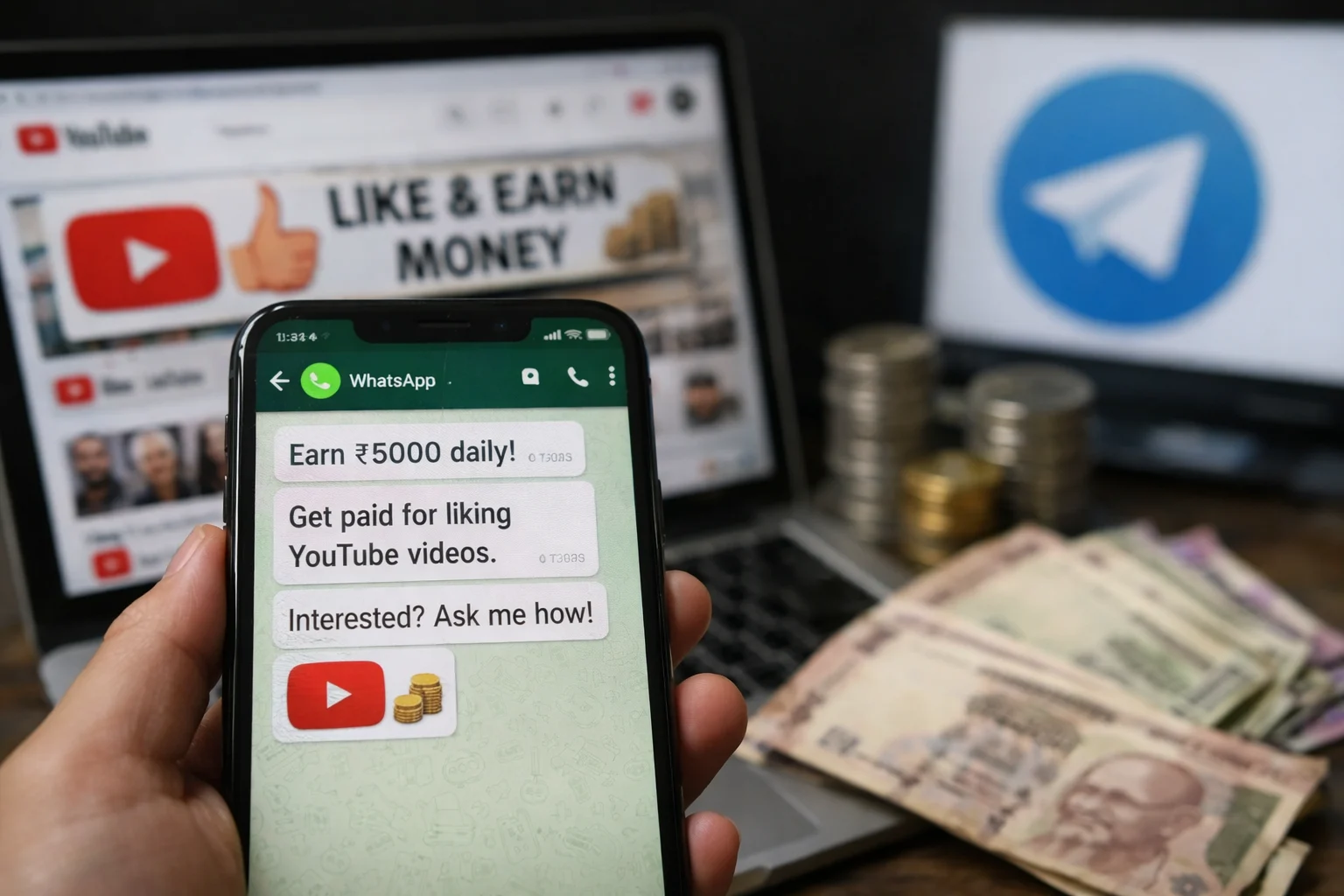
    It starts innocently. You get a WhatsApp message from an unknown number: “Are you interested in a part-time work-from-home opportunity? Earn ₹500–₹5,000 daily by liking YouTube videos.”

    No OTP asked. No bank details requested. Just like some videos and earn money. Sounds harmless, right?

    That is exactly what scammers want you to think. This is one of the fastest-growing cyber frauds in India — and thousands of people, including educated professionals, are falling for it every single month.

    In this article, we break down exactly how this scam works, who is behind it, real victim stories, and most importantly — how you can protect yourself.

    How Big Is This Problem?

    This is not a small-scale fraud. The numbers are staggering:

    • ₹200 crore lost by 30,000 Delhi residents in a single month
    • ₹3.97 crore lost by 181 Chandigarh residents in task scams alone
    • 22,680 complaints filed in just Q1 of 2024 related to Telegram task fraud
    • 400% year-over-year increase in task-based scams globally

    And these are only the reported cases. Most victims — especially those who lost smaller amounts — never file a complaint out of shame or not knowing where to report.

    How This Scam Works — Step by Step

    This fraud is carefully designed to look real at every stage. Here is the exact playbook scammers follow:

    Step 1: The WhatsApp Message

    You receive a message from an unknown number — often a +91 mobile or an international number. It offers a simple part-time job: like YouTube videos, subscribe to channels, or rate hotels and apps. No experience required. Flexible hours. ₹150–₹250 per task.

    Step 2: You Are Moved to Telegram

    Once you show interest, a “receptionist” adds you to a Telegram group. The group already has 20 to 500 members — but most of them are fake bots posting screenshots of their “earnings” every few minutes to make the group feel active and legitimate.

    Step 3: You Get Paid. For Real.

    This is the most important step. You complete a few tasks and the scammer actually pays you ₹150 to ₹500 in real money via UPI. This builds genuine trust. You think: “This is working. It is legitimate.”

    Step 4: The “Prepaid Task” Trap

    Now comes the trap. You are invited to a “VIP Task Group” where earnings are much higher — but you must pay an upfront amount to “unlock” the task. They say: “Deposit ₹3,000 and complete this task to earn ₹7,000.” You pay ₹3,000 — and you receive ₹4,500 back. It works!

    Step 5: The Stakes Keep Rising

    The amounts keep getting bigger. ₹10,000 to earn ₹25,000. Then ₹50,000 to earn ₹1.5 lakh. The fake app shows your “balance” growing. Fake screenshots of others withdrawing lakhs flood the group. You are told your total profit is now ₹3 lakh or ₹5 lakh.

    Step 6: Withdrawal Is Blocked

    When you try to withdraw, scammers tell you that you need to pay taxes, a “processing fee,” or complete one more task to unlock funds. Victims often pay more money at this stage hoping to recover everything. Then the Telegram account vanishes. The group disappears. The money is gone.

    Real Victim Cases in India

    Case 1: Gurugram, Haryana — ₹42,31,600 Lost

    A software engineer at an IT company received a WhatsApp message offering part-time income for liking YouTube videos. He was added to a Telegram group. Group members showed him fake profits of ₹69 lakh. When he tried to withdraw, they demanded more fees. He had already transferred money from both his and his wife’s bank accounts before realising it was a scam.

    Case 2: Greater Noida, Uttar Pradesh — ₹51 Lakh Lost

    A man was invited to a close-knit “investment group” on Telegram. Small returns kept coming in and he was encouraged to invest more and more. Once he transferred a large sum, all communication from the scammers stopped immediately.

    Case 3: Chandigarh — ₹3.97 Crore Lost (City-Wide)

    Chandigarh Police registered 181 cases from residents who lost money to Telegram task scams. Among the victims were chartered accountants, legal advocates, and private bank employees. Police traced the network to Gurugram — with funds being moved through shell companies and converted to cryptocurrency.

    Case 4: Agra, Uttar Pradesh — ₹11.31 Lakh Lost

    A man looking for extra income was added to a WhatsApp group and then Telegram. Fraudsters initially paid ₹600 for 3 tasks. Then came prepaid tasks – ₹2,000 returned ₹2,800, then ₹5,000 returned ₹8,060. Confidence built. He kept paying. Then it stopped completely.

    Who Is Running These Scams?

    These are not random individuals. They are highly organised criminal networks — many operating from outside India.

    Delhi Police investigations revealed that Telegram IDs used by scammers were being operated from Beijing, China. WhatsApp numbers used in the fraud were traced to foreign origins. Money collected through UPI was immediately moved through multiple shell company accounts and converted to cryptocurrency within hours — making it nearly impossible to trace.

    Cyber experts note that this scam model grew rapidly after Chinese loan app fraud declined due to government crackdowns. Criminal networks simply switched to task-based fraud as their new model.

    The Telegram channels themselves operate like fake companies — with roles like “intern,” “staffer,” “receptionist,” and “teacher” — each assigned to specific stages of manipulating victims.

    Warning Signs — Spot the Scam Before It Is Too Late

    Watch out for these red flags:

    • You received an unsolicited WhatsApp message offering part-time income from an unknown number
    • The job requires no skills, no interview, no documents — just “simple tasks”
    • You are asked to move to Telegram after showing interest on WhatsApp
    • The Telegram group is full of people constantly posting earning screenshots
    • You are asked to pay money upfront to “unlock” a higher-paying task
    • An app or platform shows a large “balance” that you cannot actually withdraw
    • They ask for more payment to “release” your withdrawal — taxes, fees, or one final task
    • Famous brand names like TCS, Infosys, Tripadvisor, or Netflix are used to appear legitimate

    What To Do and What To Avoid

    Do This

    • Block and report the WhatsApp number immediately
    • Screenshot all chats and payment receipts before blocking
    • Call cybercrime helpline 1930 right away
    • File a complaint at cybercrime.gov.in
    • Contact your bank to flag the fraudulent transactions
    • Warn your family and friends about this scam
    • Check unknown URLs and UPI IDs on ScamDekho before clicking or paying

    Never Do This

    • Never pay any upfront amount to “unlock” a task or earn money
    • Never join Telegram groups based on WhatsApp messages from strangers
    • Never trust screenshots of earnings as proof of legitimacy
    • Never invest more money to try and recover what you already lost
    • Never share your UPI PIN or bank OTP with anyone
    • Never believe a job offer just because it uses a famous company name

    Already Scammed? Do This Immediately

    Time is critical. The faster you act, the better the chance that your money can be frozen before it is moved.

    1. Call 1930 Right Now

    This is India’s National Cybercrime Helpline, available 24×7. Call immediately and report the fraud. Cyber cells can request banks to freeze accounts if reported within hours of the transaction.

    2. File a Complaint at cybercrime.gov.in

    Go to the National Cyber Crime Reporting Portal and file a detailed complaint. Include all screenshots, UPI transaction IDs, and the Telegram or WhatsApp numbers involved.

    3. Contact Your Bank

    Call your bank’s fraud helpline and inform them of the fraudulent transactions. Request them to flag or freeze the beneficiary accounts. Provide your transaction reference numbers.

    4. Visit Your Nearest Cyber Police Station

    File a physical FIR at your local cyber police station. Bring printed copies of all evidence — chats, payment receipts, and screenshots.

    Can You Get Your Money Back? The Honest Answer

    This is the first question every victim asks. The honest answer is: it depends entirely on how fast you act.

    When you transfer money via UPI, it does not sit in one account. Scammers move it through multiple accounts within minutes and eventually convert it to cryptocurrency. Once that happens, recovery becomes nearly impossible.

    Here is the reality based on how quickly victims report:

    • Within 0–4 hours: Best chance of recovery. Cyber cell can contact the beneficiary bank and request an emergency freeze before money is moved further. Many victims have recovered full amounts at this stage.
    • Within 4–24 hours: Still possible but harder. Money may have moved one or two accounts ahead. Partial recovery is realistic if you act now.
    • Within 24–72 hours: Very difficult. Funds are usually split across shell accounts by this point. Recovery is rare but an FIR is still essential.
    • After 72 hours: Recovery is unlikely but do not skip filing a complaint. An FIR creates a legal record, helps police track patterns, and is required for any insurance or bank dispute claim.

    The single most important thing you can do right now is call 1930 and file at cybercrime.gov.in. Every hour you wait reduces your chances.

    Warning: The “Recovery Scam” — Getting Scammed a Second Time

    This is something most awareness articles never mention — and it is costing victims even more money.

    After you get scammed, criminals often contact you again. This time they pretend to be a bank officer, a cyber police official, a legal consultant, or a “money recovery expert.” They say they can help you get your money back — for a fee.

    They know you are desperate. They know you are ashamed. And they use that against you.

    Here is how to identify a recovery scam:

    • They contacted you first — you did not find them
    • They claim to be from a bank, RBI, CBI, or cyber cell but called on WhatsApp or Telegram
    • They ask for an upfront “processing fee,” “legal fee,” or “tax” to release your funds
    • They ask you to transfer money to a “safe account” to protect it
    • They promise guaranteed recovery — no legitimate authority ever guarantees this

    The rule is simple: no legitimate bank, police officer, or government official will ever contact you on WhatsApp or Telegram to recover your money. If someone does, it is a scam.

    Real help is always free. Call 1930. Visit cybercrime.gov.in. Go to your nearest cyber police station in person.

    Also Read: Fake Online Shopping Websites in India: How to Identify Them Before You Lose Money

    Exactly What to Say to Your Bank — Use This Template

    Most victims do not report to their bank because they do not know what to say. Here is the exact script you can use — on call or in writing.

    1. On the Phone — Say This

    “I am a victim of a cyber fraud. On [date], I was deceived into transferring ₹[amount] to UPI ID [UPI ID / account number]. This was done under false pretences by scammers. I request you to immediately flag this transaction and send a hold request to the beneficiary bank under RBI cybercrime guidelines. My complaint reference number on cybercrime.gov.in is [number]. Please treat this as urgent.”

    In Writing — Email or Branch Letter

    “Subject: Urgent — Cyber Fraud Transaction Dispute

    Dear Sir/Madam,

    I am writing to report a cyber fraud transaction made from my account [account number] on [date]. I was deceived by scammers operating on WhatsApp and Telegram into transferring ₹[amount] to the following UPI ID / account: [details].

    I have already filed a complaint on the National Cyber Crime Reporting Portal (cybercrime.gov.in) with reference number [number] and called helpline 1930.

    I request you to: (1) immediately place a hold on the beneficiary account, (2) raise an inter-bank fraud alert, and (3) provide me with a written acknowledgement of this complaint for my records.

    Time is critical. Please treat this as an emergency.

    Yours sincerely,
    [Your Name]
    [Account Number]
    [Contact Number]”

    Documents to Keep Ready

    • Screenshot of every UPI transaction (from PhonePe, GPay, or your bank app)
    • Screenshot of all WhatsApp and Telegram chats
    • The UPI ID or account number you sent money to
    • Your cybercrime.gov.in complaint reference number
    • Date, time, and exact amount of each transaction

    Important: Banks are required under RBI guidelines to acknowledge fraud complaints within 3 working days. If your bank does not respond, escalate to the RBI Banking Ombudsman at bankingombudsman.rbi.org.in.

    Conclusion

    The “Like YouTube Videos and Earn Money” scam is not a small-time fraud. It is a professionally run criminal operation that has stolen hundreds of crores from ordinary Indians — students, engineers, doctors, homemakers, and retired professionals alike.

    The reason it works so well is simple. It does not ask for your OTP. It does not hack your account. It does not even lie to you at first. It pays you real money, builds your trust slowly, and then uses that trust against you. By the time most victims realise what is happening, they have already lost lakhs.

    But now you know exactly how it works.

    You know the six steps scammers follow. You know the red flags to watch for. You know what to do in the first four hours if something goes wrong. And you know that if someone contacts you promising to recover your money — that is the second scam.

    The most powerful thing you can do right now is not just protect yourself — it is to share this article with the people around you. Your parents who are looking for extra income. Your college friends who might get a random WhatsApp message. Your relatives who trust any message that offers easy money.

    One conversation could save someone from losing their life savings.

    And if you ever receive a suspicious link, a unknown UPI ID, or a website that looks off — check it for free on ScamDekho before you click or pay. That one check could make all the difference.

    Stay alert. Stay safe.

  • Fake Online Shopping Websites in India: How to Identify Them Before You Lose Money

    Fake Online Shopping Websites in India: How to Identify Them Before You Lose Money

    The discount looked too good to ignore.

    A brand new iPhone at ₹12,000. A Nike sneaker pair for ₹899. A saree that normally costs ₹3,500 — available for ₹499 with free delivery.

    You click. You pay. You wait.

    A week later, nothing arrives. You try the customer support number — it is switched off. You check the website again — it is gone. Your money is gone with it.

    This is how fake online shopping website scams work in India. And they are happening to thousands of people every single month — especially during sale seasons like Diwali, Dussehra, and Republic Day.

    What you will learn in this guide:

    • Exactly how these fake shopping scams work
    • How to identify a fake website before you pay
    • What to do if you have already been cheated

    Why Fake Shopping Websites Are a Growing Problem in India

    India’s e-commerce market is growing fast. More people shop online than ever before — from small towns, on mobile phones, discovering new websites through Instagram ads, WhatsApp forwards, and Google searches.

    Scammers know this.

    They create websites that look completely genuine — professional logos, product photos, fake customer reviews, even a padlock icon in the browser bar. Everything looks real. Everything is designed to make you trust them.

    Their biggest targets are first-time online shoppers who may not know what red flags to look for.

    Scam activity in India peaks during major festival periods — Diwali, Dussehra, and Dhanteras — when fraudsters create convincing copies of popular e-commerce and travel booking sites. They know you are in a hurry. They know the deals feel urgent. And they take full advantage of that.

    The result? People lose money, receive fake or empty packages, or have their payment details stolen without ever realizing it.

    How a Fake Online Shopping Website Scam Works

    The pattern is almost always the same.

    Step 1: The attractive ad

    A heavily discounted product appears on Instagram, Facebook, or in a WhatsApp group. The ad looks professional. The website it links to looks real. You see a countdown timer — “Offer ends in 2 hours.”

    The urgency is intentional. It stops you from thinking clearly.

    Step 2: The website looks genuine

    The site has product photos, a shopping cart, a checkout page, and even customer reviews. Some sites go further — they copy the design of trusted brands like Myntra or Meesho almost exactly, changing only the domain name slightly.

    You think you are on a real website. You are not.

    Step 3: Payment is collected

    You pay online — UPI, card, or net banking. The website accepts it smoothly. No errors. No warnings. Everything feels normal.

    Step 4: Nothing happens

    No order confirmation arrives. Or a fake one does — with a tracking number that leads nowhere.

    Customer support does not respond. Within days, the website may go offline entirely.

    Your money is gone. The website never existed to sell you anything.

    8 Signs That a Shopping Website Is Fake

    Learn these warning signs. Check every unfamiliar website against this list before you pay anything.

    1. The URL looks slightly wrong

    This is the most common trick. Scammers create domain names that look almost identical to trusted brands — with small changes you can easily miss.

    • flipkart-sale.in instead of flipkart.com
    • myntra-offers.com instead of myntra.com
    • amazon-india.shop instead of amazon.in

    Always check the full URL carefully before entering any payment details.

    2. Prices are unrealistically low

    If a product is 70–80% below its normal market price, that is not a deal. It is a trap.

    Compare the price on at least two trusted platforms before buying from any unknown website.

    3. No Cash on Delivery option

    Legitimate Indian e-commerce websites almost always offer COD.

    If a website insists on advance payment only — especially via UPI or bank transfer with no COD option — treat it as a serious red flag.

    4. No verifiable contact details or address

    A real registered business in India must display its company name, registered address, and contact number.

    Copy the address shown on the website into Google Maps. If nothing comes up — the business does not physically exist.

    5. The website has no digital history

    Search the website name on Google with the word “review” or “scam.” Then check:

    • Trustpilot or MouthShut reviews
    • The brand’s presence on Instagram, Facebook, and LinkedIn
    • Any news coverage

    If you find nothing — no reviews, no social media, no news — that silence is itself a warning.

    6. Poor grammar, broken design, or copied content

    Poor-quality images, inconsistent layouts, placeholder text that was never removed, grammatical errors in product descriptions — these are signs the website was put together in a hurry.

    Legitimate businesses do not look like this. Close the tab.

    7. Fake or AI-generated reviews

    Signs of fake reviews:

    • All five-star ratings with no criticism
    • Vague comments like “Great product, fast delivery”
    • No photos attached to reviews
    • Reviewers with no profile history or account activity

    Even genuine-looking reviews can be purchased or AI-generated. Do not trust them blindly.

    8. The website was registered very recently

    Every website has a registration date. Check it for free using any WHOIS lookup tool.

    If the website was registered just a few weeks or months ago and claims to be a big brand — it is almost certainly fake.

    Also Read: Fake PhonePe Screenshot — Real Examples And How to Verify Payments Safely

    Real Cases of Fake Shopping Website Fraud in India

    These are not hypothetical examples. They are real incidents that have been reported.

    The Festival Sale Trap

    During the 2025 Diwali season, a website called “DealsFestive.in” ran Instagram ads offering electronics at massive discounts. It looked professional. The deals looked real.

    After collecting payments from over 400 buyers, the website went offline within 72 hours.

    Most victims had paid between ₹1,500 and ₹8,000. The website was gone before most of them even realized something was wrong.

    The Branded Clothing Copy

    A website mimicking a popular ethnic wear brand ran Facebook ads showing beautiful embroidered kurtas at ₹299.

    Buyers received either nothing at all — or a piece of low-quality fabric worth far less than what they paid.

    The website’s domain name had just one extra letter compared to the original brand. Something most buyers never noticed until it was too late.

    The WhatsApp Forward Scam

    A WhatsApp message claiming to offer free government laptops for students circulated widely in rural areas. It looked official. It felt trustworthy — it came from a known contact.

    The link led to a fake government-style website asking for a ₹200 “registration fee.”

    Hundreds of people paid before the scam was identified and reported. No laptop ever arrived. No fee was ever refunded.

    Check: Fake Loan App Scam India: How to Identify Them and Protect Yourself

    How to Verify a Shopping Website Before Paying — Quick Checklist

    Before you pay on any website you have not used before, run through this:

    1. Check the URL: Does it match the official brand exactly? No extra letters, numbers, or unfamiliar domains?
    2. Search for reviews: Google the website name with “review” or “scam.” What comes up?
    3. Check the domain age: Use a free WHOIS tool to see when the website was registered.
    4. Look for COD: Does the website offer Cash on Delivery? If not, why?
    5. Find the contact details: Is there a real address and a working phone number?
    6. Verify on ScamDekho: Enter the website URL on ScamDekho.in to check if it has been reported for fraud. It takes under 30 seconds.
    7. Trust your instinct: If something feels off, it probably is.

    What to Do If You Have Already Been Scammed

    Do not wait. Act within the first 24 hours — the sooner you report, the better the chances of recovering your money.

    1. Call 1930

    India’s official Cyber Crime Helpline, available 24/7. Report the fraud immediately and provide all details you have — the website URL, payment amount, and screenshots.

    2. File a complaint online

    Go to cybercrime.gov.in, select “Report Other Cyber Crime,” and register your case. Keep these ready:

    • Screenshots of the website and ads
    • Payment receipts
    • The website URL
    • Any order confirmation or messages received

    3. Contact your bank

    If you paid by card or net banking, call your bank immediately and request a chargeback.

    Many banks can reverse fraudulent transactions — but only if you report quickly. Do not delay.

    4. Call the National Consumer Helpline

    Dial 1800-11-4000 or short code 1915, available from 8 AM to 8 PM, seven days a week.

    5. Report the website on ScamDekho

    Flag the URL on ScamDekho.in so other users across India are warned before they visit it.

    Every report helps protect someone else from the same scam.

    The Simple Rule That Keeps You Safe

    Online shopping scams do not succeed because people are careless. They succeed because scammers are good at creating urgency and building fake trust. They know exactly how to make you act fast — before you have time to think.

    The antidote is one simple habit — verify before you pay. It does not take long. Two minutes of checking a website’s URL, reviews, and contact details can save you from losing thousands of rupees and days of stress.

    Stick to trusted platforms for big purchases. For new or unfamiliar websites, always check before you pay. And when something feels too good to be true — it almost always is.

    Not sure about a website? Enter the URL on ScamDekho.in before you click anything. It takes under 30 seconds and could save you from everything this guide has described.

  • Fake Loan App Scam India: How to Identify Them and Protect Yourself

    Fake Loan App Scam India: How to Identify Them and Protect Yourself

    You need money urgently. Rent is due. A medical bill is pending. Your salary is still a week away.

    You search online and find an app that promises ₹10,000 in 10 minutes — no documents, no credit check, instant approval. You download it, fill in your details, and wait.

    What happens next is not a loan. It is the beginning of a nightmare.

    Why this scam is growing so fast:

    Fake loan app scams are one of the fastest-growing cybercrimes in India. Every month, thousands of people are targeted — students, small business owners, daily wage workers, and salaried employees. By the time most victims realize what happened, they have already lost money, lost their personal data, and sometimes lost their dignity.

    What you will learn in this guide:

    • Exactly how these scams work
    • How to spot a fake loan app before it is too late
    • What to do if you have already been targeted

    What Is a Fake Loan App?

    A fake loan app is an illegal mobile app that pretends to give you an instant personal loan — but actually works against you.

    These apps are not registered with the Reserve Bank of India (RBI) or connected to any real NBFC (Non-Banking Financial Company). They do not give loans in any legal or regulated way.

    What they actually do:

    • Steal your personal data
    • Charge hidden fees you never agreed to
    • Trap you in a cycle of debt and harassment

    What about RBI approval?

    The RBI does not directly approve or license loan apps. What it does is regulate banks and NBFCs.

    Any genuine loan app must clearly tell you — which RBI-registered bank or NBFC it is partnered with.

    If an app cannot answer this question — or says it is “RBI approved” without naming a lender — that is a red flag.

    Real lender = names a registered bank or NBFC

    Fake lender = just says “RBI approved” with no details

    Fake Loan App List — Commonly Reported Apps in India

    Several apps have been widely reported for fraud, harassment, or operating without proper NBFC backing. Some commonly flagged names include:

    • Flip Cash
    • ApnaAroham
    • CashFish
    • Kredipe
    • FlyCash
    • LoanCube
    • Rupee Master
    • GuayabaCash
    • AA Kredit
    • 4S Cash
    • FlashLoan / Flash Loan
    • EasyCredit (fake version)
    • QuickCashNow / InstaLoan Pro
    • UltraLoanX / SpeedLoan
    • RupeePocket / CashAdvance Go

    But here is the problem:

    Google has already removed more than 4,700 illegal loan apps from the Play Store over the past two years. They updated their policies to make sure all loan apps must be linked to a regulated lender.

    Despite this, new fake apps keep appearing — just under different names.

    This is why a list is not enough.

    By the time an app gets reported and removed, a new one has already taken its place. The name changes. The logo changes. But the scam stays the same.

    What actually protects you is not memorizing a list.

    It is knowing how to spot a fake loan app before you ever download it.

    How Fake Loan App Scams Work — Step by Step

    Understanding the pattern is the best way to protect yourself.

    Step 1: The attractive offer

    The scam starts with a social media ad, a WhatsApp message, or a search result. It promises instant cash with no paperwork, no credit check, no questions asked.

    The app looks professional. It has a clean logo. It even has reviews — most of which are fake.

    It feels safe. That is exactly how it is designed to feel.

    Step 2: Excessive app permissions

    Once you download the app, it asks for access to your contacts, photos, camera, and location.

    None of this is needed for a loan. But you tap Allow without reading carefully.

    That one tap gives them everything they need.

    Step 3: Upfront fee demand

    Before sending you any money, the app asks for a processing fee, insurance charge, or security deposit.

    Legitimate loan apps never charge fees before giving you the loan.

    Once you pay — either you never hear from them again, or you receive a small loan with shockingly high interest rates.

    Step 4: The harassment begins

    Now comes the worst part.

    Abusive calls. Threatening messages. And in many cases — your photos from your gallery are morphed and sent to your contacts.

    This is not a lending company anymore. This is blackmail.

    Step 5: The debt trap

    Even after you repay the full amount, some apps keep demanding more money. Victims report being charged again and again with no end in sight.

    The loan never really ends. That was the plan from the beginning.

    Real Cases of Fake Loan App Fraud in India

    These are not hypothetical examples. They are real incidents that have been reported.

    Kerala ED Case, 2026

    In early 2026, the Enforcement Directorate arrested two men in Kerala for running a network of fake Chinese loan apps.

    These apps promised quick loans. But once users downloaded them, the apps stole personal data from their phones — private photos, contact lists, everything.

    Then came the blackmail. Victims were threatened with their own photos being shared with family and friends.

    The total fraud — over ₹719 crore. The money was moved abroad through cryptocurrency and shell companies. Authorities managed to freeze ₹123 crore during the investigation.

    Delhi Student Trap

    A college student saw an Instagram ad for a quick loan app. He downloaded it and received ₹3,000 — but ₹800 was immediately deducted as a processing fee.

    Within days, recovery agents started calling his family members. They had access to his full contact list from when he installed the app.

    The original loan was ₹3,000. They were now demanding ₹9,000.

    Small Business Owner Fraud — Hyderabad

    A shopkeeper in Hyderabad needed ₹25,000 for his business. He found a loan app through a simple Google search. It looked legitimate.

    He paid a ₹2,000 processing fee as asked.

    After that — complete silence. Customer support number switched off. No loan. No response.

    When he investigated further, he found the app had no NBFC partner and was not listed on any RBI registry.

    The ₹2,000 was gone. So was his data.

    Check: Latest Online Scams in India (2026): New Fraud Trends You Must Know

    How to Check if a Loan App Is Real or Fake

    This is the most important section. Before you download any loan app, run through this checklist.

    1. Check the RBI NBFC list Go to rbi.org.in and search for the lender’s name in the official NBFC registry. If the app’s lending partner does not appear there — do not proceed.

    2. Look for the NBFC name inside the app Every genuine loan app clearly tells you which bank or NBFC it is partnered with. If this information is missing, hidden, or vague — treat it as a fake loan app.

    3. Check the app permissions A real lending app does not need access to your contacts, photos, or camera. If the app asks for these permissions during install — uninstall it immediately.

    4. Look for a physical address and real customer support Fake apps have no real office address and no working helpline. Genuine lenders are required by RBI guidelines to provide a proper grievance redressal system. If you cannot find one — it is a red flag.

    5. Search for reviews and complaints Search the app name on Google along with words like “fraud,” “scam,” or “complaint.” Victims almost always leave warnings. Take those warnings seriously.

    6. No upfront fee is a good sign A legitimate lender never asks for money before your loan is approved and disbursed. Any app asking for a processing fee, insurance charge, or deposit upfront — is suspicious.

    7. Check download count and developer details On the Play Store, check:

    • The developer’s name
    • Total number of downloads
    • Date and quality of reviews

    Very few downloads + recent one-line five-star reviews = almost certainly fake.

    Is Navi Loan App Fake or Real?

    Many users search specifically for “Navi loan app fake or real” — so let us address this directly.

    Navi is a legitimate financial services company founded in India and is backed by a registered NBFC. It is listed on regulated platforms and complies with RBI digital lending guidelines. It is not a fake app.

    However, scammers sometimes create apps with names similar to well-known brands like Navi to confuse borrowers. Always verify that you are downloading from the official Play Store listing and that the developer name matches the official company.

    Also Visit: Common digital banking fraud types growing in India (avoid these mistakes)

    What to Do If You Have Been Scammed by a Fake Loan App

    Act immediately. Do not let shame or fear stop you from reporting. You are not alone — thousands of people face this every month.

    Step 1: Stop all payments

    Do not pay any more money — even if they threaten you.

    Paying does not stop the harassment. In most cases, it only makes it worse.

    Step 2: File a complaint on the Cyber Crime Portal

    Go to cybercrime.gov.in and register your complaint.

    Keep these ready:

    • App name and screenshots
    • Conversation history
    • Payment receipts
    • Any threats you received

    Step 3: Call the Cyber Crime Helpline

    Dial 1930 — India’s official cyber fraud helpline, available 24/7.

    Reporting quickly can sometimes help freeze fraudulent transactions before more damage is done.

    Step 4: Report on the RBI Sachet Portal

    Go to sachet.rbi.org.in to report unauthorized lending apps directly to the Reserve Bank of India.

    Step 5: Inform your bank

    If you shared your bank account details or UPI ID with the app — call your bank immediately.

    Ask them to do a security review of your account. Do not wait.

    Step 6: Check your credit report

    If you shared your Aadhaar or PAN details, check your CIBIL or Experian credit report.

    Make sure no unauthorized loans have been taken in your name without your knowledge.

    Safe Loan Apps You Can Trust

    If you genuinely need a personal loan, stick to apps that are backed by RBI-registered lenders.

    Some trusted options include:

    • KreditBee
    • PaySense
    • CASHe
    • Bajaj Finserv

    All of these clearly display their NBFC or bank partnerships and follow RBI’s digital lending guidelines.

    Not sure about any loan message or website?

    Before you download anything, verify it first.

    Use ScamDekho scam detector simply enter the loan message or website link and the tool will immediately flag whether it’s safe or scam.

    The One Rule That Protects You

    If you remember nothing else from this guide, remember this — a legitimate lender never asks you to pay before giving you the loan. No processing fee in advance. No insurance deposit upfront. No security amount before disbursal. If any app asks for money before the loan reaches your account, it is a scam. Every single time.

    Fake loan apps target people in financial distress. They count on your urgency. They count on your trust. They count on you not having time to think. That is their strategy. Now you know it.

    The good news is that your defense is simple. Take a few minutes before you download anything. Check the RBI NBFC list. Read the app permissions carefully. Search the app name with “fraud” or “scam” on Google. Those few minutes can save you months of stress, harassment, and financial loss.

  • Fake PhonePe Screenshot — Real Examples And How to Verify Payments Safely

    Fake PhonePe Screenshot — Real Examples And How to Verify Payments Safely

    PhonePe has completely changed the way India pays.

    No more carrying cash. No more “exact change nahi hai” moments. Just scan a QR code and the payment is done in seconds. UPI has made life genuinely easier for millions of Indians — from big city professionals to small town shopkeepers.

    But where there is convenience, there are also scammers.

    While UPI was growing, fraudsters were quietly finding ways to exploit people’s trust in digital payments. And their method? Shockingly simple.

    A fake screenshot.

    That’s it. Just a manipulated image on a phone screen.

    A fraudster walks into a shop, buys goods worth thousands of rupees, shows a “Payment Successful” screen — and walks out. No money was ever sent. Not a single rupee reached the shopkeeper’s account.

    And this isn’t rare. This is happening every single day

    • In local markets and kirana stores
    • On OLX and Facebook Marketplace deals
    • At petrol pumps and roadside stalls
    • In WhatsApp transactions between strangers

    Shopkeepers, freelancers, and small business owners across India are losing their hard-earned money — simply because they trusted a screenshot instead of checking their own bank account.

    If you accept UPI payments in any form — this guide is a must-read.

    We’ll cover:

    • Real examples of fake PhonePe screenshots
    • How scammers create them
    • How to verify every payment safely
    • How tools like ScamDekho can help you stay protected

    What Is a Fake PhonePe Screenshot?

    Imagine someone shows you their phone. The screen says:

    “Payment Successful — ₹2,000 Sent”

    It has your name on it. A transaction ID. A timestamp. It looks 100% real.

    But not a single rupee has left their account.

    That is exactly what a fake PhonePe screenshot is — a manipulated or AI-generated image made to look like a real payment confirmation. Everything you see on that screen is fabricated:

    • The payment amount
    • The sender and receiver names
    • The UTR / transaction ID
    • The date and time
    • The big green “Payment Successful” status

    All fake. All designed to fool you.

    What Does a Fake Screenshot Look Like?

    A typical fake PhonePe screenshot is built to show you exactly what you want to see:

    ElementWhat You See
    Amount₹500, ₹2,000, ₹10,000 — whatever fits the scam
    NamesYour name as the receiver, their name as sender
    UTR NumberA random number that looks legitimate
    TimestampCurrent date and time
    StatusA green “Payment Successful” message

    How Do Fraudsters Create Fake Screenshots?

    You might be thinking — “How can a fake screenshot look so real?”

    The answer is simple. Scammers have multiple easy methods to create them. Here are the four most common ones:

    1. Fake Screenshot Generator Websites

    This is the easiest method. Several websites let anyone create a convincing PhonePe payment confirmation in just a few minutes.

    All a scammer has to do is:

    • Enter the amount
    • Type in your name
    • Add a fake transaction ID
    • Click generate

    The website spits out a perfectly designed fake payment screenshot — ready to use.

    2. Modified Fake Payment Apps

    Some fraudsters use fake UPI apps that look exactly like PhonePe — same colors, same fonts, same green tick, same layout.

    But these apps never actually send any money. They just display a fake success screen that looks identical to the real thing.

    3. Photo Editing

    This one is even simpler. A scammer takes a real payment screenshot from an old transaction and edits it using:

    • Photoshop
    • Mobile photo editing apps
    • Basic image editors

    They just change the amount, name, and date — and the screenshot looks completely legitimate.

    4. Screen Recording Tricks

    This is the most convincing method of all. Instead of showing a screenshot, the fraudster plays a pre-recorded video of a “successful payment” — sometimes even showing themselves typing in the amount in real time.

    It looks live. It looks genuine. And it’s completely fake.

    Real Examples of Fake PhonePe Screenshot Scams

    These are not made-up stories. These types of scams happen every day across India. Here are five real-world examples that show just how easy it is to get fooled:

    Case 1: The Grocery Shop Fraud — Pune

    A shopkeeper in Pune was running his small grocery store when a well-dressed customer walked in and bought items worth ₹1,840.

    The customer tapped his phone for a few seconds, then turned the screen around. It showed:

    “Payment Successful — ₹1,840” — with the shopkeeper’s name and a transaction ID.

    The shopkeeper handed over the goods without a second thought.

    Fifteen minutes later, he checked his account. Nothing was credited. The customer was long gone.

    Case 2: OLX Phone Sale Gone Wrong

    A seller listed his second-hand phone on OLX for ₹14,000. A buyer contacted him, agreed to pay ₹5,000 in advance via PhonePe, and asked for the phone to be couriered.

    A payment screenshot arrived on WhatsApp. It looked completely genuine. The seller packed and shipped the phone.

    The payment never arrived. The buyer’s OLX profile was fake. The seller lost both the phone and the money.

    Case 3: Petrol Pump Scam — Gurgaon

    During busy evening hours at a petrol pump in Gurgaon, a customer filled fuel worth ₹2,000 and claimed to pay via PhonePe.

    He quickly flashed a payment screen and drove away — before the staff could even verify.

    The fraud was discovered only during the end-of-day account check. By then, it was far too late to do anything.

    Case 4: Freelancer Cheated After Delivery

    A graphic designer completed a logo project worth ₹8,500. The client sent a payment screenshot on WhatsApp. Trusting it, the designer delivered all final files.

    The payment never showed up in the account. The client stopped responding. The phone number was switched off.

    The designer lost both the payment and the work.

    Case 5: Home Tiffin Business Victim

    A woman running a home-based tiffin service received a week-long order. The customer paid via a fake screenshot, collected food on day one — and disappeared after day two.

    The total loss was over ₹2,000. Small in number, but a big blow for a home business running on tight margins.

    Warning Signs You Should Never Ignore

    Before trusting any UPI payment, always watch out for these red flags:

    1. No Notification on Your Phone

    Every real UPI payment triggers two instant alerts:

    • A notification on your PhonePe app
    • An SMS from your bank

    If neither of these arrived — the payment did not happen. Simple as that.

    2. Customer Shows Only Their Screen — Not Yours

    A real payment shows up on your device — not just theirs.

    If the only “proof” of payment exists on the customer’s phone, that is a serious red flag. Always check your own app before handing over anything.

    3. Customer is in a Hurry

    Fraudsters always create urgency. Watch out for lines like:

    • “Network slow hai, check kar lena baad mein”
    • “Bhaiya jaldi karo, late ho raha hoon”
    • “Screenshot bhej diya na, ho gaya payment”

    This pressure is 100% intentional. They want you to skip verification and move on quickly. The moment someone rushes you — slow down.

    4. Transaction Not Visible in Your App

    Open your PhonePe app and check your transaction history directly.

    If the payment is not listed there — it was never made. No exceptions.

    5. The Screenshot Looks Slightly Off

    Look closely at the screenshot they show you. Fake images often have:

    • Blurry or pixelated text
    • Misaligned icons or buttons
    • Unusual fonts or letter spacing
    • Inconsistent spacing between elements
    • Slightly wrong colors or layout

    A genuine PhonePe screenshot always looks clean and consistent. If something feels even slightly off — trust your instinct and verify.

    Also Read: Fake UPI Payment Screenshot Scam — How Shopkeepers Are Getting Fooled

    How to Verify a PhonePe UPI Payment — Step by Step

    These steps take less than 30 seconds. Make them a habit for every single transaction.

    Step 1: Check Your PhonePe Transaction History

    Open your PhonePe app and go to the History section.

    Every real payment appears here instantly — the moment it is made. If you don’t see the transaction listed, the payment did not go through. No history entry = no payment. End of story.

    Step 2: Wait for the Bank SMS

    Your bank sends an automatic SMS every time money is credited to your account. It will say something like:

    “INR 2,000 credited to your account via UPI. Ref No: XXXXXXXX”

    Did not receive this SMS? Do not hand over the goods. Do not complete the service. Wait until the SMS arrives.

    Step 3: Ask for the UTR Number

    Every real UPI transaction has a unique 12 Digit UTR (Unique Transaction Reference) number.

    Ask the customer to share it. You can verify this number by:

    • Checking your banking app
    • Calling your bank’s customer care

    Fake screenshots almost always contain made-up UTR numbers that don’t match any real transaction. A genuine customer will have no problem sharing it.

    Step 4: Use a UPI Soundbox

    If your business handles multiple payments every day, a UPI Soundbox is one of the best investments you can make.

    It announces every successful payment out loud:

    “PhonePe payment received — ₹2,000”

    No more checking your phone. No more guessing. No more getting fooled by fake screens. The soundbox tells you instantly — real payment or nothing.

    How ScamDekho Can Help

    Received a suspicious UPI ID or QR code? Don’t transact — verify first.

    ScamDekho is a free Indian platform built specifically to help you stay safe from digital payment scams. Before making any transaction — especially with someone you don’t know — you can quickly check whether their UPI ID or QR code has been reported for fraud.

    It takes less than a minute and could save you thousands.

    What Can You Do on ScamDekho?

    • Enter a UPI ID — instantly check if it has been flagged for scam activity
    • Upload a QR Code image — scan and verify before paying
    • Report a scam — help protect other users by reporting fraudulent UPI IDs

    When Should You Use ScamDekho?

    Use it whenever something feels even slightly off:

    • A stranger on OLX or WhatsApp sends you a UPI ID
    • Someone shares a QR code asking you to scan and pay
    • You receive an unexpected collect request from an unknown ID
    • A “customer support agent” shares their UPI ID for a refund

    What to Do If You Have Already Been Cheated?

    First — don’t panic. Take a deep breath and act immediately. The faster you report, the better your chances of recovering your money.

    1. Call 1930 — Right Now

    Dial 1930 — India’s official Cyber Crime Helpline. It is available 24 hours a day, 7 days a week.

    This is your most important first step. Authorities can attempt to freeze the fraudster’s account before the money is withdrawn — but only if you report quickly. Every minute counts.

    2. File an Online Complaint

    Visit the official portal: cybercrime.gov.in

    Register your complaint with as many details as possible:

    • Transaction amount and date
    • Fraudster’s UPI ID or phone number
    • Screenshots of the fake payment
    • Any chat messages or call records

    The more evidence you provide, the stronger your case.

    3. Save All Evidence — Don’t Delete Anything

    Before doing anything else, make sure you save:

    • The fake payment screenshot
    • The customer’s phone number
    • All chat messages and call logs
    • CCTV footage if available at your shop

    Do not delete any of this. It is your proof and investigators will need it.

    The One Rule That Prevents All of This

    A screenshot proves nothing. Your transaction history proves everything.

    Those 30 seconds of verification can save you thousands of rupees — and a lot of unnecessary stress, anger, and regret.

    Digital payments have made life easier for millions of Indians. Small shopkeepers, freelancers, home businesses, roadside vendors — everyone benefits from the convenience of UPI.

    But that convenience only works when both sides are honest.

    When a fraudster tries to exploit your trust with a fake image, you have one and only one defense — a quick check on your own device.

    Not their screen. Not a WhatsApp screenshot. Your app. Your account. Your confirmation.

    Make It a Habit

    Every payment. Every time. No exceptions.

    It doesn’t matter if the customer looks trustworthy. It doesn’t matter if they seem in a hurry. It doesn’t matter if the screenshot looks perfect.

  • UPI Collect Request Scam: How Scammers Steal Money Without OTP (Step-by-Step Guide)

    UPI Collect Request Scam: How Scammers Steal Money Without OTP (Step-by-Step Guide)

    India has grown a lot in digital payments. Apps like PhonePe, Google Pay, and Paytm have made it super easy to send and receive money in just seconds — all thanks to UPI (Unified Payments Interface).

    But as digital payments grew, so did online scams.

    Cybercriminals have found a smart way to steal money from UPI users — it’s called the UPI Collect Request Scam. In this scam, fraudsters trick you into approving a payment request. The moment you approve it, money gets deducted from your bank account — without any OTP.

    Yes, you read that right. No OTP needed. Just approving the request + entering your UPI PIN is enough for the money to leave your account. Most people don’t know this, and that’s exactly what scammers take advantage of.

    In this article, we’ll explain:

    • How this scam works
    • How fraudsters trick you
    • How to check if a UPI ID or QR code is safe
    • How to protect yourself from UPI scams in India

    What Is a UPI Collect Request?

    A UPI Collect Request (also called a Payment Request) is a simple feature where someone can ask you to send them money — directly through your UPI app.

    Instead of you going and sending money yourself, the other person sends you a request. You just see a notification pop up in your app.

    You get two options:

    • Approve — money gets sent
    • Decline — nothing happens

    If you tap Approve and enter your UPI PIN, the money is instantly transferred to the other person’s account.

    This is a totally normal and useful feature. People use it every day for things like:

    • Paying a shopkeeper
    • Splitting a bill with friends
    • Paying a freelancer for work
    • Subscribing to online services

    So what’s the problem?

    The problem is — scammers misuse this exact same feature to steal money from innocent people. And because it looks just like a normal request, most users don’t even realize they’re being scammed.

    Also Read: What Is a Digital Arrest Scam And How to Protect Yourself

    How the UPI Collect Request Scam Works

    The scam usually follows a simple but effective process.

    Step 1: The Scammer Contacts You

    The fraudster reaches out to you through apps and platforms like:

    • WhatsApp or Telegram
    • Phone calls
    • OLX or Facebook Marketplace
    • Fake customer support messages

    They pretend to be someone you’d trust, like:

    • A buyer interested in your product
    • A bank or app customer care agent
    • A delivery agent
    • A company representative

    Step 2: Victim Receives a Payment Request

    Instead of sending money, the scammer sends a collect request to the victim’s UPI app.

    The notification may look like:

    “₹5,000 Payment Request Received”

    The scammer claims this request is required to receive money.

    This is the trick.

    In reality, approving the request sends money instead of receiving it.

    Step 3: You Approve and Lose Money

    If you:

    1. Tap Approve
    2. Enter your UPI PIN

    The payment goes through instantly. The money lands in the scammer’s account within seconds.

    And since you authorized the transaction yourself using your own UPI PIN, banks usually treat it as a valid payment — making it very hard to get your money back.

    Real-Life Example of This Scam

    A common scenario happens on online marketplaces.

    For example:

    Someone lists a phone for sale on an online marketplace. A buyer contacts them and agrees to purchase the item.

    The buyer then says:

    “I am sending payment through UPI. Please approve the request to receive money.”

    Soon, the seller receives a UPI Collect Request for ₹10,000.

    Thinking it is required to receive payment, the seller approves the request and enters the UPI PIN.

    Instead of receiving money, ₹10,000 is deducted from the seller’s account.

    This scam has affected thousands of online sellers across India.

    Warning Signs of a UPI Collect Request Scam You Should Never Ignore

    Before approving any UPI request, watch out for these red flags:

    1. Someone Asks You to “Approve to Receive Money”

    This is the biggest red flag.

    Receiving money on UPI never requires your approval or PIN. If someone sends you money, it just arrives automatically in your account.

    Only sending money requires your UPI PIN.

    So if anyone tells you “approve this request to receive your payment” — it’s a scam. Period.

    2. They’re Pressuring You to Approve Quickly

    Scammers don’t give you time to think. They’ll say things like:

    • “Payment is pending, approve fast”
    • “Transaction will fail if you don’t approve now”
    • “Hurry up, it’s about to expire”

    Urgency is a classic fraud trick. Any time someone is rushing you to approve a payment — stop, pause, and think.

    3. The Request is From an Unknown UPI ID

    If a collect request comes from a UPI ID you don’t recognize — do not approve it. Always verify who is sending the request before doing anything.

    4. It Says “Payment Request” — Not “Payment Received”

    Always read the notification carefully. There’s a big difference between:

    • Payment received
    • Payment request

    These two look similar but are completely opposite. One small word can cost you thousands of rupees.

    How to Check a Suspicious UPI ID or QR Code on ScamDekho

    If you receive a suspicious payment request, you can verify the UPI ID before taking action.

    Follow these steps:

    Step 1: Open the website ScamDekho.

    Step 2: Go to the UPI ID/QR code Check tool.

    Step 3: Enter the suspicious UPI ID such as: example@upi

    Step 4: Click Check UPI ID.

    Step 5: The tool will show if the UPI ID or Qr code is scam or safe.

    If multiple complaints appear, avoid interacting with that account.

    This step helps users identify potential scammers quickly.

    What to Do If You Get a Suspicious Collect Request

    If you receive an unexpected UPI collect request, don’t panic — just follow these simple steps:

    1. Do Not Approve It

    This is the most important step. If you don’t recognize the request — decline it immediately. Never approve a collect request from an unknown or unexpected source.

    2. Verify Who Sent It

    Before doing anything, confirm who actually sent the request. Call or message the person directly through a trusted contact number — not through the same WhatsApp chat where the request came from.

    Scammers can easily fake conversations. Always verify through a separate, trusted channel.

    3. Never Share Your UPI PIN

    Your UPI PIN is like the key to your bank account. Never share it with anyone — not with friends, not with strangers, and not even with someone claiming to be bank staff or customer support.

    No legitimate bank or app will ever ask for your UPI PIN.

    4. Never Install Remote Access Apps

    Some scammers will ask you to install apps like AnyDesk or TeamViewer, claiming they need to “help you” with a payment issue.

    Do not install these apps. Once you give someone remote access to your phone, they can see everything — including your UPI apps, bank details, and PIN.

    If anyone asks you to install such an app, cut the call immediately.

    How to Report UPI Fraud in India

    If you become a victim of a UPI scam, act immediately.

    Step 1: Call Cybercrime Helpline

    Dial 1930, the official cybercrime helpline in India.

    This helpline is operated under the Indian Cyber Crime Coordination Centre (I4C) under the Ministry of Home Affairs.

    Quick reporting increases the chances of freezing the fraudster’s account.

    Step 2: Report Online

    Visit the official portal: https://cybercrime.gov.in

    Submit a complaint with:

    • Transaction ID
    • Bank details
    • Screenshots
    • Phone number used by scammer

    Step 3: Inform Your Bank

    Contact your bank immediately and report the unauthorized transaction.

    Banks may attempt to freeze the destination account if reported quickly.

    Quick Safety Tips to Remember

    Stay safe from UPI scams by keeping these simple rules in mind:

    • Only enter your UPI PIN when you are sending money
    • Always decline collect requests from unknown sources
    • Never trust a stranger who asks you to approve a UPI request
    • Always verify a UPI ID before making any transaction
    • Never scan a QR code sent by someone you don’t know

    The Golden Rule

    Scammers survive on confusion and urgency. Whenever you feel rushed or confused — stop, think, then act.

    One extra second of verification can save you thousands of rupees.

    Conclusion

    The UPI Collect Request Scam is one of the most common online frauds in India right now. Scammers target people who don’t fully understand how UPI payment requests work — and trick them into sending money without even realizing it.

    But the good news? Awareness is your strongest weapon.

    The one thing you must always remember:

    You NEVER need to enter your UPI PIN to receive money. Ever.

    If anyone tells you otherwise — it’s a scam.

  • 20 Text Message Scams in India (2026): Real SMS Examples, How to Check And Report Fraud

    20 Text Message Scams in India (2026): Real SMS Examples, How to Check And Report Fraud

    Text message scams are becoming one of the fastest-growing cyber frauds in India. Every day, thousands of people receive suspicious SMS messages claiming to be from banks, courier companies, electricity departments, government agencies, or job providers.

    These scam messages often contain fake links, urgent warnings, or attractive offers designed to trick users into clicking malicious links or sharing sensitive information.

    With the rapid growth of smartphones and digital payments in India, cybercriminals are increasingly using SMS scams (also known as smishing attacks) to target unsuspecting users.

    According to cybercrime reports, thousands of SMS-related fraud complaints are registered every month in India. These scams can lead to financial loss, identity theft, bank account hacking, and personal data theft.

    In this guide, you will learn:

    • What a text message scam is
    • Why SMS scams are increasing in India
    • 20 common SMS scams circulating today
    • Real scam text message examples
    • How to identify a fake SMS
    • How to report SMS scams in India

    Understanding these scams can help you protect yourself and others from becoming victims of cyber fraud.

    What Is a Text Message Scam?

    A text message scam (also called an SMS scam or smishing attack) is a type of cyber fraud where scammers send fake messages pretending to be from trusted organizations.

    These messages may appear to come from:

    • Banks
    • Delivery companies
    • Government departments
    • Telecom providers
    • Job agencies

    The goal of these messages is simple — to trick users into clicking a malicious link, calling a fake number, or sharing sensitive information.

    Once victims interact with the message, scammers may steal:

    • Bank account details
    • Credit or debit card information
    • OTP codes
    • Login credentials
    • Personal identity data

    In many cases, victims only realize the fraud after money has already been stolen from their accounts.

    Why SMS Scams Are Increasing in India

    SMS scams are growing rapidly because they are easy to execute and difficult for many users to identify.

    Here are some major reasons why these scams are increasing.

    1. Huge Number of Smartphone Users

    India has over 700-800 million smartphone users, making SMS a massive communication channel.

    Cybercriminals target this large user base to reach thousands of potential victims quickly.

    2. People Trust SMS Messages

    Most legitimate notifications from banks, OTP services, and delivery companies are sent through SMS.

    Because people are used to receiving important messages via SMS, they tend to trust them easily.

    Scammers exploit this trust.

    3. Urgency Tactics

    Fraudsters create panic situations in their messages.

    For example:

    • Electricity will be disconnected
    • Bank account will be blocked
    • SIM card will be deactivated

    This pressure forces users to react quickly without verifying the message.

    4. Fake Shortened URLs

    Many scam messages contain shortened links that hide the real website address.

    Once clicked, these links may lead to:

    • Fake banking pages
    • Malware downloads
    • Phishing websites

    5. Easy Bulk Messaging

    Scammers can send thousands of SMS messages using bulk messaging tools, making SMS scams highly scalable.

    SMS Scam Statistics in India

    The cases of cyber fraud are increasing rapidly in the country.

    Some reports have shown that:

    • Every year, millions of cybercrime cases are reported in India.
    • One of the common types of SMS phishing is Smishing.
    • The number of cases may increase as people are not reporting the cases of scams and frauds.

    Due to the increasing use of digital transactions such as UPI, cyber fraudsters are developing more and more types of SMS scams.ques.

    20 Common Text Message Scams in India

    Below are some of the most common SMS scams currently circulating in India.

    1. Electricity Bill Disconnection Scam

    Victims receive messages claiming their electricity connection will be disconnected due to unpaid bills.

    Example message:

    “Dear customer, your electricity will be disconnected tonight due to pending bill. Contact support immediately.”

    Scammers then ask victims to download apps or pay through fake UPI accounts.


    2. Bank KYC Update Scam

    Fraudsters send SMS messages pretending to be from banks asking users to update their KYC details.

    Example:

    “Your bank account will be blocked if KYC is not updated today. Click the link below.”

    The link usually leads to a fake banking website.


    3. Courier Delivery Scam

    Victims receive SMS messages saying their parcel delivery is pending.

    Example:

    “Your parcel is waiting for address confirmation. Click here to reschedule delivery.”

    The link may steal personal information or install malware.


    4. Lottery Winning Scam

    These messages claim the user has won a lottery prize.

    Example:

    “Congratulations! You have won ₹25 lakh in our lucky draw.”

    Victims are asked to pay processing fees or taxes.


    5. Job Offer SMS Scam

    Fraudsters send fake job offers promising high income.

    Example:

    “Work from home and earn ₹5000 daily. Limited vacancies available.”

    After responding, victims may be asked to pay registration fees.


    6. OTP Verification Scam

    Scammers send fake OTP messages and then call victims pretending to be bank officials.

    They try to trick victims into sharing OTP codes.


    7. Loan Approval Scam

    These messages offer instant personal loans without verification.

    Example:

    “Get personal loan up to ₹5 lakh instantly. Apply now.”

    After applying, scammers demand upfront fees.


    8. Fake UPI Payment Alert

    Victims receive messages claiming they have received money.

    Example:

    “You received ₹10,000 in your UPI account. Click here to claim.”

    The link leads to phishing websites.


    9. SIM Card Block Scam

    Users receive messages claiming their SIM will be blocked.

    Example:

    “Your SIM will be deactivated within 24 hours. Contact support immediately.”

    Victims are tricked into sharing OTPs.


    10. Income Tax Refund Scam

    Fraudsters pretend to be from the income tax department.

    Example:

    “You are eligible for an income tax refund of ₹15,000.”

    The link leads to fake government websites.


    11. Insurance Policy Bonus Scam

    Victims receive SMS messages claiming they have an insurance bonus pending.


    12. Google Account Security Alert Scam

    Messages warn users that their Google account has been compromised.


    13. ATM Card Block Scam

    Users receive messages claiming their ATM card will be blocked unless verified.


    14. WhatsApp Verification Scam

    Victims receive SMS asking them to verify their WhatsApp account.


    15. Investment Opportunity Scam

    These scams promote fake stock market or crypto investment opportunities.


    16. Scholarship Scam

    Students receive fake scholarship approval messages.


    17. Government Scheme Scam

    Fraudsters send SMS claiming eligibility for government schemes.


    18. Fake Recharge Offer Scam

    These messages promise free mobile recharge.


    19. Delivery Address Verification Scam

    Victims receive messages asking to confirm delivery addresses.


    20. Account Suspension Scam

    Messages claim the user’s account will be suspended unless verified immediately.

    Real SMS Scam Message Examples

    Here are some examples of scam text messages commonly used by fraudsters.

    Example 1

    “Dear user, your bank account will be blocked today. Update KYC immediately.”

    Example 2

    “Your electricity service will be disconnected tonight. Call customer support.”

    Example 3

    “Congratulations! You have won ₹10 lakh in our lucky draw.”

    Example 4

    “Your parcel delivery failed. Click here to reschedule delivery.”

    If you receive messages like these, always verify them before taking action.

    How to Identify a Scam Text Message

    You can often identify scam SMS messages by looking for these warning signs.

    Suspicious Links

    Scam messages often contain strange or shortened URLs.

    Urgent Threats

    Many scam messages create panic by threatening account suspension.

    Unknown Numbers

    Many scam messages are sent from random or unverified numbers.

    Spelling or Grammar Errors

    Poor language or spelling mistakes are common in scam messages.

    Requests for Sensitive Information

    Banks and government departments never ask for passwords or OTP through SMS links.

    What To Do If You Receive a Scam SMS

    If you receive a suspicious message, follow these steps.

    Do not click any links.

    Never open links from unknown SMS messages.

    Do not call unknown numbers.

    Scammers may try to manipulate you during calls.

    Block the sender.

    Most smartphones allow you to block spam messages.

    Report the message.

    Reporting helps authorities track scam activities.

    How to Report Scam Text Messages in India

    If you receive a scam SMS, you can report it through the following methods.

    Report to Cybercrime Portal

    You can file a complaint on the official cybercrime reporting portal.

    Forward Spam SMS to 1909

    You can forward suspicious SMS messages to 1909 to report spam.

    Contact Your Bank

    If the scam involves bank accounts or UPI payments, contact your bank immediately.

    Easily Check Any Suspicious SMS with ScamDekho

    Paste the message, link, or screenshot into ScamDekho.in. India’s free scam checker. It analyzes for fraud signs, phishing URLs, urgency tactics, and common Indian scam patterns.

    Use it to:

    • Verify suspicious texts instantly
    • Scan images/screenshots of messages
    • Get alerts on new fraud trends

    Awareness + tools like ScamDekho = your best defense.

    Final Thoughts

    Text message scams have risen sharply in India, and scam artists are always looking for ways to deceive people via text messages.

    The best way to avoid these scams is to always be careful, verify these messages, and not share any information via SMS links or unknown numbers.

    If you ever come across any suspicious message, always take your time to verify it first.

    We can minimize the effects of these scams by being aware of them, thus protecting many people from becoming victims.